
Written by You-Hao Lai.
Image credit: DSC00006 by albyantoniazzi / Flickr, license: CC BY-NC-ND 2.0.
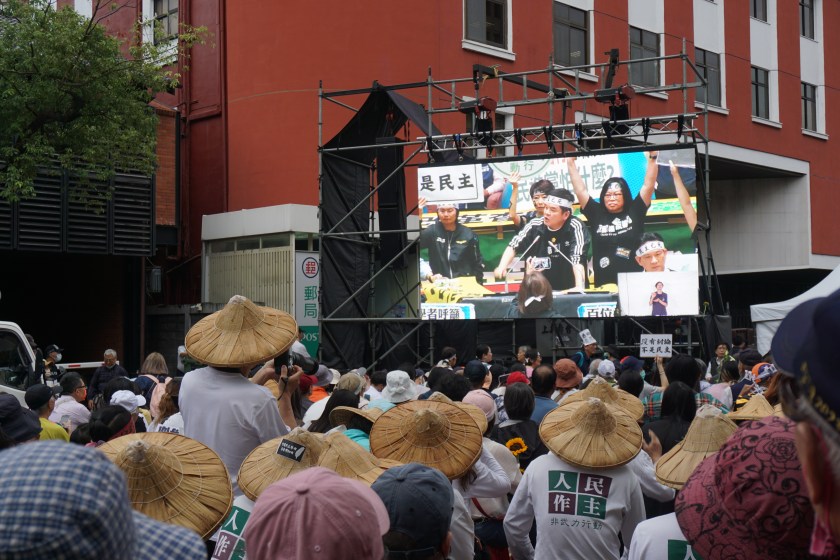
Throughout May, Taiwan has been engulfed in a significant constitutional storm. For several days, tens of thousands of citizens took to the streets surrounding the Legislative Yuan to protest the congressional reform pushed by the majority alliance of the Kuomintang (KMT) and the Taiwan People’s Party (TPP). This reform, if enacted, is feared to severely undermine Taiwan’s constitutional democracy. Is this newly passed legislation a step forward or an abuse of legislative power? This article analyzes the procedural controversy and four substantive controversies of this reform, highlighting the significant constitutional concerns each raised.
Procedural Controversies
First and foremost, the constitutional protection of “congressional self-discipline” in Taiwan is broad yet conditional. Taiwan’s Constitution mandates that the Legislative Yuan must deliberate and vote on laws, with congressional self-discipline supporting the legislature in fulfilling its role of promoting deliberation. However, when legislative procedures exhibit “significant and obvious” flaws, the laws passed under such circumstances are considered invalid because the legislature fails to perform its democratic duties. Taiwan’s Constitutional Court has previously ruled that legislative procedures not meeting the requirements of “openness and transparency” violate the principle of “national sovereignty” and are, therefore, significantly and obviously unconstitutional.
The recent reform has been criticized for thoroughly undermining the spirit of legislative deliberation. During the committee review process, proposals put forward by minority legislators were entirely excluded. In the markup session, the committee chair from the KMT party prohibited the discussion of any substantive controversies and sent over 20 versions of the bill directly to the plenary session. Worse still, the bill voted on during the second reading on May 17 was a new amendment introduced by two majority legislators on that same day. This rush left other legislators with no time to assess the latest version before voting. Due to the lack of deliberation and the fact that the proposal was kept “secret” until the last moment, this legislative reform has been deemed to have significant and obvious procedural flaws. As a result, tens of thousands of people gathered in front of the Legislative Yuan to protest, chanting, “No discussion, no democracy.”
Substantive Controversies: State of the Nation
The first substantive controversy centres on whether the legislative branch can impose a legal obligation on the President to deliver a “State of the Nation” address. According to the new legislation, the President is required to present a “State of the Nation” report to the Legislative Yuan annually and must respond promptly to legislators’ oral questions. However, while the requirement is based on Article 4, Paragraph 3 of the Constitutional Amendment, the text merely states that the Legislative Yuan “may” hear the State of the Nation report without explicitly granting it any authority to mandate the President to present such a report. Furthermore, within Taiwan’s constitutional framework, the elected President is not responsible to the legislature and, thus, has no constitutional obligation to report to the Legislative Yuan or to undergo questioning. This reform has been criticized as an undue expansion of legislative power, as it introduces a legal requirement that exceeds the constitutional authority of the legislative branch, thereby violating the principle of separation of powers.
Substantive Controversies: Investigative Power
Critics also argue that the legislature is inappropriately expanding its investigatory powers at the expense of the separation of powers and individual rights. The new legislation enables the Legislative Yuan to investigate government agencies, private individuals, and organizations, compelling them to provide documents and testimony, with fines or impeachment proceedings for non-compliance.
When government agencies are targeted, constitutional issues arise. The Constitution does not explicitly grant investigatory powers to the legislative branch; instead, these powers have been established by the Constitutional Court. However, the Court set two clear limitations: first, the legislature cannot investigate matters involving “executive privilege,” which includes confidential issues related to national security, defence, or foreign affairs. Second, the investigatory power should not infringe upon other branches’ “independent exercise of powers” protected by the Constitution, such as investigations and trials prior to a case’s resolution. The new legislation ostensibly respects the Court’s precedents by excluding these two categories from its investigative scope, which seems to maintain the checks and balances between the executive and legislative branches.
However, the devil is in the details. Under the new Article 50-1, even if government officials believe an investigation has overstepped its bounds, they must still obtain approval from the investigative committee chair before refusing to respond or provide documents. This design diverges from the Court’s suggested dispute resolution methods—negotiation or litigation—and unconstitutionally tilts the balance of power towards the legislative branch. The legislature can now unilaterally determine the scope of “independent powers” or “executive privilege,” and officials who disagree and refuse to comply may still face penalties.
Similar constitutional concerns arise when private entities are targeted. The Court has stated that the exercise of investigatory powers can affect legal rights such as privacy, trade secrets, and the right not to speak. Therefore, due process must be ensured, including clearly defined grounds for refusing to testify or provide documents and allowing those under investigation to seek legal counsel. Nevertheless, the new legislation does not enumerate these reasonable grounds; even if they exist, the refusal of an investigation is still unilaterally granted by the committee chair. Worse, individuals under investigation must obtain the chair’s consent to seek legal assistance. According to established precedents, these procedural designs raise significant concerns about violating the due process clause under the Constitution.
Substantive Controversies: Interpellation Power
The reform of interpellation power carries significant constitutional risks. According to the new Article 25, those subject to interpellation are prohibited from “asking counter-questions,” being absent without permission, refusing to answer questions or provide information, or giving false answers—actions that will be considered “contempt of Congress” and are punishable. The Legislative Yuan can also impeach government officials for these actions or pursue criminal charges against those who make false statements.
The expansion of interpellation power is constitutionally problematic in three ways. While Article 3, Paragraph 2, Section 1 of the Constitutional Amendment stipulates that legislators have the power to interpellate, the subjects of interpellation are limited to the Premier and the heads of ministries and agencies. However, the new law clearly authorizes legislators to interpellate private entities. This expansion exceeds the textual scope of the Constitution and overlooks that the interpellation power is designed to hold the executive accountable; therefore, private entities should not be the subjects of interpellation. Moreover, the prohibition against counter-questions has been criticized for being overly vague and creating room for arbitrary punishment, thereby violating the principle of legal clarity required by the Constitution.
Furthermore, this amendment raises concerns about the separation of powers. Those above “executive privilege” should also apply to interpellations, but the new law only excludes a portion of those recognized in court precedents—executive heads can only claim this privilege in cases of “clear and immediate danger to national defence or foreign affairs.” Even then, those subject to interpellation must obtain the consent of the presiding chair to refuse to answer, or they could still be found in contempt of Congress. Such legislation forces executive heads to choose between protecting national security and risking penalties for their officials, severely hindering their ability to perform constitutional duties.
Substantive Controversies: Hearing Power
The expansion of hearing power contains similar constitutional flaws. Under the new law, the Legislative Yuan can hold hearings for various reasons and impose fines on those who fail to attend without proper cause, refuse to answer questions or provide information, or make false statements. Government officials could also face impeachment or criminal charges.
First, the constitutional basis for the hearing power is Article 67, Paragraph 2, which only allows legislative committees to “invite” government officials or individuals to attend and answer questions. While the Constitutional Court has interpreted that government officials have to attend based on democratic accountability, this rationale clearly does not extend to justify the “mandatory invitation” of private entities. Therefore, leveraging penalties to compel private attendance at hearings likely exceeds the legislative branch’s authority. Additionally, it is also constitutionally problematic that participants must obtain the chair’s consent to seek legal assistance. Lastly, the exercise of hearing power does not exclude all forms of executive privilege and does not exempt materials related to ongoing criminal investigations or judicial proceedings, thereby raising significant concerns about the separation of powers.
Conclusion
In the Federalist Papers, James Madison articulated the vision and risks of representative government. When functioning well, it helps to “refine and enlarge the public views;” however, those with nefarious intentions might, upon gaining power, betray the public and neglect their duty to pursue the common good. Taiwan now seems to be witnessing the dark side of representative politics. As citizens have clearly expressed their voices, how the executive branch and the Court respond using existing constitutional mechanisms will ultimately test the resilience of Taiwan’s democracy.
You-Hao Lai is pursuing his SJD degree at The George Washington University Law School, with a focus on constitutional law and technology regulation. He also holds a non-resident fellowship at the Research Institute for Democracy, Society, and Emerging Technology (DSET), a governmental think tank in Taiwan. Before starting his doctoral studies, he worked as an attorney at the Cogito Law Office. He served as a legal and policy advisor to the President of the Judicial Yuan, Taiwan’s highest judicial organ. He holds his LL.M. from National Taiwan University College of Law and Harvard Law School.
This article was published as part of a special issue on ‘Bluebird Movement: Legislative Reform Protests in Taiwan’.
 Taiwan Insight