
Written by Ming-Cheng Li.
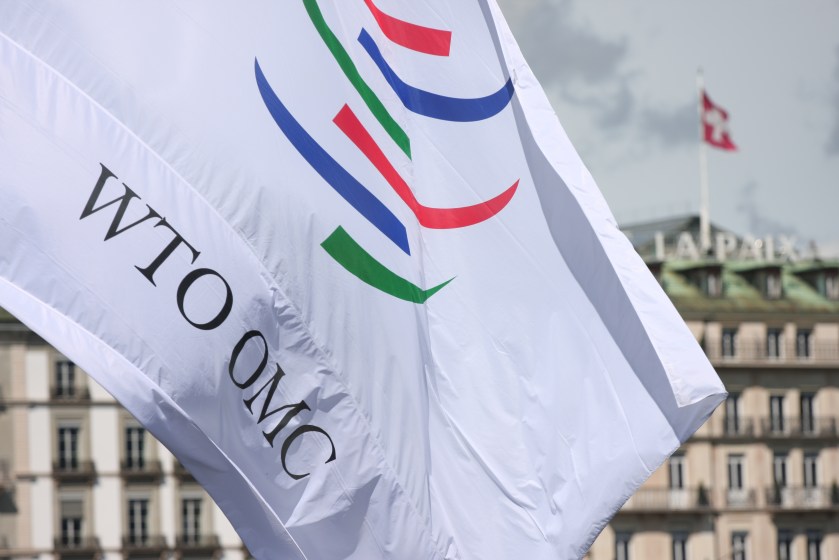
Image credit: WTO Public Forum 2010 by World Trade Organization/ Flickr, license: CC BY-SA 2.0.
During the May 20 inauguration ceremony, President Lai announced that Taiwan has officially submitted an application to join the Comprehensive and Progressive Agreement for Trans-Pacific Partnership (CPTPP) and will “continue to actively engage in regional economic integration.” In his presentation, he promised his fellow citizens a three-part approach to advance Taiwan’s development, focusing on assisting Taiwanese businesses in expanding their global presence and markets. President Lai aims to actively seek bilateral investment agreements with democratic nations across the globe and enhance trade relations, aligning with the goals of former president Tsai, which was the New Southbound Policy (NSP). The article aims to present my viewpoint on showcasing the World Trade Organization (WTO) as the fundamental economic pathway for acceptance into the CPTPP by its member countries.
The WTO, established in 1995, oversees and enforces trade regulations globally. Taiwan joined in 2002 and has actively participated in negotiations to reduce trade barriers, establish rules, and enhance trade knowledge. Taiwan’s active role in the WTO, including the successful eradication of trade obstacles and the enhancement of economic ties with other member countries, is a testament to its commitment to global trade. As one of the top 20 global trading economies, Taiwan must reassess its trade policies every five years and participate in Trade Policy Review meetings to understand member countries’ trade policies and expand its industries’ global business prospects.
The CPTPP is a regional free trade agreement involving 12 countries, including Japan, contributing 15% of the global GDP. Taiwan’s trade value is 20% of the CPTPP. China submitted its application for membership in 2021 before Taiwan, but both are pending. The agreement requires countries to reduce tariffs, open services, and investment markets, and adhere to competition, intellectual property rights, and foreign company protections. China’s market size and resources significantly impact the members, and it may use political means to prevent Taiwan from joining. In 2021, the New Zealand Ministry of Foreign Affairs and Trade expressed its support for Taiwan’s application to join the CPTPP, stating that Taiwan meets all the necessary criteria.
When analysing Taiwan’s actions in the WTO, it becomes evident that Taiwan is dedicated to creating a thorough trade strategy that fosters cooperation with other members and adapts its policies to match the present circumstances. Taiwan has made amendments to the Dispute Settlement Understanding (DSU) in order to achieve a comprehensive interpretation of the WTO regulations and trade obligations. Taiwan also actively engages in the governance of the WTO, arguing for equitable government procurement practices and implementing time restrictions for countries being responded to. Taiwan demonstrates its willingness to conform to the standards of the CPTPP by undertaking a systematic review of its trade policies. The Taiwanese government conducted a comprehensive evaluation and revised 11 laws to align with the commitments of the CPTPP. These adjustments were designed to ensure compliance with various aspects of the CPTPP, such as intellectual property rights and environmental regulations. Put simply, Taiwan has made significant efforts in formulating trade policies for the WTO to display its advanced economy and diverse collaborations with other WTO members.
Moreover, Taiwan has robust partnerships and significant bilateral investments with substantial members of the WTO. I want to highlight the cases of Japan, Canada, and the UK here.
Japan and Taiwan are fostering bilateral cooperation through the Japan-Taiwan Exchange Association Taipei Office and their memberships in the WTO, which promotes diverse trade and economic activities. Former President Tsai highlighted the resemblance between Japan and Taiwan in terms of familial ties, emphasising the importance of political resilience and meaningful human contacts in TAIPEI this year. Despite geopolitical and economic concerns, the alliance is anticipated to persist for an extended period, demonstrating the endurance of both nations in successfully handling challenges. The bilateral trade between Japan and Taiwan amounted to a substantial 75.7 billion US dollars last year. Additionally, the supply chain was mutually advantageous, exemplified by the TSMC’s Kumamoto facility on February 24. If feasible, Taiwan can extend an invitation to Japan with comprehensive investments, thus strengthening their relationship and increasing the likelihood of Japan’s support for Taiwan’s inclusion in the CPTPP.
Canada is currently hosting the CPTPP this year. Canada is a member of the WTO and has a bilateral trading relationship with Taiwan. Reflecting on the previous year, the Canadian Trade Office in Taipei and the Taipei Economic and Cultural Office in Ottawa entered a foreign investment promotion and protection arrangement, indicating that the two relationships have become stronger than before. Taiwan plays a significant role as a regional ally in Canada’s Indo-Pacific Strategy. The framework seeks to establish enduring and varied trade relationships with dependable partners to reduce the impact of supply chain interruptions and enhance adaptability. From this perspective, Taiwan is a reliable ally for Canada. Moreover, it is a favourable period to secure Canada’s support for Taiwan’s accession to the CPTPP, given the closer relationship with Canada than ever before.
Furthermore, Taiwan benefits from assistance from the United Kingdom. During a debate in the House of Lords on July 14 2020, the United Kingdom reaffirmed its stance on Taiwan. The statement highlights that it lacks official diplomatic connections with Taiwan but instead maintains a robust informal association mainly focused on trade, education, and culture. As a member of the WTO, the United Kingdom is familiar with Taiwan’s strong economic strength and may be willing to support Taiwan’s entry into the CPTPP. The United Kingdom’s entry into the CPTPP presents many advantages for both businesses and consumers. The factors include enhancing ties with affluent economies, penetrating untapped markets, implementing advanced digital regulations, lowering tariffs, expanding supply chains, creating fresh export prospects, ensuring economic stability, and fostering investment. Taiwan has a promising possibility of joining the CPTPP due to the UK’s existing membership and strong ties with Taiwan. From my perspective, it would be advantageous for the UK to enhance its commercial and investment connections with Taiwan following Taiwan’s admission to the CPTPP, in addition to participating in the WTO.
Taiwan has encountered significant challenges due to China’s hostility to its participation in the CPTPP. However, Taiwan has made remarkable advancements and demonstrated a willingness to adapt its trade regulations to align with international agreements, thereby seeking support for its inclusion in the CPTPP. Taiwan has also made diligent efforts to participate in informal negotiations with the 11 members of the CPTPP, as stipulated in Article 2.2 of the current CPTPP Accession Process, which indicates the steps applicants must undertake to attain membership. To date, Taiwan has actively participated in direct discussions with influential figures in the CPTPP member countries that are more receptive to Taiwan’s admission, such as Japan and Canada. In addition to this, along with the unstable geopolitical issue of China interfering with its closing countries, Japan must seek another channel of not being dependent on China. In other words, it gives Taiwan a better chance of being valued by Japan. Canada’s hosting of the CPTPP this year offers Taiwan a noteworthy opportunity to become a member of the CPTPP, owing to its strong relations in other domains. Taiwan is also eager to engage in a transparent and sincere dialogue concerning further economic collaboration with the UK in the CPTPP. This interest stems from the fact that both the UK and Taiwan are members of the WTO to support Taiwan’s membership in the CPTPP.
Ming-Cheng, Li is an MA in International Security graduated-student at National Defence University. Her research concentrates on Foreign Policy and Human Security.
 Taiwan Insight