
Written by Bonnie, Yushih Liao.
Image credit: IMG_1677 by rafm0913/ Flickr, license: CC BY-NC-SA 4.0.
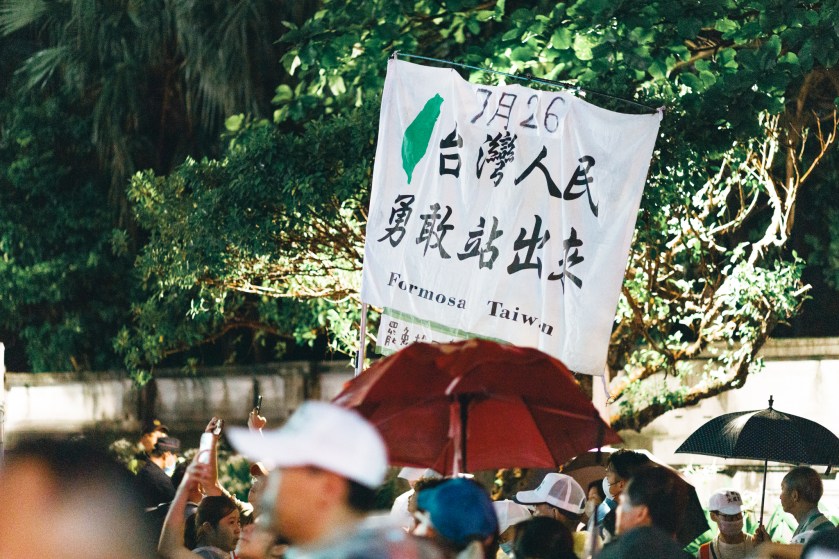
Taiwan’s unprecedented “Great Recall” movement in 2025—targeting 32 legislators, nearly one-fifth of the Legislative Yuan—marked a significant milestone in the island’s constitutional history. While the ultimate results may not have shifted parliamentary power, the campaign’s institutional impact, social effects, and geopolitical implications highlight a crucial inflexion point in Taiwan’s ongoing democratic development.
Deepening Democratic Mechanisms and Reviving Accountability
For years, Taiwan’s constitutionally mandated recall system was largely symbolic. High thresholds and organisational barriers hamstrung it. This recent wave of recall attempts, however, broke the mould. It signalled a rising civic consciousness and a demand for ongoing accountability between—not just at—quadrennial elections. Citizens deployed constitutional tools in new and intriguing mid-term ways to register dissatisfaction with lawmakers’ behaviour, particularly actions perceived as undemocratic or out of step with the national interest. In 2025, citizens stretched mid-term accountability to its lawful limits: they synchronised multi-district recall filings to create national leverage; used civic-tech (QR-coded forms, bots, dashboards) to reduce signature errors and track progress; tied recalls to documented conduct via open-source voting scorecards and FOI requests; kept the process clean with micro-donation ledgers, ‘signature clinics,’ and volunteer observer corps; and calibrated media roll-outs or negotiated concessions so that the threat of recall secured procedural corrections even where removal failed.
Targeting primarily KMT and allied opposition legislators, the movement wasn’t merely about party rivalry—it was a response to citizens’ unhappiness with parliamentary dysfunction: blocking budgets, ousting the premier, and pushing unilateral power grabs. It signalled a shift in Taiwanese electoral culture, from candidate-based to behaviour-based judgments of the legislator’s actions.
The recall also became a form of democratic self-defence against Chinese influence. Lawmakers perceived as aligned with Beijing—whether through opposing national defence programmes or supporting United Front narratives—faced electoral reckoning for the first time. The message was clear: in the eyes of the Taiwanese citizenry, sovereignty and democracy are not negotiable.
Accelerating Polarisation Through Identity, Not Party
More significant than the party dynamics was the growing polarisation rooted in national identity. Supporters and opponents of the recalls were not neatly divided along partisan lines. Instead, they split on whether they accepted pro-China political stances, supported reforms (such as pension reform, judicial reform, etc.), or prioritised national sovereignty. This kind of identity-based polarisation, unlike Western class- or culture-driven divides, is more existential—centred on Taiwan’s future national direction and security.
The media landscape amplified this split. Disinformation disseminated from China, echo chambers on social platforms, and highly charged language from partisan media created an “us vs. them” narrative. Appeals to the populace became moral: “If you support this legislator, you don’t love Taiwan.” This black-and-white framing pushed out moderates and discouraged centrist voter participation—heightening the malignant influence of polarised, mobilised camps.
Shifting the Balance of Power in Governance
Although the recall did not alter the legislative majority, its political effects are already visible. Lawmakers across parties have become more cautious—especially on national defence, China, and constitutional reform—since no one wants to be the next target of a grassroots campaign that could imperil a seat.
Meanwhile, the legislature’s moral authority has been dented. If a significant share of lawmakers is seen as illegitimate by the public, the Legislative Yuan risks losing the institutional credibility on which its power rests. The first recall’s failure is not a vote of confidence; it reflects high thresholds and turnout hurdles. Public judgment is shifting from legal authority to moral legitimacy: accusations of procedural overreach and chaotic floor tactics are eroding trust. Even without a single seat changing hands, credibility suffers if a critical slice of voters concludes incumbents are undeserving.
This assessment rests on three considerations. First, legal survival is not the same as moral endorsement: clearing a recall threshold says only that removal did not occur, not that the public approves. Second, the design of the recall—its stringent turnout and signature requirements—can mask real discontent that surfaces in polling, mobilisations, and subsequent elections. Third, legitimacy is shaped as much by process as by outcomes; when parliamentary procedure appears manipulated or chaotic, citizens discount formal results and downgrade the institution itself.
In the wake of the failed recall, the denting of the Legislative Yuan’s moral authority, and continued procedural deadlock, a power vacuum has emerged that allows the executive to take the lead. Recent actions by the Ministry of the Interior show how administrative actors can interpret—and, when necessary, re-interpret—laws to fill the governance gap left by legislative dysfunction, at times to the polity’s detriment. Rather than dictating outcomes, Interior Minister Liu Shih-fang has used executive tools to stabilise the arena and check Blue–White overreach. She tightened public-order measures—bolstering protection for the Judicial Yuan and enforcing the Assembly and Parade Act—and, following the Constitutional Court’s 2025 ruling, instructed MOI agencies to keep testimony and data disclosure strictly within statutory limits. The Ministry has also vetted legislators’ nationality qualifications, advanced transparency in political finance and recall campaigns, acted against PRC-linked influence operations, and standardised policing of protests. Grounded in court rulings and existing law, these steps safeguard procedure and administrative neutrality, curbing legislative excess without crossing executive red lines.
Geopolitical Reflections: China’s Shadow on a Domestic Battlefield
Any recall is a high-risk but necessary stress test of democracy. It challenges the strength of institutional design, the mobilisation capacity of civil society, and the ability of a divided society to maintain dialogue and pursue reform. The fact that so many citizens stepped forward to support this recall shows that it wasn’t driven by partisan hatred, but by a shared belief: only by constantly testing the system’s limits and strengthening mechanisms of responsibility and accountability can Taiwan’s democracy remain strong under the shadow of authoritarianism.
Beijing watched the results closely. A successful recall would have shown that Taiwan’s electorate can reject unification-leaning politicians and defend democratic integrity; a failure, by contrast, gives China grounds to allege the DPP is abusing democratic mechanisms for partisan gain—a line state media is likely to amplify.
Has that happened since the vote? Yes. Beijing has framed the failed recall as DPP “abuse.” The response is straightforward: Taiwan’s recall process is citizen-initiated, administered by an independent election commission, and deliberately difficult to pass to deter gamesmanship. The result shows institutions—not any party—prevail. We respect the outcome and return to governance; Taiwan’s democracy is judged by voters and the law, not propaganda.
For the international community, especially the U.S. and its democratic allies, this episode is a double-edged sword. On the one hand, it signals that Taiwan’s civic society remains active and capable of countering authoritarian influence. On the other hand, if extreme polarisation leads to instability, outsiders may worry whether Taiwan’s democracy is veering toward populism and internal gridlock.
Conclusion: A Necessary Test for a Maturing Democracy
From a scholarly perspective, I support the recall effort not out of partisan loyalty, but because I believe democracy must be stress-tested. Institutions must allow for mid-term accountability to their citizens. When representatives betray their mandate—by undermining defence, promoting foreign influence, or eroding checks and balances—citizens must have recourse.
Of course, recalls carry risks: deepening divides, fuelling populism, and weakening institutional trust. But if managed well—with legal reforms and more inclusive civic education—they can also strengthen Taiwan’s resilience.
This recall was not the end—it was a beginning. The next challenge is not just winning or losing by-elections. It’s whether Taiwan can channel this political awakening into sustainable democratic renewal, reform, and readiness in the face of ongoing authoritarian threats.
Dr. Bonnie Yushih Liao is an assistant professor in international relations and political communication, specialising in East Asian diplomacy, alliance politics, and democratic resilience. She writes regularly on cross-strait relations and Indo-Pacific strategy.
This article was published as part of a special issue on ‘Recall elections: Practice or problem for Taiwan’s democracy?‘.
 Taiwan Insight