
Written by Annabel Simpson.
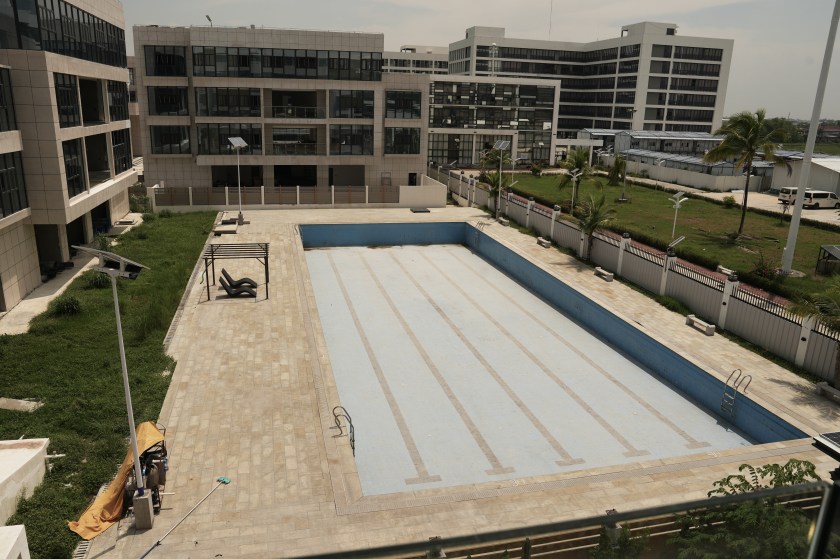
Image credit: Raided gang-run internet ‘scam farm’ in Bamban, north of Manila, the Philippines (53832319615) by United Nations Office on Drugs and Crime/ Wikimedia Commons, license: CC BY 2.0.
Over the summer of 2022, reports of people being trafficked from overseas and being forced to work scamming others began to make their way into Western media. Whilst they also contain a number of willing workers, these so-called “scam compounds” have since garnered an international reputation for their violence and brutality, with trafficked victims coming from at least 66 different countries. In March of 2022, the Taiwanese police reportedly received their first case involving a Taiwanese victim, but others state that there have been reports of Taiwanese victims trapped in these compounds from as early as 2021. These compounds are predominantly located in Southeast Asian countries and particularly in Cambodia, a country with a One China Policy so strict that flying the Taiwanese flag is banned. As a result, Taiwan is unable to maintain an unofficial diplomatic presence in the country. This begs the question: how does Taiwan’s lack of international recognition impact the assistance it can provide to Taiwanese victims trapped in these compounds? In other words, does Taiwan’s lack of international recognition limit the government’s ability to intervene? Does it create a gap that civil society actors have to fill? And what about other actors, such as the media?
Impacts of Taiwan’s status
For decades, Taiwan has faced a number of obstacles as a result of its lack of international recognition, with one of the most notable examples being its inability to join international organisations such as the UN and INTERPOL. Despite originally joining INTERPOL in 1961, Taiwan was forced out of the organisation in the 1980s in order for China to be able to join, leaving it now excluded from the global information chain. As a result of this exclusion, Taiwanese law enforcement is ineligible to receive INTERPOL notices, including those about the scam compounds. Taiwan is also unable to access the organisation’s analysis reports, as access is reserved solely for police from INTERPOL member countries. So far, the only thing that experts and institutions can agree upon is that international cooperation is the only solution to this crisis, given the mobility of the compounds. One can thus wonder whether such a response will be effective if you exclude Taiwan, whose nationals can be found as both perpetrators and victims in this crisis.
In addition to the challenges stemming from Taiwan’s exclusion from international institutions, it also faces challenges created by China’s influence in the region. As a result of its economic and political influence in countries such as Cambodia and Laos, Taiwan does not have any form of diplomatic presence in these countries, official or unofficial. For example, it is the Taiwanese representative office in Ho Chih Minh City, Vietnam, which has jurisdiction over Taiwanese diplomatic issues in Cambodia. When the father of a Taiwanese victim travelled to Cambodia with a document from this office asking local law enforcement for assistance, however, this document was ignored, and photos of the father and members of NGOs accompanying him were sent to the compound in which his son was trapped, indicating that this office is not taken seriously in Cambodia.
Nevertheless, Taiwan is not as excluded from the international system as it may first appear. According to my interviewees, Taiwan is able to use the same Cambodian government channel to report cases of Taiwanese victims despite the country not being recognised. The efficiency of this channel, however, is questionable, given the widespread corruption in Cambodia and the government’s limited success in finding these reported victims – among the cases reported between 2024 and early 2025 involving international victims, only around 45.7% were found.
Reliance on civil society
Despite this crisis crossing borders with relative ease, the reliance on civil society actors (such as NGOs, business associations, and other groups not associated with a government) can vary based on the country in which the victims find themselves. In the case of Cambodian compounds, the role of civil society actors is debated: with some of my interviewees arguing that there are no rescues where civil society is not involved, whilst others argued that the formal system for reporting these cases works.
In the case of Myanmar-based compounds, one could argue that it is the local political context that complicates government efforts more than an issue directly related to Taiwan’s lack of recognition, as the military junta, which took control of the country following the 2021 coup, does not have control over the entirety of the country’s territory. As these compounds are largely located in areas under militia control and not that of the government, the Burmese government channels are unable to tackle this issue. According to my interviewees, this then means that the Taiwanese response has to rely more on civil society actors, as they may be able to directly contact and even negotiate with those running the compounds.
In addition to their role in rescue efforts, NGOs like Humanity Research Consultancy (HRC), Global Anti-Scam Organisation (GASO) and Amnesty International also play an important role in raising awareness of this crisis. One clear example of this is the extensive number of reports that have been published on the topic of these compounds and testimonies from human trafficking victims trapped inside them. Meanwhile, the Taiwanese government is also making an effort to boost citizens’ awareness of these job scams. An example of this is the large number of fake job/human trafficking awareness posters found at Taoyuan International Airport in the lead-up to summer.
As a result, the role of civil society actors is not only intertwined with that of the Taiwanese government, with civil society taking on a larger role in areas that the government cannot access, but also overlaps in other areas, such as raising awareness on this issue.
The role of the media
Another important actor in this crisis is the media, as it has an impact on how other civil society actors and the government can fulfil their roles in handling this crisis both positively and negatively.
One of the most crucial impacts the media has had on this crisis is bringing it into the international spotlight in the first place, as it is the international attention and pressure which forced the Cambodian government to face the issue. It has also been reported that this media attention can be used by NGOs in negotiations for the release of victims, as, if they were to go to the press with this story, there could be another chain reaction of international outcry, forcing the release of many more workers trapped in the compounds. Journalists and social media personalities have also played a key role in spreading awareness of this issue and sharing insights into what it is like for those trapped in the compounds.
The media’s involvement, however, is not purely positive, as this international attention can be a double-edged sword. According to one of my interviewees, the fearmongering created by the extensive media coverage of the crisis has negatively impacted Taiwan’s relationship with Thailand. A main reason for this is Thailand’s unwilling role as a transit hub for human trafficking, and the nation’s economy being reliant on the tourism industry. This being said, media stunts have not helped either, with a prime example being the Goodnight Chicken Incident from 2024. This incident involved a Taiwanese YouTuber known online as Goodnight Chicken faking his kidnapping in Sihanoukville, a town renowned for hosting scam compounds. Not only did this incident discredit the testimonies of victims, but, in the eyes of my interviewees, it also gave the Cambodian government an opportunity to deny the true extent of this crisis.
In conclusion, Taiwan faces many obstacles to assisting its nationals trapped in Southeast Asian scam compounds as a result of its exclusion from international institutions and China’s influence in the region. This, however, does not mean that it has been unable to assist Taiwanese victims or that government actors can only focus on spreading awareness. As a result of these obstacles, the government and civil society’s responses appear to have become intertwined. Furthermore, the media’s focus on these compounds does not come without its own challenges, adding additional strain to the already limited international cooperation.
Annabel Simpson is an MA Taiwan Studies student at SOAS, University of London, whose research focuses on the human impacts of the lack of international recognition of Taiwan.
This article was published as part of a special issue on ‘SOAS Taiwan Studies Summer School 2025‘.
 Taiwan Insight
.jpg)