
Written by Aleksandrs Gross.
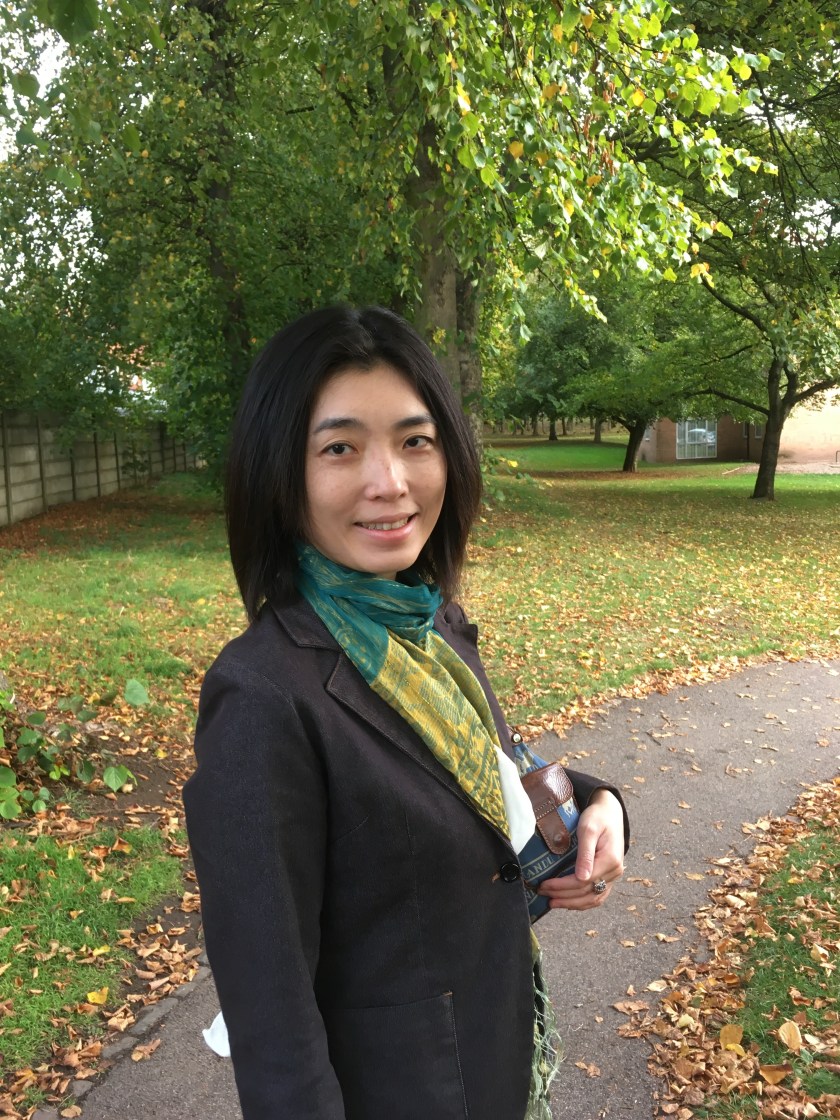
This article is based on interviews with Dr Chun-yi Lee.
Image credit: provided by the interviewee.
Chun-yi Lee’s path into Taiwan Studies was not the result of a deliberate career plan, but of following research questions that matched her interests and skills. Fascinated by the relationship between political and economic power—particularly how business actors influence political decision-making in China—she initially planned to study emerging ASEAN–China trade agreements during her PhD in the early 2000s. Advised to focus on a topic better suited to her Mandarin abilities, she redirected her research to Taiwanese businesspeople investing in China, a community increasingly seen at the time as bridging cross-strait relations.
In her PhD work and later as the director of the Taiwan Research Hub, Chun-yi would combine her academic training in political science with her personal familiarity with Taiwan. Though she was from Taiwan, she chose to study the island from the outside – within a specific academic discipline – rather than studying Taiwan from within, as a field in and of itself.
Such an approach also characterises how Chun-yi conceives of the field of Taiwan Studies more broadly: as one that has value insofar as it can contribute to existing research in other disciplines.
(as regards) how I feel as a Taiwanese scholar doing Taiwan Studies: I don’t really think of myself as “doing Taiwan Studies.” As I said before, I do research on political economy, specifically on the semiconductor industry in Taiwan (..) I want to bring Taiwan out into broader conversations, rather than simply entering Taiwan as an object of study. (..)
Chun-yi mentions how the trend of seeing Taiwan Studies as a field that has value in and of itself has emerged rather recently. While she sees the value of this approach, as the director of the Taiwan Research Hub, she positions Taiwan in a more interdisciplinary context to raise its appeal across different disciplines beyond area studies.
If Taiwan Studies becomes a comfortable bubble, we risk missing how Taiwan connects to broader scholarly debates. Taiwan appears across many disciplines—that’s what excites me. (..) Disciplinary grounding provides depth and perspective.
In other words, an interdisciplinary positioning significantly increases the scholarly appeal of Taiwan Studies: scholars of vastly different disciplines can see how Taiwan offers a fascinating case study for their particular research interests.
Chun-yi Lee became director of the Taiwan Studies Programme at Nottingham University in response to unexpected – and still not fully understood – developments at the university. The School of Contemporary Chinese Studies, which also housed the Taiwan Studies Programme, was suddenly dissolved in 2016, and Chun-yi, along with the Taiwan Studies Programme, were integrated into the School of Politics. The then director of the programme, Steve Tsang, moved to SOAS, which meant that Chun-yi, the deputy director at the time, became the head of the programme.
Given how niche a topic Taiwan is, the challenge of finding an audience for Taiwan Studies, within the new institutional framework, became a question of survival for the hub. If there were no audience, the programme would be shut down, as funding, provided by Taiwan’s Ministry of Foreign Affairs, depended on the hub’s ability to facilitate wider engagement with Taiwan.
Attracting and Keeping Audiences
Chun-yi had to find ways to rebrand the Taiwan Studies Programme to appeal to audiences outside of Asia Studies. What made the challenge more difficult was the location of the hub. Nottingham may be a strong, highly reputable centre of research at the national level in the UK, but on a global level, topics within Taiwan Studies are considered quite specialised. Topics that may find an audience in London – a much more globally integrated centre of research – would fail to elicit interest in Nottingham.
At the same time, while adjusting for local audiences, the Hub had to find ways to maintain the more specialised, international following it had acquired for its pioneering work on niche topics within Taiwan Studies. This was a complex problem, as what attracted local audiences was often at great odds with the interests of the Hub’s Taiwan-specialised followers.
To resolve this complex problem, the Taiwan Studies Hub diversified its work by employing a three-pronged approach, each of which was designed to attract a different audience. The three-pronged approach consisted of 1) seminars, 2) output-focused conferences, and 3) an online publication.
To attract local audiences that may not be familiar with Taiwan, the hub organises seminars. The topics of these seminars are based on research interests that overlap with other departments at the University of Nottingham. Past seminars have focused on issues such as LGBTQ rights, nuclear power, and undersea cable security.
To maintain its Taiwan-specialised academic audience, the hub organises conferences annually, which are aimed at producing an edited volume or special journal issue. In organising these conferences, the hub works with other universities and often involves scholars outside of Taiwan Studies, whose disciplines, when applied to Taiwan-related issues, provide unique insights.
Besides the conferences, the hub has also begun working with Taiwan Studies scholars from British Universities that have Taiwan studies programmes, for instance SOAS and others, to annually organise a joint PhD colloquium on Taiwan Studies.
The idea was that PhD candidates working on Taiwan—regardless of discipline—would be welcome. It doesn’t matter whether you come from political science, cultural studies, sociology, or another field. We come together to give young scholars a space to present their research, and then senior scholars provide broader, overarching feedback and guidance.
Thirdly, the hub also seeks to attract a wider international audience – not only academics, but also those working in think tanks, journalists, or simply people interested in Taiwan. To attract such an audience, Taiwan Insight, an online magazine, was established.
Taiwan Insight, established in September 2017, has been the newest addition to the Taiwan Research Hub. When it was started, there was no clear sense of who would be interested in writing or reading about Taiwan outside of specialised scholarly circles.
I remember talking to my colleague, who joked, saying, “Who would write about Taiwan as a blog?” And they were right—very few people wanted to contribute to a newborn Taiwan Insight back then. Taiwan Insight started with maybe ten views per month for three articles. It was very hard. I kept wondering whether I should continue. But I did, and now Taiwan Insight is something people interested in Taiwan regularly read. Looking back, it was a good decision, but at the time, I had no idea if it would succeed.
The journal gradually gained momentum and now publishes several special issues each month, attracts more than 10,000 visitors per month and has a steadily growing readership. Readers come from all over the globe, with most readers coming from the United States, Taiwan and the United Kingdom. New contributors reach out to the journal every month and include academics, journalists, PhD students and more.
What makes the voice of Taiwan Insight unique is the breadth of topics its publications feature. There are articles discussing issues that are most salient in the current news cycle. There are also articles focusing on specialised topics that traditional news media wouldn’t cover. This is because Taiwan Insight is neither strictly news media nor an academic journal, but sits in between. It is analytically rigorous while remaining accessible and jargon-free.
We’re not journalists, strictly speaking. We’re more like academic observers—perhaps semi-academic observers—but with a strong analytical grounding. That’s why our topics vary so much.
The sheer variety of topics Taiwan Insight deals with reflects Chun-yi’s vision. Taiwan Insight exists to present the complexity of Taiwan rather than serve the interests of a political party or ideology. What the paper covers depends on the rigour and interests of its contributors.
I tell our editors that while I’m aware of major trends—such as US elections, recall campaigns, or the Bluebird Movement—and I may sometimes ask contributors to address those issues, the guiding principle of Taiwan Insight is not to be overshadowed by them.
Taiwan has many fascinating dimensions beyond geopolitics, US–China–Taiwan relations, or even social movements, which are already quite mainstream. With all due respect to those fields, there are so many other aspects of Taiwan that deserve attention. (..)
Some submissions genuinely surprise me. I encounter topics I’ve never considered before, such as psychoanalysis and medicine, or martial arts.
Because I’m the first reader of every article before it goes online, each piece feels like a discovery. Very often, I read something and think, “Wow, this is really interesting. (..)
That’s what amazes me about Taiwan Insight: the sheer diversity of niche topics. I really appreciate that many contributors now approach us directly, asking whether we’d be interested in their ideas. I see it as an honour that Taiwan Insight can provide a platform for these voices—to be read, heard, and seen.
As regards what motivates Chun-yi in her role as the director of the Taiwan Research Hub, her main goal is to raise awareness of Taiwan and, by raising awareness, to improve its standing internationally.
My personal vision for Taiwan Studies has two parts. First, to disseminate accessible knowledge to the public—that’s what Taiwan Insight does. Second, to embed Taiwan-related research firmly within academic disciplines, through conferences and peer-reviewed publications.
Chun-yi does not see herself as a representative of Taiwan, as she believes that the variety and complexity of the country cannot be reduced to the perspective of one individual. Rather, she sees herself as a communicator, sharing what she knows, and as a facilitator, encouraging others to explore further.
In her role as communicator, Chun-yi doesn’t want to create an image of Taiwan that is one-sided, or that serves the interests of any particular group of people, rather:
My effort has always been to show Taiwan from all perspectives—good and bad. Then you, as the reader or audience, can decide whether Taiwan is a place you find interesting or not. My mission is simply to introduce Taiwan. I don’t mean to say Taiwan is all good or all rosy, because it’s not.
Even though Chun-yi misses Taiwan deeply – after all, family and valuable academic contacts remain there – it is in Europe, in the context of Nottingham University’s Taiwan Research Hub, that she sees most potential for her role as communicator of Taiwan to international audiences.
Aleksandrs Gross is a freelance journalist focusing on the grassroots development of Taiwanese identity. He is particularly interested in the development of Taiwanese civic society, especially social movements, and how younger generations of Taiwanese respond to the unique political, identity-related and economic challenges of Taiwan. Find more of his writing on New Bloom and his Substack Identity Island.
This article was published as part of a special issue on ‘Taiwan Studies Interviews: What can we learn?’.
 Taiwan Insight