Energy transition in Taiwan: Generating electricity with love, or inclusive public engagement?

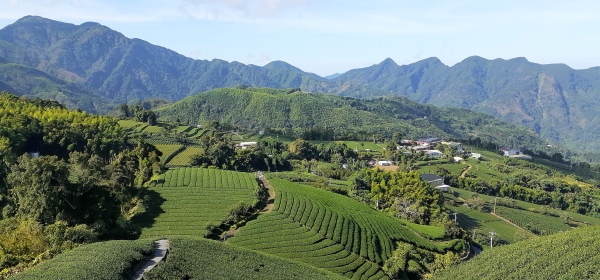
Written by Anthony H. F. Li. A stable electricity supply is vital for national security, economic development as well as the everyday lives of citizens in Taiwan. Since the Democratic Progressive Party (DPP) pursued an ambitious policy to decarbonise the electricity sector with renewable energies and to phase out nuclear energy by 2025, the discussion on whether Taiwan is facing a shortage of electricity amidst the process of energy transition emerges on the social agenda from time to time.

The Development of Taiwan Studies at Roma Tre University

Written by Rosa Lombardi and Silvia Schiavi. Since 2012, Roma Tre University carried out a series of activities to promote the knowledge and dissemination of Taiwanese culture and literature, contributing to the development of Taiwan studies in Italy. Before that, there was very little or no space devoted to Taiwanese literature in Italian universities, and courses in modern and contemporary Chinese literature mainly still deal with Chinese mainland literary production. Given this scarcity of studies on Taiwan in Italy, Prof. Rosa Lombardi and Dr Silvia Schiavi have promoted and implemented a series of events to raise awareness about the island and foster a better understanding of the Sinophone world through the introduction of Taiwan’s rich culture, history and literature to the students and the general public.

Taiwan’s Tibetan Buddhist Monk Dilemma and its Unintended Consequences

Written by Dolma Tsering. Taiwan is known as the beacon of democracy, and its competitive democratic principles and practices distinguish it from authoritarian China. Advocacy for promoting religious freedom is one of the important tasks undertaken by the government. For instance, as a part of this advocacy, in 2018, President Tsa Ing-Wen announced that Taiwan would donate US$200,000 per year for five years to the United States’ International Religious Freedom Fund as a part of Taiwan’s contribution to advancing global religious freedom. The government, annually in association with the American Institute in Taiwan (AIT), hosts an international forum for religious freedom to establish a more inclusive society in Taiwan. However, on 6th June 2023, more than 112 Tibetan Buddhist centres in Taiwan joined a press conference which called for the government’s unfair treatment of visa restrictions for Tibetan Buddhist monks in Taiwan and therefore demanded an amendment to the existing visa restriction.

The difficulty of being Hou

Written by Jonathan Sullivan. The KMT’s stellar showing in local elections last November had many in the party dreaming of a return to power in the January 2024 national elections. As has happened in every previous election following a two-term president in Taiwan, a change of party in power (政黨輪替) looked a likely outcome as the DPP haemorrhaged city mayorships and town council seats. In hypothetical polling match-ups at the time, re-elected Xinbei Mayor Hou You-yi handily beat VP Lai Ching-te. Those two and former Taipei Mayor Ko Wen-je have now been formally nominated by their parties to compete for the ROC presidency.

The Fluidity of the Presidential Field

Written by Jonathan Sullivan. Although the main parties have nominated their Presidential candidates, the composition of the field remains fluid and unsettled. On the DPP side, current VP Lai Ching-te long ago locked down the nomination unopposed, and as a continuity candidate enjoying the benefits of incumbency, his campaigning thus far has been relatively smooth. However, Lai’s responsibility for answering any gripes with government policy over the last eight years and the stubborn ceiling to his poll numbers over the last few months suggest substantial challenges to come. But for now, the main uncertainties and drama are on the opposing side of the fence.

Taiwan’s 2024 presidential election candidates: What will Hou or Lai’s election mean for tensions across the Taiwan Strait?

Written by Corey Lee Bell. Taiwan’s main opposition party, the Beijing-friendly Kuomintang (KMT), recently selected its candidate for the 2024 presidential election. With the main competitors for Taiwan’s top job essentially locked in, each has been interrogated on their policies on cross-strait relations in recent weeks. With tensions high across the Taiwan Strait, and between Beijing and Washington, what each candidate stands for could have profound ramifications for, and perhaps even beyond, the Indo-Pacific region.

Progress or Not? An Assessment of the Significance of Liz Truss’ Taipei Visit

Written by Milo Hsieh and Wei Azim Hung. At a time when Downing Street seeks to recalibrate its relationship with Beijing, Liz Truss’ Taipei trip has raised eyebrows and controversy in London as well as provoked strong condemnation from Beijing. For Taiwan, the trip shows that yet another former official sees Taiwan as an important part of their agenda as world leaders increasingly make Taiwan a priority destination.

Provocations: Taiwan Amidst Trust, Truss and the G7

Written by Ian Inkster. Liz Truss led her charge into Taiwan on 16 May with the notion of Britain backing a Taiwan move to join the Pacific trade block, the CPTPP, against the present neutral position of the British Tory government under Rishi Sunak. This immediately provoked the Chinese to label her ‘sinister’. The point being that this was merely a Trussian wedge into her major provocation, that there is a ‘fatalism in the free world that somehow a Chinese takeover of Taiwan is inevitable’. Dangerously, Truss seems to have failed utterly (and almost certainly deliberately) to distinguish commercial and political, even military, aggressions, and to that extent, the danger of such an intervention should, of course, be noted.

Liz Truss: Fighting for Taiwan or Personal Credibility?

Written by John Burn. It was already clear from her recent speech to conservative think tank The Heritage Foundation in Washington DC that Liz Truss – the UK’s shortest-serving Prime Minister of all time – is trying to develop her image beyond the country’s shores. Being responsible for one of the most disastrous economic policy outlines in the UK’s history in her mini-budget upon coming to office, she lost public confidence and the confidence of the Conservative Party in very short order, resulting in her dismissal after 44 days in office.

Going for Low-Hanging Fruit, Deliberate Strategy, or Path Dependency?: Liz Truss’ Visit to Taiwan

Written by Brian Hioe. Former UK prime minister Liz Truss arrived in Taiwan on May 16th for a five-day visit. Truss’ main purpose in visiting was to give a speech at the invitation of the Prospect Foundation, a think tank close to the Tsai administration. In addition, Truss met with President Tsai Ing-wen, Vice President William Lai, and other high-ranking officials.

Truss Visits Taiwan: Worth or Trouble?

Written by Huynh Tam Sang and Phan Van Tim. Liz Truss’s journey is in the limelight as the first ex-British prime minister to set foot in Taiwan nearly thirty years after Margaret Thatcher’s visits in the 1990s. Nonetheless, the worth of Truss’s five-day sojourn is a contentious issue. From one perspective, Truss’s visit is deemed immensely significant, exemplifying the UK’s unwavering backing for Taiwan amidst escalating Chinese pressure, given her enduring advocacy for a democratic Taiwan. But, conversely, others argue that her visit merely inflamed the already high-strung tensions between China and Taiwan.

1 14 15 16 17 18 26