Tibetan Diaspora in Taiwan: Who are They and Why They are Invisible (1)

Written by Dolma Tsering. The government’s official website describes Taiwan as a multicultural society. It further stated that in addition to the dominant Han population, Taiwan is home to aboriginals, Malayo-Polynesian and new immigrants that hailed mainly from China and Southeast Asian countries. The Han population constitutes 95 per cent of the total population, followed by new immigrants that constitute 2.6 per cent and the indigenous population with 2.5 per cent. However, what is missing in this description, in particular and generally in the discourse of immigrants and ethnic diversity in Taiwan, is the Tibetan diaspora.

The gulf that separates Taiwan and China is getting wider (1)

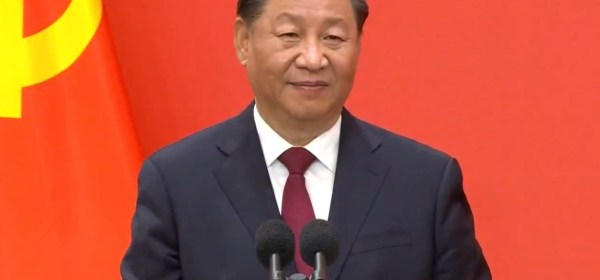
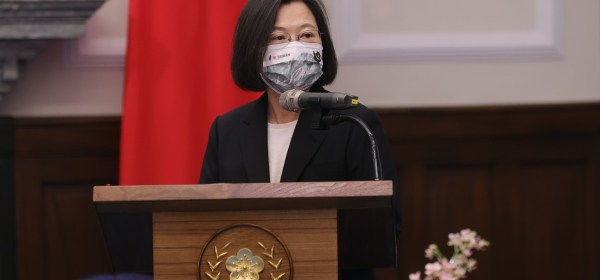
Written by Daniel Jia. The question, then, is why the CCP’s “reunification” agenda faces increasing resistance from Taiwan? The answers are in Xi’s Report and will be even more obvious compared to another speech given by Taiwan’s President Tsai Ing-wen a week earlier at a National Day ceremony on October 10. The following are six takeaways from Xi’s Report that merit a close examination.

Taipei Mayoral Race: For the City or for the Party?

Written by Jonathan Leung. Less than three weeks before the 2022 Taiwanese Local Elections, the limelight is on Taipei City, Taoyuan City, Hsinchu City and Miaoli County. Multiple candidates from different parties running in these constituencies are unprecedented and will surely add uncertainties to the polling results. The first pass-the-post system renders the mayoral campaign a competition between the Chinese Nationalists Party (KMT) and the Democratic Progressive Party (DPP). Yet, the young established New Power Party (NPP) and Taiwan People’s Party (TPP) have both nominated candidates to run for mayoral and magistrate posts and city councillors. Rather than being also-rans, they now stand a decent chance to win. This article examines the case of the Taipei City Mayoral Election, evaluating the differences between the two traditionally dominant parties and the newly established ones.

Taiwan’s 2022 Local Elections: The State of Electoral Campaigns

Written by T.Y. Wang. Taiwan will hold its 2022 local elections on November 26. Dubbed the “9-in-1” elections, voters will select candidates in several races, including mayors of the six special municipalities, 16 county/city magistrates, council members, and heads and representatives of boroughs. Candidates of the ruling Democratic Progressive Party (DPP), the main opposition Nationalist Party (Kuomintang or KMT), and smaller parties, such as the Taiwan People’s Party (TPP) and the New Power Party (NPP), will participate in the elections. The electoral outcomes will have important political implications as they not only determine the fate of candidates running for more than 11,000 positions but also impact the future direction of main political parties, the viability of small parties and the playing field of the country’s 2024 presidential election.

‘Dissertation Gate’, Candidates’ Background and the 2022 Local Elections in Taiwan

Written by Mei-Chuan Wei. The term ‘Dissertation Gate’ has been used by the media and general public to highlight an issue which marked the 2022 local election campaign in Taiwan. It refers to the phenomenon unseen before the mayoral by-election of Kaohsiung City in 2020, when the candidate of the Kuomintang (the KMT) Mei-jhen Li (李眉蓁) was fiercely criticised for plagiarism in her Master’s dissertation. Li publicly apologised for her plagiarism after the university from which she obtained her Master’s decided to revoke her degree. Whether or not plagiarism was the major factor contributing to Li’s failure in the election remains to be proved. Yet negative campaign strategies focusing on candidates’ dissertations, specifically plagiarism, have become increasingly popular among almost all parties since then.

Why Does Education Affect Local Elections in Taiwan?

Written by Yu-tzung Chang. What is more worrisome is that the majority of candidates in this local election have adopted a negative campaign strategy and have not put forward specific policy proposals, which may lead to more confrontation in society in the future. Political polarization has produced a crisis of democracy in Western countries. Traditional political polarization is being replaced by affective polarization, in which partisans are hostile to supporters of other parties and regard them as the main enemy. Taiwan is no exception to these developments. This will have a potentially negative effect on the development of Taiwan’s democracy.

How Europe looks at Taiwan – and how Taiwan fails to send out a clear message

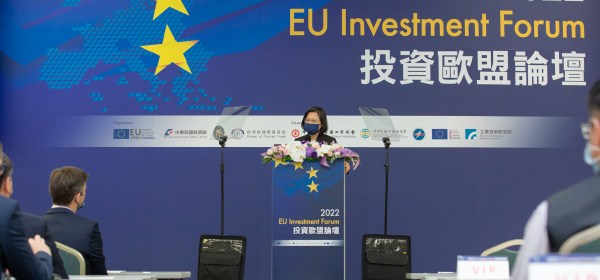
Written by Gunter Schubert. The Taiwanese people and their political representatives must decide if they want to forge a national consensus on their relationship with China and communicate this clearly in Europe and beyond – or if they would rather prefer to adhere to an unclarified stance on their national identity and the concept of ‘unification’, giving in to uncompromising viewpoints and undermining any chances as gaining the lasting support of the countries that cherish democracy and admire their struggle for survival.

Biden Speaks Again: The End of Strategic Ambiguity?

Written by Gerrit van der Wees. The press and think tanks, on their part, need to reassess their understanding of “strategic ambiguity”: they need to come to a clearer understanding of its origins – as reiterated in the quotes from former NSC Director Robert Suettinger’s book – and arrive at the unavoidable conclusion that it does not equate policy. Rather, it is, at best, a mode of operation determining how to calibrate a response. As described above, the policy itself on how to (help) defend Taiwan is laid down clearly in the Taiwan Relations Act.

1 19 20 21 22 23 26