Navigating Geopolitical Turbulence with Taiwan’s Energy Transition Policy 

Written by Yun-Ling Ko and Chia-Wei Chao. Taiwan’s reliance on imported fossil fuels presents a critical energy security vulnerability and makes a transition to renewable energy a vital pathway to greater national resilience. This article argues that developing domestic renewable energy and strategically addressing supply chain dependencies are crucial for Taiwan to enhance its energy and national security in an evolving geopolitical landscape.

Revisiting Research: Indigenous Peoples as Non-State Diplomatic Actors in the Public/Cultural Diplomacy of Taiwan 

Written by Dr Carla Figueira. This article reflects on the 2024 IJTS Open Access Award-winning paper, “Indigenous Peoples as Non-State Diplomatic Actors in the Public/Cultural Diplomacy of Taiwan: A Case Study of Dispossessions: Performative Encounter(s) of Taiwanese Indigenous Contemporary Art.” It highlights the value of engaging with the personal and social contexts shaping research outputs. It celebrates the growing academic focus on Indigenous Peoples and cultural diplomacy, foregrounding Taiwan’s unique position.

The Expansion of Taiwanese Firms and the US-China Trade War: The Subcontractors’ Dilemma in Global Supply Chain Competition 

Written by Lin, Thung-Hong. This article introduces the 2023 IJTS Open Access Award-winning paper, “Subcontractors’ Dilemma: The Expansion of Taiwanese Firms 2002–2015”, and discusses a follow-up study examining how China’s autocratisation under Xi Jinping has impacted Taiwanese firms operating in China through 2022. Together, these studies provide a comprehensive view of the challenges Taiwanese businesses face amid globalisation and shifting geopolitics, offering crucial insights into corporate strategies and government policies.

‘Free China’ in History: A Look Back at Cold War Taiwan’s Anti-Communist Defectors 

Written by Andrew Morris. Reflecting on the 2023 IJTS Open Access Award-winning paper, the author revisits his path toward researching the Cold War-era defections from the PRC to Taiwan—stories once celebrated in Taiwan as “anti-communist righteous warriors.” This article shows how these largely forgotten stories offer a rare insight into a fervent hope once shared by millions in Taiwan.

Reflections on “Finding Meaning in Time and Space: Periodisation and Taiwanese-centric History” 

Written by Evan N. Dawley. The 2022 IJTS Open Access Award-winning paper, “Finding Meaning in Time and Space: Periodisation and Taiwanese-centric History,” challenges the conventional state-centric periodisation of Taiwan’s history by proposing a Taiwanese-centric framework that emphasises social transformation and identity formation. This article reflects on this broader trend in Taiwan-focused publications, its influence on the author’s future work, and the strength of this historical approach to understanding Taiwan on its own terms.

Ontological Entanglements: Indigenous Peoples and the Future of Taiwan  

Written by Scott E. Simon. This article introduces and reflects on the author’s two IJTS Open Access Award-winning papers. Drawing on decades of fieldwork and writing, the author contributes to Taiwan Studies by addressing how indigeneity integrates Indigenous peoples into the state project of post-martial law in Taiwan while emphasizing the need to recognize both Taiwan and its Indigenous peoples as having distinct ontological existence of their own. He calls for an ontological commitment to self-determination amid growing geopolitical precarity.

Taiwan Insight–IJTS Special Issue on ‘IJTS Open Access Awards’ 

Written by Dr Ming-Yeh T. Rawnsley. This article is an introduction to the Taiwan Insight–IJTS Special Issue on IJTS Open Access Awards, an initiative recognising high-quality Taiwan-focused research by granting open-access status to the selected articles. This Special Issue showcases six award-winning articles, highlighting their contribution across multiple disciplines beyond Taiwan Studies.

The Death Penalty in Taiwan: An Overview and the Impact of 113-Hsien-Pan-8 

Written by Szu-Yu (Suzy) Chen. This article provides an overview of Taiwan’s legal landscape of the death penalty, focusing on the Constitutional Court’s Judgment 113-Hsien-Pan-8 (2024), which upheld the constitutionality of the death penalty while imposing strict procedural restrictions. It examines the historical context, legal shifts, and the current impact of 113-Hsien-Pan-8, highlighting its influence on Taiwan’s death penalty practices and the ongoing debate.

Distance Between Goals and Actions: The Challenges of Implementing Legal Frameworks for Climate Change Adaptation in Taiwan 

Written by Chien-Liang Lee. This article examines the evolution of Taiwan’s legal framework for climate change adaptation, identifying gaps between the current framework and the adaptation goals. It argues that the most critical missing link is the lack of robust normative connections between the various special administrative laws. It calls for more cohesive legal mechanisms to better connect multiple relevant sectors involved in climate adaptation actions.

Rukai Tribe’s Millet Farming: Indigenous Knowledge and Climate Change Adaptation Wisdom 

Written by Tzu-Ming Liu. The article discusses how the Rukai tribe’s traditional millet intercropping system not only sustains their food security and cultural heritage but also serves as an effective adaptation strategy to climate change. It also critiques government policies and economic shifts that have neglected these Indigenous practices, leading to environmental injustice and increased vulnerability to extreme weather events.

Climate Change Adaptation in Taiwan: Empowerment Workers and Mental Health Challenges in Post-Morakot Reconstruction  

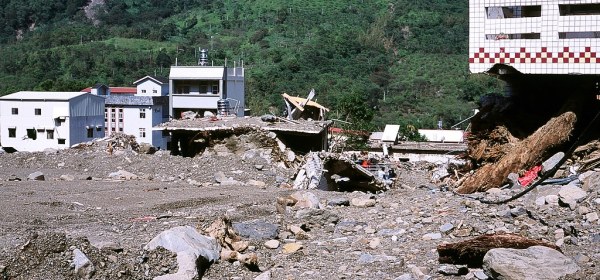
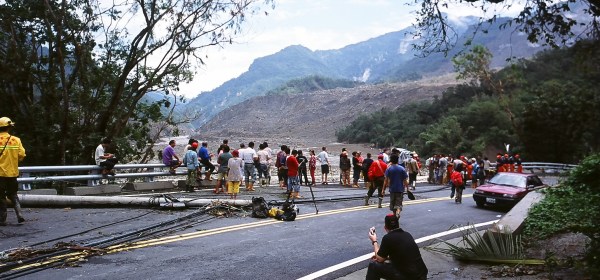
Written by Tzu-Ming Liu. Based on the author’s experience participating in reconstruction after the 2009 Morakot Typhoon, this article focuses on the role of disaster companions (empowerment workers) who connect disaster victims with external resources, highlighting the need for their mental health support for companions and strengthened communication with the government.

1 2 3 4 5 10