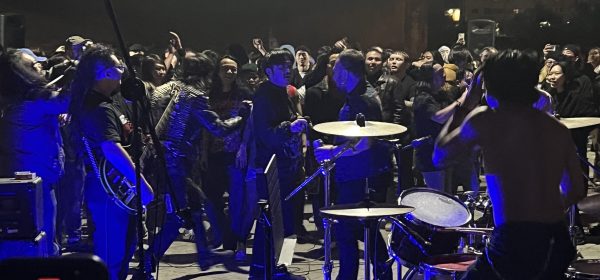
Toward Antiracist Taiwan: A Short Fieldnote in Studying Racism through Punk and Metal Musical Performances by Indonesian Migrant Workers 

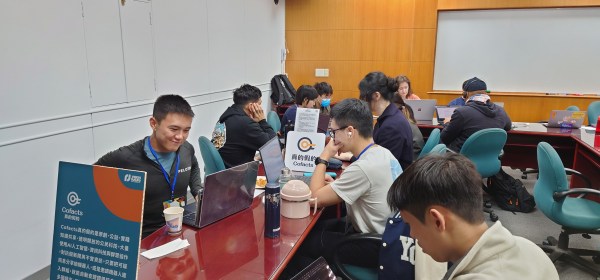
Written by Mark Hsiang-Yu Feng. Drawing on field notes on punk and metal musical performances by Indonesian migrant workers in Taiwan, this article reveals racism and stereotypes in the music scene. The author calls for a critical examination of multiculturalism to address the structural inequality and racial hierarchy in Taiwanese society.

Challenging the Myth of Intercultural Competence: Encounters between the “New Second Generation” and a Philippine Studies Scholar in Taiwan 

Written by Yi-Yu Lai. In the name of promoting multiculturalism in Taiwan, the new second generation is anticipated to utilise their intercultural ability to serve as a bridge between Taiwan and Southeast Asia. This article highlights that the assumption has caused increased anxiety among the new second generation if they are unable to prove their competence. It has also erased the internal disparities and the actual daily experiences of the individuals, making the historical injustice and their own agendas invisible.

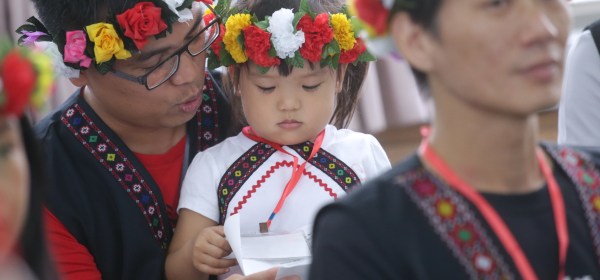
Indigenous Language Education in Taiwan: From Language Preservation to Community-Based Learning 

Written by Yang-Hsun Hou, Nikal Kabala’an (a.k.a. Margaret Yun-Pu Tu), and Huiyu Lin. As the Taiwan government has been pushing efforts for Indigenous Language Revitalization and Reclamation, this article highlights the importance of transitioning from government-led preservation to community-based, Indigenous-led education approaches, ensuring that culturally sustaining practices are truly integrated into Indigenous language teaching and learning.  

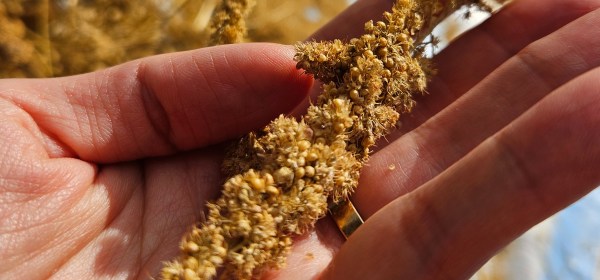
Is Integrating Possible? Towards weaving knowledges to transform care

Written by Wasiq Silan. This article critiques the superficial integration of Indigenous perspectives within Taiwan’s multiculturalist policy framework, arguing for a transformative approach that prioritises Indigenous knowledge systems in long-term care policies. Highlighting the idea of “weaving knowledge,” it seeks to recentre Indigenous onto epistemologies and challenge the deep-rooted colonial present.

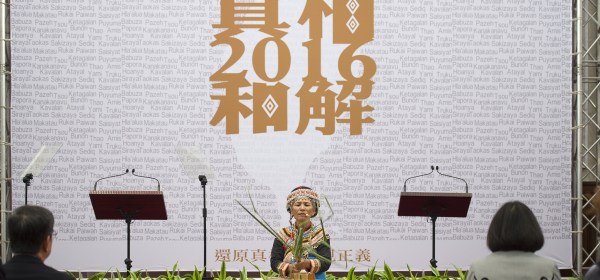
Decolonisation of Multicultural Taiwan

Written by Yulia Nesterova. Although Taiwan has made remarkable progress in transforming into a flourishing multicultural democracy over the past three decades, it still faces challenges in fully decolonising its multicultural vision. Focusing on education policies, this article highlights the need for further actions to address historical injustices and reconciliation.

Taiwan’s Trade Dynamics in 2023: Challenges and Partners Shifting 

Written by Yun-Chieh Wang. In 2023, Taiwan’s international trade experienced a decline in growth because of global economic challenges, with a notable dependency on semiconductor exports. Despite this downturn, Taiwan’s trade gap widened positively, attributed to the reshoring of Taiwanese enterprises, and increasing foreign investment. Meanwhile, the Taiwanese government is actively diversifying its trade partners, reducing its reliance on China and forging ties with the U.S. and U.K. through trade agreements.

Envisioning Migrant Worker Policy: Toward Dignity and Well-being 

Written by Hang-Tang Chen; translated by Yu-Chen Chuang. Taiwan needs to refine its migrant worker policies to focus not only on labour contributions but also on the well-being and dignity of the workers. Personal stories of migrant workers in this article reveal the necessity for comprehensive policies that address the physical and mental health needs, acknowledging the humanity behind the workforce.

Neither Green nor Just: The DPP’s Reckoning with Environmental Justice 

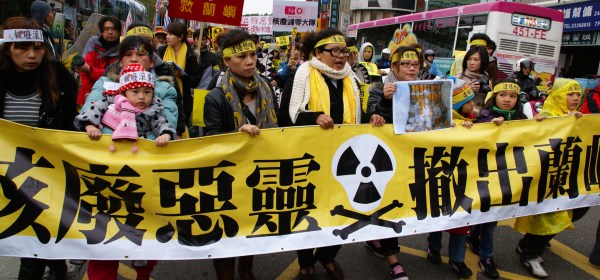
Written by Dominika Remžová. The Russian weaponisation of gas supplies has sparked a renewed interest in Taiwan’s energy security, placing the DPP’s anti-nuclear policies at the centre of attention. On the one hand, both energy and national security experts have criticised the DPP’s continuing nuclear phase-out for pushing Taiwan, which in 2022 imported more than 97% of its energy, into an increasingly precarious position. The opposition, on the other hand, has criticised the party’s 2025 energy mix formula (i.e., 20% renewable energy, 30% coal, and 50% LNG) for its inconsistency with international trends, namely the increasing role of nuclear energy in global decarbonisation efforts, which the DPP countered by referring to industry-wide trends, such as the renewable energy focus of the RE100 initiative, instead.  

1 6 7 8 9 10