Teenage Pregnancies, Child Marriage, and Girl Child Sexual Abuse in Malawi

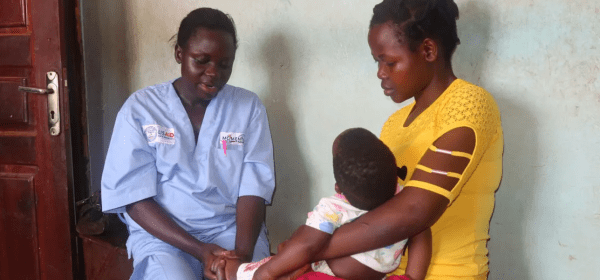
Written by Lana Chikhungu. In both Taiwan and Malawi, adolescent pregnancy is associated with an increased risk of physical and mental health issues. Also observed in both Taiwan and Malawi during the COVID-19 pandemic is the higher risk women were exposed to gender-based violence. Studies on pregnancy in Taiwan during the pandemic focused on how the disease affected pregnancy and maternal care practices and how the disease had an impact on sex life. This article provides insights into teenage pregnancies, child marriage and girl child sexual abuse in Malawi.

Under The Radar: How Taiwan Compares to Sexism in the East

Written by Zoe Parrott. There is no doubt that, as three examples of major developed East Asian countries, Japan, South Korea, and Hong Kong are able to boast of countless laudable achievements. Furthermore, compared to other countries, all of these nations have impressive Human Development Indexes, ranking higher than the United States. However, there is one aspect of each of these nations that often flies under the radar – the infamous gender inequity these nations are characterised by. For concrete examples, look no further than DJSoda, who was sexually assaulted during her show in Osaka, Johnny Kitagawa, who, for decades, dangled “the price of stardom” as an explanation for his sexual abuse, and the four undergraduates who were sexually harassed and/or raped by their older 28-year-old peer at the Education University of Hong Kong.  However, there seems to be one outlier among its peers – Taiwan, otherwise known as the Republic of China.

#MeToo Cases Lead to Legal Hotline for Victims. But Will This Change Engrained Social Attitudes?

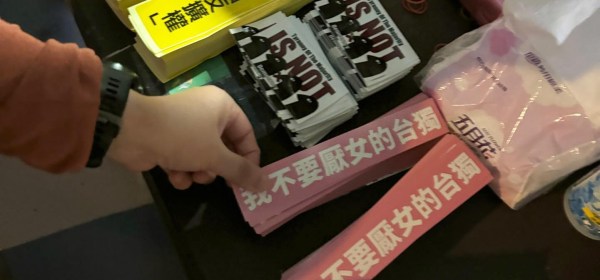
Written by Darice D. Chang, Caritta Lin, and Rita Jhang. The #MeToo movement blossomed in Taiwan in May 2023 partly due to a successful TV show, Wave Makers, which features sexual harassment in the political world and partly due to several high-profile sexual harassment cases brought to light in Taiwanese politics around the same time. While increased social awareness and scandal brought swift legislative action and increased support for victims in the form of both social support and legal aid, which we will delve into more detail, amendments to laws that have failed victims previously and increasing support are not a definitive solution to an entrenched social issue — instead, we should consider the various factors that have contributed to a society where power based gender violence could be an open secret.

#MeToo in Taiwan’s Music Industry: After Making Waves, Can We Forge a Better Workplace?

Written by Chen-yu Lin. In 2023, a watershed moment emerged in Taiwan’s #MeToo movement with the resounding success of the Netflix series “Wave Makers.” The show’s resonance was profound, shedding light on sexual harassment and abuse in the workplace. This spotlight inspired survivors from politics, education, arts, and entertainment to break their silence. The waves of #MeToo allegations have not spared Taiwan’s music industry.

#MeToo Movement in Taiwan: Reconfiguring the Intimate Life

Written by Mei-Hua Chen. #MeToo movement has been claimed as a global movement that connects women in the global North and the global South. Nonetheless, the MeToo movement must always confront various local social, economic, and cultural relations when it spreads across the globe. It also demands social, legal, and even material infrastructures to materialise. Global South countries that fail to deliver the MeToo movement might relate to the lack of efficient internet infrastructure and the taboo of talking about sex in public (e.g. Bangladesh), freedom of speech (e.g. China), or severe social stratification such as India in which the MeToo movement only circulated among the rich and well-educated elite women.

What have we learned from the still-unfolding #MeToo movement in Taiwan?

Written by Weiting Wu. The flames of Taiwan’s #MeToo movement have provided new opportunities to reflect on Confucian and patriarchal influences throughout society. To do so, however, Taiwan must act and work in solidarity to address the long-repressed suffering of #MeToo victims. Then, the transgender population, ethnic minorities, senior citizens, people with disabilities, and so on, may finally have the power to seek their justice.

Has the #MeToo Wave Passed in Taiwan?

Written by Brian Hioe. A short two months after a wave of #MeToo cases swept across the Taiwanese political landscape, it proves a question as to whether there have been genuine changes in social attitudes in the aftermath of these cases. Certainly, there has been no shortage of commentary on the matter, and the legislature responded by passing amendments to Taiwan’s “Three Gender Equality laws.” But whether there are lasting changes remains to be seen.

After #MeToo, where does Taiwan go?

Written by Shan-Jan Sarah Liu. Five years after the global #MeToo movement began, Taiwan has finally started its own. It began with a wave of sexual assault claims against several members of Taiwan’s ruling Democratic Progressive Party (DPP). While those alleged in the DPP have resigned, these claims led to allegations against others beyond the political sphere. Since May, more than 100 politicians, activists, intellectuals, and celebrities have been called out for their misconduct. The #MeToo movement has garnered much media attention and has been discussed widely.

The Green Party Taiwan’s Achievements and Challenges in Promoting Gender Equality

Written by Wang Yan-han, Dafydd Fell and Peng Yen-wen. Founded in January 1996, Green Party Taiwan (GPT) was the first Green Party to be established in Asia. It is one of the oldest movement parties in Taiwan, created through the efforts of student activists and several civil society groups, including activists from the eco-feminist Homemakers United Foundation. One of the main reasons Taiwan has made such impressive progress in the realm of gender equality has been due to civil society activism. Since Green Parties operate on the boundaries between civil and political society, an examination of the GPT’s case can bring a different perspective on Taiwan’s achievements and challenges in the realm of gender equality.

From Tradition to Institutionalisation: The Development of the Postnatal Care Centres Industry in Taiwan

Written by Amélie Keyser-Verreault. In Chinese culture, the tradition of yuezi (月子) or the practice of postpartum care for the mother, is a longtime established practice. In Taiwan, this practice underwent and continues to undergo the vicissitudes of social and interpersonal relationship changes. Before the 1970s, the birth rate in Taiwan was extremely high, and the idea of “more children, more grandchildren, more good fortune” (多子多孫多福氣) was widely accepted. The large family size also meant sufficient human resources for agricultural-related field labour. The practices of yuezi were already crucial at that time. Mothers in the postpartum period had some privileges like a long rest and special food, particularly meals containing meat like chicken, a precious food at that time. 

Queering the Intergenerational Remembrance of the White Terror

Written by Linshan Jiang. In 2020 and 2021, the National Human Rights Museum and Spring Hill Publishing released two literary collections on the White Terror in Taiwan (1947–1987): a four-volume novel collection entitled Making the Past in the Moment (2020) and a five-volume essay collection, entitled Soul and Ash (2021), co-edited by two Taiwanese writers, Hu Shuwen (1970– ) and Tong Weiger (1977– ). “White Terror” refers to the 50-year oppressive rule by the Chinese Nationalist Party (Kuomintang, KMT) in Taiwan after the Republic of China took over Taiwan from Japan in 1945. Then the KMT lost the Chinese Civil War (1945–1949) and was exiled to Taiwan in 1949. As a result, it is officially known as the martial law period. Although it should be admitted that the concept of “white terror” may not encompass every aspect of the martial law period, my focus is on the continuing oppression of the people due to KMT’s authoritarian rule, and I will mainly use White Terror to refer to this period in this article.  

1 2 3 4 6