Siraya Groups Take Stand Against KMT Effort to Deny Indigenous Recognition to Pingpu Groups

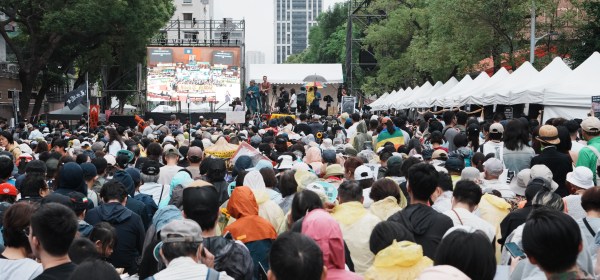
Written by Brian Hioe. Siraya civil society groups oppose a KMT proposal to create a “Pingpu Indigenous” category, arguing it undermines their full legal recognition mandated by a 2022 Constitutional Court ruling. The debate reflects ongoing struggles over identity, resources, and recognition amid shifting political dynamics and the KMT’s efforts to defund Indigenous institutions.


The Death Penalty in Taiwan: An Overview and the Impact of 113-Hsien-Pan-8 

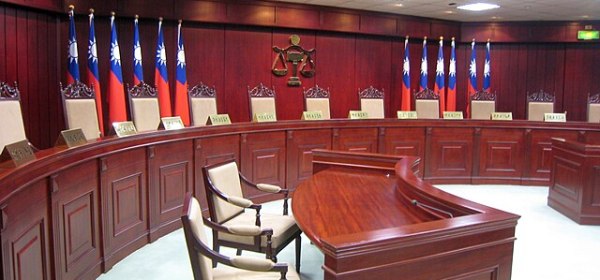
Written by Szu-Yu (Suzy) Chen. This article provides an overview of Taiwan’s legal landscape of the death penalty, focusing on the Constitutional Court’s Judgment 113-Hsien-Pan-8 (2024), which upheld the constitutionality of the death penalty while imposing strict procedural restrictions. It examines the historical context, legal shifts, and the current impact of 113-Hsien-Pan-8, highlighting its influence on Taiwan’s death penalty practices and the ongoing debate.

Distance Between Goals and Actions: The Challenges of Implementing Legal Frameworks for Climate Change Adaptation in Taiwan 

Written by Chien-Liang Lee. This article examines the evolution of Taiwan’s legal framework for climate change adaptation, identifying gaps between the current framework and the adaptation goals. It argues that the most critical missing link is the lack of robust normative connections between the various special administrative laws. It calls for more cohesive legal mechanisms to better connect multiple relevant sectors involved in climate adaptation actions.

Civic Efforts Fostering Rule of Law: Judicial Reform Foundation’s 2024 Recap and 2025 Aspirations  

Written by Cheng-Ching Lin and Grace Huang. The Judicial Reform Foundation (JRF) unites dedicated allies from Taiwan’s civil society to advance judicial reform. This article highlights their efforts and achievements in 2024, as well as their outlook for 2025. Despite the challenges posed by political turmoil in parliament, JRF remains committed to fostering public engagement, rebuilding trust in democratic governance, and upholding the rule of law.

The Smoking Gun of Democratic Backsliding? The 2024 Amendment to the Constitutional Court Procedure Act in Taiwan 

Written by Shih-An Wang. This article examines the 2024 amendment to the Constitutional Court Procedure Act from the perspective of democratic backsliding. The author argues that the amendment demonstrates an alarming political attempt to undermine the Constitutional Court’s integrity and advocates for greater levels of public oversight to halt the derogation of democracy. 

Establishing a Digital Bill of Rights: Towards a Rule of Law Foundation Upholding Freedom and Democracy in The Digital Age 

Written by Grace Huang. The Judicial Reform Foundation of Taiwan is leading the development of a Digital Bill of Rights to protect people’s rights in an era of increasing surveillance and data exploitation. This Bill comprises ten articles addressing various aspects of digital rights and governance, aiming to empower citizens, regulate AI and data usage, and ensure democratic values remain central in shaping our digital future.

Taiwan and Artificial Intelligence

Written by Hon-min Yau. This article examines Taiwan’s recent development and regulation of artificial intelligence (AI). Sensing the incoming grand trend of AI development, Taiwan’s “Year 0” for AI came in 2017. At the time, AI-enabled devices such as smart speakers or smart TVs have been the focus of the consumer market, but other emerging AI-enabled services in fields such as object recognition, medical diagnosis, customer service, and vehicle self-driving were seen by Taiwan as new economic opportunities for Taiwan’s development.

Whose stratified reproduction? Disparities in Taiwanese gay men’s quest for overseas surrogacy

Written by Jung Chen. This article begins by examining the current Assisted Reproductive Act in Taiwan. Its exclusion of Tongzhi couples’ leads many to seek transnational surrogacy services. Recognising the controversy surrounding the services in LGBTQ+ community, the author argues for ‘flexible moral boundaries’ to distinguish between ‘problematic’ and ‘ethical’ surrogacy practices.

How Will 2023 Gains in Transgender Rights Fair after the 2024 Elections?

Written by Yo-Ling Chen. 2023 was a big year for Taiwan’s transgender rights movement. This article traces important legal cases regarding transgender rights in 2023, and explores how the growing public visibility of transgender issues and legal consensus around the need to abolish compulsory surgery for changing one’s legal gender play in the aftermath of the 2024 elections.

1 2 3 4