How Will 2023 Gains in Transgender Rights Fair after the 2024 Elections?

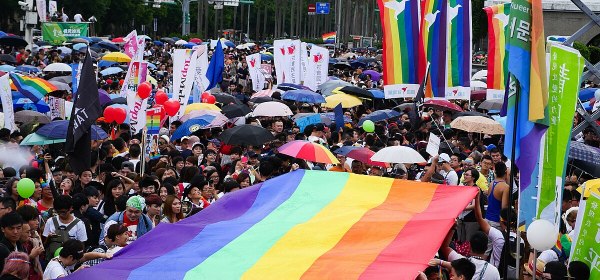
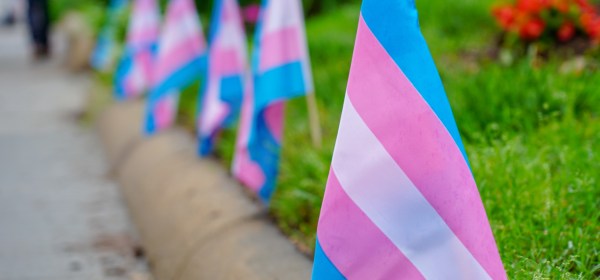
Written by Yo-Ling Chen. 2023 was a big year for Taiwan’s transgender rights movement. This article traces important legal cases regarding transgender rights in 2023, and explores how the growing public visibility of transgender issues and legal consensus around the need to abolish compulsory surgery for changing one’s legal gender play in the aftermath of the 2024 elections.

Assisted Reproductive Act Amendment: The Testing Ground for the New Taiwanese Parliament’s Power Dynamics

Written by JhuCin Rita Jhang, Ph.D. The 2024 Taiwanese presidential election has garnered substantial international attention due to the ever-intricate US-Taiwan-China relationship. However, this election means more to the Taiwanese than just how they want to engage with China. Contrarily, domestic issues carried much more weight than usual, including housing prices, economic policies, transportation infrastructure, and, for the first time in the centre of the competition, the Assisted Reproductive Act (ARA).  

Beyond Mayday’s Lip-synching Investigation: Taiwan’s Music Freedom Questioned Under PRC Influences 

Written by Chen-yu Lin. On December 28, 2023, Reuters and CNN​ reported a disconcerting incident involving Mayday, a Taiwanese rock band, who found themselves entangled in a request from Chinese authorities to make pro-Beijing statements. As reported by CNN, the authorities demanded a public statement affirming the unity of China and Taiwan as a single nation. The band’s refusal to comply resulted in consequences related to alleged lip-synching, which is referred to as “deceptive singing (假唱)” in Chinese. This accusation carries the potential for fines or even performance bans under Chinese law. These developments stemmed from their December concert in Shanghai and are potentially connected to Taiwan’s presidential election in January 2024, prompting an ongoing investigation.​ 

Neither Green nor Just: The DPP’s Reckoning with Environmental Justice 

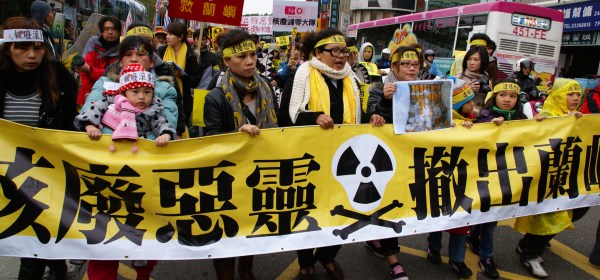
Written by Dominika Remžová. The Russian weaponisation of gas supplies has sparked a renewed interest in Taiwan’s energy security, placing the DPP’s anti-nuclear policies at the centre of attention. On the one hand, both energy and national security experts have criticised the DPP’s continuing nuclear phase-out for pushing Taiwan, which in 2022 imported more than 97% of its energy, into an increasingly precarious position. The opposition, on the other hand, has criticised the party’s 2025 energy mix formula (i.e., 20% renewable energy, 30% coal, and 50% LNG) for its inconsistency with international trends, namely the increasing role of nuclear energy in global decarbonisation efforts, which the DPP countered by referring to industry-wide trends, such as the renewable energy focus of the RE100 initiative, instead.  

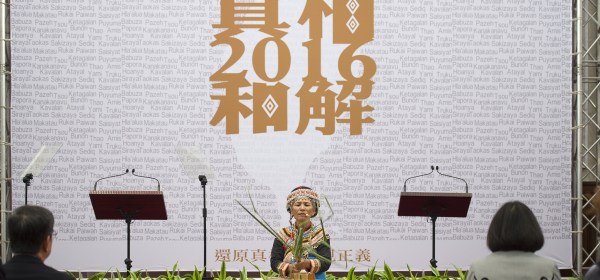
Inherent Powers of Objects: Resonance Across the Online Exhibition 

Written by Zuzule Demalalade & Tien-Li Schneider. When we believe that there is power behind every object, it signifies our departure from mundane perspectives and a return to the cosmic space we share with our ancestors. As Indigenous cultural curators based in Taiwan, our involvement with the Kuroshio Odyssey: Maritime Memories, Culture, and Landscapes (hereafter KO) exhibition project began on an ordinary workday when KO’s curator, Jiun-Yu, returned from the United States to Taiwan and visited our office one afternoon. He mentioned that the Burke Museum had some collections from Taiwan’s Indigenous tribes. Together with Nikal (Margaret), a law doctoral student at the University of Washington with Amis Indigenous roots in Taiwan, they were planning an exhibition on Taiwanese Indigenous artefacts. This sparks the idea of collaboratively establishing an online platform, a digital bridge across the 14-hour time difference between Taiwan’s Indigenous artefacts and the Burke Museum’s exhibits.

Embarking on the Kuroshio Odyssey: A Journey from Taiwan’s East Coast to the U.S. West Coast 

Written by Sra Kacaw (Bo-Jun Chen). While planning the Kuroshio Odyssey exhibition, I had a discussion with Margaret Yun-Pu and Jiun-Yu Liu. Margaret invited Indigenous communities in Taiwan to collaborate, prompting me to search for colleagues who might accompany me. I started by pinpointing the topics we aimed to share through the exhibition. As the Kuroshio Current flows through Eastern Taiwan, what are the ethnic groups living in that area? How can we introduce the marine and material culture to the people in Seattle?  

Crossing Paths: A Cultural Odyssey from Taiwan to Seattle 

Written by Sayang  Anang. In November 2023, I had the honour of being invited as a member of the Taiwanese Indigenous delegation to the Kuroshio Odyssey exhibition hosted by the Burke Museum at the University of Washington, Seattle. Before embarking on this journey, I hadn’t given much thought but to grasp the rare opportunity to share the traditional cultural practices of my tribe—the Lidaw tribe of the Amis in Hualien, Taiwan—with my foreign friends. Excitement filled me as this was my first time setting foot on American soil, and I relished every exchange I made. The thrill stemmed from meeting new people, exploring the UW campus’s rich history, or appreciating the proximity of Burke Museum’s collections. With each encounter, we absorbed different nutrients, stimulated more reflection and feedback, and made this trip a fruitful one. 

The Digital Evolution in Taiwan and Japan: Implications for Political Communication

Written by Tommy Hall and Margaret Siu. The digital era has revolutionised political communication, with profound effects in Asian democracies, notably Japan and Taiwan. This exploration delves into the intricacies of how political entities in these countries harness digital platforms. It aims to unpack the varied strategies they employ, the challenges they confront, and the opportunities they seize within the digital realm. Our analysis will not only highlight the distinct tactics and responses shaped by each country’s unique cultural, legal, and historical contexts but also examine the broader implications these digital transformations hold for political engagement and democratic discourse in the region.

1 12 13 14 15 16 55