Civic Efforts Fostering Rule of Law: Judicial Reform Foundation’s 2024 Recap and 2025 Aspirations  

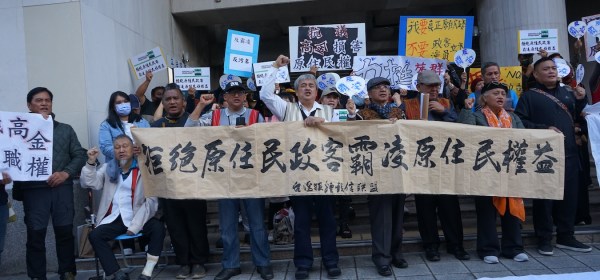
Written by Cheng-Ching Lin and Grace Huang. The Judicial Reform Foundation (JRF) unites dedicated allies from Taiwan’s civil society to advance judicial reform. This article highlights their efforts and achievements in 2024, as well as their outlook for 2025. Despite the challenges posed by political turmoil in parliament, JRF remains committed to fostering public engagement, rebuilding trust in democratic governance, and upholding the rule of law.

The Smoking Gun of Democratic Backsliding? The 2024 Amendment to the Constitutional Court Procedure Act in Taiwan 

Written by Shih-An Wang. This article examines the 2024 amendment to the Constitutional Court Procedure Act from the perspective of democratic backsliding. The author argues that the amendment demonstrates an alarming political attempt to undermine the Constitutional Court’s integrity and advocates for greater levels of public oversight to halt the derogation of democracy. 

Teaching Instruction Manual of Safe Cycling in Taiwan: A Critical Discourse Analysis

Written by Yi-Ting Lu. This article introduces and examines the “Safe Cycling” manual for school teachers and parents in Taiwan. The author argues that while it emphasises cyclists’ responsibilities, the manual neglects children’s unique needs and perceptions. It is recommended that future revisions should empower children and foster a positive image of cyclists to enhance safety.

Professional Sports in Taiwan: Business Structure and Co-governance Mismatch in Technology 

Written by Yi-Yen Lim, Jui-Jan Chan and Chan-Yuan Wong. This article analyses the challenges and opportunities facing professional sports in Taiwan. Unlike Western models, Taiwanese teams heavily rely on corporate sponsorships and government support, leading to a mismatch between technology push and industry demand. The authors argue that granting more autonomy to teams and fans in technology adoption could foster a more independent and vibrant sports culture. The article focuses on the case of the Uni-Lions baseball team, highlighting its unique business structure and sustainability challenges.

The TaiwanPlus Controversy: Press Freedom, Political Influence, and the 2024 U.S. Election Coverage 

Written by Chiaoning Su. This article examines the reporting controversy faced by TaiwanPlus, a government-funded English-language news platform in Taiwan, following the U.S. election. It highlights how Taiwan’s coverage of the U.S. election goes beyond geopolitical and economic considerations to address issues of press freedom. The article emphasizes the need for Taiwan’s public media to reinforce its independence and create a better environment for press freedom.

​Taiwan 22: History, Travel, and Talking to Locals: A 2024 Publication by Plum Rain Press

Written by Tyrel Cameron Eskelson. In “Taiwan 22: History, Travel, and Talking to Locals,” the author shares his three-month journey across Taiwan, exploring its history, culture, and the challenges it faces. Through diverse experiences and conversations with locals, he aims to inspire readers to visit the island, connect with its people, and support Taiwan’s pursuit of democracy and freedom in the face of ongoing threats to its sovereignty.

Newsgames for the Greater Good: The Effects of Graphic Realism and Geographic Proximity on Knowledge Acquisition and Willingness to Help

Written by Jih-Hsuan Tammy Lin and Dai-Yun Wu. The article discusses newsgames, a game genre of interactive digital experiences designed to inform players about real-world issues. It explores the impact of graphic realism and geographic proximity on player engagement and emotional responses. The research indicates that newsgames can foster prosocial behavior and awareness.

Digital Cultivation: How Taiwan’s Video Games Transform Wuxia into Cultural ‘Internal Power’ (Part 1) 

Written by Mark G. Murphy. This article explores how Taiwan’s video games use wuxia mythology to build cultural identity and soft power. The games weave local legends with historical events, focusing on themes of resistance, spiritual growth, and rootedness. The author argues that the practice of “cultivation” – developing inner strength – should be interpreted broadly, linking it to Taiwan’s cultural memory and landscapes. This allows players to engage deeply with Taiwanese culture, blending myth and real-world settings to reinforce collective identity and memory. Importantly, this means soft power becomes a kind of internal power, a key principle in wuxia philosophy.

“Be My Guest”: How Taiwan Is Using Social Media Influencers for International Engagement

Written by Chiaoning Su. This article discusses how Taiwan is leveraging social media influencers for nation branding as part of its public diplomacy efforts. While current initiatives effectively promote Taiwan’s democratic values and openness, the government needs to address several key issues, such as defining a clear target audience, fostering bottom-up partnerships with foreign influencers, and navigating geopolitical challenges.

1 6 7 8 9 10 55