Toward Antiracist Taiwan: A Short Fieldnote in Studying Racism through Punk and Metal Musical Performances by Indonesian Migrant Workers 

Written by Mark Hsiang-Yu Feng. Drawing on field notes on punk and metal musical performances by Indonesian migrant workers in Taiwan, this article reveals racism and stereotypes in the music scene. The author calls for a critical examination of multiculturalism to address the structural inequality and racial hierarchy in Taiwanese society.

Public Safety At Risk: Undetermined Responsibility for the Death Caused by Taichung Metro and Highwealth Corporation

Written by Yi-hsiang Shih. On May 10, 2023, a construction crane fell from a construction site of Highwealth Construction Corporation and entered the metro tracks in Taichung, resulting in one death and 15 injuries inside the train. This article aims to review the incident and shed light on the persistent structural problems with the outsourcing of construction projects, lack of staff training and inadequate emergency procedures.

Semiconductor and Renewable Energy: Taiwan-Vietnam Cooperation under New Leadership

Written by Tran Thi Mong Tuyen. Since the 1990s, Taiwan’s government has championed the “Go South” and “New Southbound” policies, catalyzing Taiwanese entrepreneurship across the Association of Southeast Asian Nations (ASEAN). Vietnam, boasting a stable economy, ample labour force, a youthful demographic, and rich natural resources, has emerged as a prime destination. This article focuses on the recent cooperation between Taiwan and Vietnam in different industries, and proposes potential future collaborative opportunities between the two.

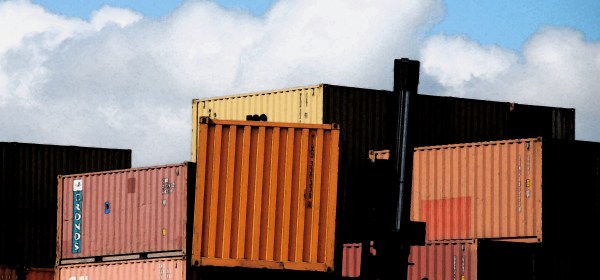
Taiwan’s Trade Dynamics in 2023: Challenges and Partners Shifting 

Written by Yun-Chieh Wang. In 2023, Taiwan’s international trade experienced a decline in growth because of global economic challenges, with a notable dependency on semiconductor exports. Despite this downturn, Taiwan’s trade gap widened positively, attributed to the reshoring of Taiwanese enterprises, and increasing foreign investment. Meanwhile, the Taiwanese government is actively diversifying its trade partners, reducing its reliance on China and forging ties with the U.S. and U.K. through trade agreements.

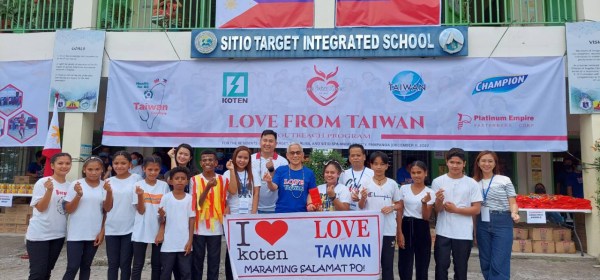
Envisioning Migrant Worker Policy: Toward Dignity and Well-being 

Written by Hang-Tang Chen; translated by Yu-Chen Chuang. Taiwan needs to refine its migrant worker policies to focus not only on labour contributions but also on the well-being and dignity of the workers. Personal stories of migrant workers in this article reveal the necessity for comprehensive policies that address the physical and mental health needs, acknowledging the humanity behind the workforce.

Taiwan’s 2024 Elections: How will China Respond?

Written by T.Y. Wang. Lai’s victory, nevertheless, is a rebuke to Beijing’s sovereignty claim of the island and a hard pill for Chinese leaders to swallow. In the aftermath of the election, observers are pondering how Beijing will react to Taiwan’s electoral outcomes. Chinese leaders view Lai as a “separatist,” and his affiliated DPP is a secessionist political party. A win by Lai, in their mind, means Taipei will continue its policy of pursuing Taiwan independence in spite of Lai’s pledge to continue the incumbent President Tsai Ing-wen’s policy of maintaining the status quo. Prior to the election, Beijing had magnified a “war and peace” narrative, intensified its military and economic pressure on Taiwan and warned the island citizens to make a “correct choice” in the elections.

Taiwan and the Free World Need A New Strategy To Confront China 

Written by Daniel Jia. Taiwan’s 2024 presidential election has concluded. The Taiwanese people have elected the China-defiant candidate as the new president. For Taiwan, the results of the election are important. But what is more important, in view of the presence of China’s meddling with Taiwan’s election, is to lay out new strategies to mitigate China’s interference in the future.  

Taiwan, Be on the Right Side of History on Labour Migration

Written by Bonny Ling. A few months before the presidential elections, I gave a talk in Taipei on the responsible recruitment of migrant workers, where they do not bear the cost of their job recruitment and begin their employment saddled by debt. Afterwards, a participant came up to ask me which presidential candidate I thought would stand the best chance to reform Taiwan’s labour recruitment system towards the Employers Pays Principle, where the costs of recruitment are borne by the employers. I was asked this from time to time in the runup to the January 2024 elections, so this alone did not surprise me. What did was his next statement: “And I will vote for them.” I studied his face to see if he was serious. Not sure. Had I just met my first single-issue voter on migration in Taiwan? Are there more?

Taiwan Election 2024: What it Means for the Island’s Future Engagement with the Asia-Pacific Region

Written by Raian Hossain. Now that the election results are in, the period of intense suspense and electoral speculation has concluded. The issue of cross-strait relations remains unresolved, as the People’s Republic of China (PRC) insists that the Republic of China (ROC), often known as Taiwan, is a separatist province of the mainland and aims for reunification. For the first time in history, Taiwan has re-elected the same political party to govern the democratic island for a third consecutive term. The election of Lai Ching-te on Saturday signifies a strong counter to the People’s Republic of China’s (PRC) forceful stance and intimidation tactics towards the island. The primary challenge now is how Lai’s new government will maintain its relations with Beijing and navigate the complex triangular dynamics of the US, China, and Taiwan.

What Does Taiwan’s Presidential Election Outcome Tell Us About Its Economic Prospects?

Written by Min-Hua Chiang. William Lai (Lai Ching-te) of the Democratic Progressive Party (DPP) secured his election as Taiwan’s 16th president on January 13, 2024. As the DPP extends its rule for another four years, the administration is likely to maintain President Tsai Ing-wen’s economic policies, notably diversifying the economy away from China. Navigating Taiwan’s export-oriented economy through the evolving US-China relationship will pose the most significant challenge for the new administration. 

1 2 3 4 5 6 21