Taiwan’s 2024 Presidential Candidates: How Do They Fare on the Climate?  

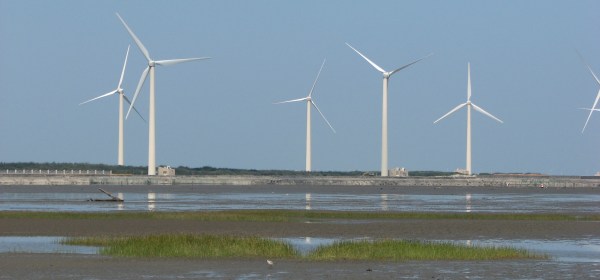
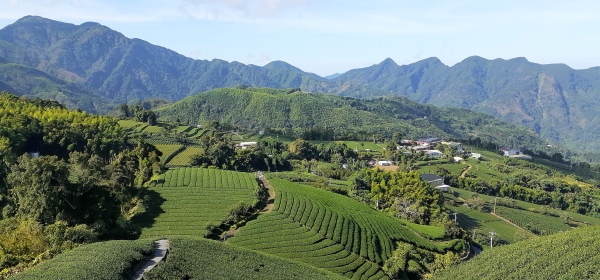
Written by Chia-wei Chao & Benjamin Yang. When it comes to the climate, all three candidates in Taiwan’s upcoming presidential election have emphasised the importance of taking action and committed to achieving net-zero emissions by 2050. The main driver behind this mainstreaming of climate policy is the fact that supply chain requirements have made the country’s export competitiveness highly connected to climate performance. Therefore, we must scrutinise the comprehensiveness of each candidate’s policy proposals, rather than solely relying on whether they are climate denialists, to distinguish their positions. Taiwan Climate Action Network (TCAN), a collaborative advocacy platform organised by five NGOs, has thus produced a climate commitment tracker to compare their positions on seven key climate-related policies: (1) 2030 emissions reduction target, (2) carbon pricing strategies, (3) 2030 power mix, (4) renewable energy development plan, (5) industrial decarbonisation, (6) public participation, and (7) just transition. In this article, we will focus specifically on their 2030 pledges, carbon pricing strategies, and just transition policies.

Taiwan’s energy policy at the crossroads in the presidential election in 2024? 

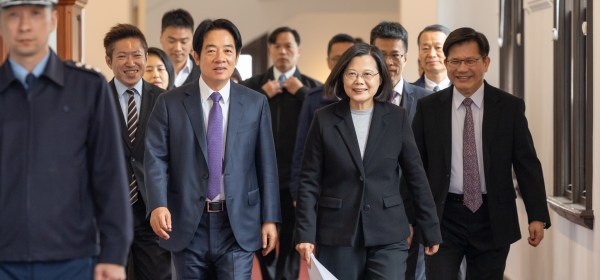
Written by Anthony Ho-fai Li. Energy policy remains a highly controversial policy arena in Taiwan after democratisation, given its importance for Taiwan’s security, environmental sustainability and economic development. Under the presidency of Tsai Ing-wen, the agenda of “Nuclear-free Homeland 2025” (2025非核家園) proposed by the Democratic Progressive Party (DPP) in 2016 has been subject to political challenges, which involved the debates about the use of nuclear energy beyond 2025 and the reduced capacity of coal-fired electricity plants for air pollution mitigation. The policy strategy to replace nuclear energy with rapid solar energy development has also faced enormous social challenges as its large-scale installation conflicts with the existing land uses. 

How Czechia Engages Taiwan 

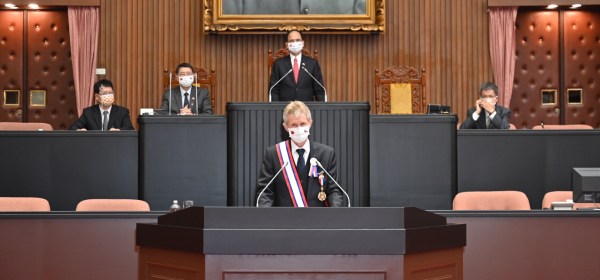
Written by Filip Šebok. While it has been over the past few years that the Czech-Taiwanese relations have grabbed headlines over the world, the two sides’ ties have not come from nowhere. In fact, the recent intensification of cooperation has been built on a very solid foundation jointly forged by the two sides since the early 1990s. Taiwan has become an important investor in the Central European countries already in the 2000s, especially through the investment of electronic manufacturer Foxconn, which has become a major exporter and tax payer in the country.  

Improving Conditions of Artistic Labour and Local Economic Sustainability 

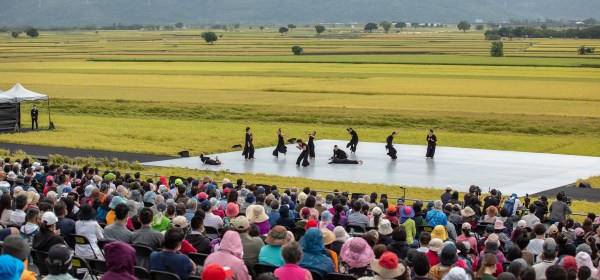
The essence of cultural policy lies in nurturing and stimulating social creativity, which involves both the preservation of classics and the kindling of future possibilities. The durability of policy development hinges on the transmission of memory and skills. Rather than being a political display, citizens occupy a central role in artistic performance, whether as creators or audience members. Does the support for creators aim to ensure the vitality and competitiveness of society, to enhance cultural production, or does its impact merely extend to safeguarding welfare measures? 

TACPS Cultural Petition to the 2024 Presidential Election: The Sustainability of Culture and Democratic Governance in Taiwan

People are the mainstay of Taiwan’s culture, and “freedom” is at the centre of people’s thoughts and creations. Since the early 2000s, Taiwan has undergone a series of citizen-led cultural reforms, including a series of citizens’ cultural movements from 2000 to 2010 (such as the advocacy for community development and multicultural policies), the establishment of the Ministry of Culture in 2012, the National Cultural Conference in 2017/2022, and the White Paper on Cultural Policy in 2018. With the promotion of the Cultural Fundamental Act in 2019, Taiwan has, on the one hand, established the prototype of the country’s “cultural governance” system and civic and cultural awareness, and on the other hand, demonstrated its uniqueness in practising sustainable cultural democracy and participatory cultural governance among the global society.

US-Taiwan Trade Agreement: It is More of Politics than Economic

Written by Raian Hossain. Taiwan has severe military security concerns, and the island has over-trade and investment dependency towards the PRC, which raises the question of economic security. As of 2022, the PRC accounted for 25% of Taiwan’s exports and 20% of its imports, making Beijing still the largest trading partner of Taipei. However, Taiwan made significant progress in growing trade by 25% with the U.S. in 2021 and expanded its trade volume with New South Bound countries under President Tsai Ing-wen. After a year of negotiations aimed at diversifying trade and commerce, the U.S. and Taiwan signed the first part of the US-Taiwan Initiative on 21st Century Trade. Meanwhile, the second round of negotiations has already started.

Taiwan-US Trade Initiative: A good start, but the beginning of a long road

Written by Chieh-Ting Yeh. In 2005, I understood the FTA to be an aspirational long-shot—something that we can press for but not something we should expect to see in the foreseeable future. Recent developments such as the 21st Century Trade Initiative are milestones for sure, but milestones to mark just the beginning of a long road for a true free trade agreement with the US, as well as meaningful participation in regional trade blocs.

The Prospect of a US-Taiwan BTA in an Era of Heightened Political Exchanges

Written by Brian Hioe. The US and Taiwan signed the first stage of the US-Taiwan Initiative on 21st Century Trade in June, paving the path for both to streamline customs and taxation procedures between both sides. The trade agreement will also boost economic cooperation regarding small-to-medium-sized enterprises, while implementing anti-corruption measures. Progress on the trade agreement has continued, with the second negotiating round of the agreement starting in August. In particular, an end to double taxation between the US and Taiwan is a concrete outcome that both sides may pursue, long a stumbling block for those that work and do business in both the US and Taiwan. As progress on the US-Taiwan Initiative on 21st Century Trade has continued, legislation to this effect has been introduced in the US Senate.

Sustainable Traditional Knowledge: Land Ethics and Disaster Resilience in Cinsbu 

Written by Bayis Atung; translated by Yu-Chen Chuang. In recent years, due to climate change, community members have begun to think more about how to minimise the impact of disasters before they occur. When engaging in farming, we have started to think and take action to incorporate traditional land use knowledge from the past. We continuously experiment and face challenges, ultimately returning to traditional land use and cultivation ethics. We have discovered that this approach can be used to adapt to and address climate change, as it helps Cinsbu adapt to the ever-changing challenges posed by disasters. In this article, I share our land ethics and explain how sustainable land use relates to disaster prevention. Even though the intensity of climate change has increased, the Tayal people have not given up on using the land. Instead, there have been even more changes in how we use the land.

‘They’d rather sit in an air-coned office than work under the scorching sun’: dirty, dangerous and difficult farm labour in rural Taiwan

Written by Isabelle Cockel. Labour migration from Southeast Asia to Taiwan has been indispensable to Taiwan’s economic development in the last three decades. Farm work is one of the most recently opened sectors for migrant labour, and migrant farm workers, regular and irregular, have become a new and crucial source of labour in rural Taiwan. How was the recruitment of farm workers justified by the Council of Agriculture (CoA, currently the Ministry of Culture), the lobbyist for opening the farm labour market, and the Ministry of Labour (MoL), the overseer of migrant labour policy, sheds light on three critical and inter-related issues.

A lesson from the Russo-Ukrainian war for Taiwan: Connection

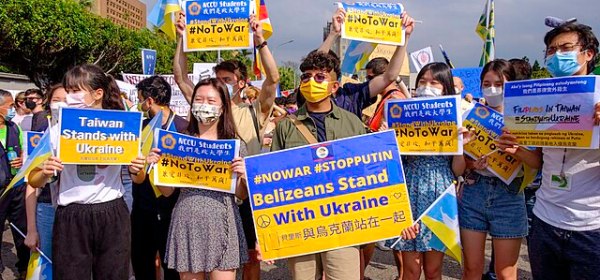
Written by Patricia Elnakhal, H.K. Wind and Fengze Strategy. Currently, the controllable intensity on the Taiwan Strait can potentially escalate. The growing frequency of analogous cases that several military aircraft from the mainland flying into the island’s air defence zone cause the intensity on this territory, while the situation is still under control because these actions are mainly for strategic purposes. More importantly, none of the powers is fully prepared for uncontrollable collisions, but the situation’s development indeed keeps invisibly escalating. As a lesson from the Ukraine war, Taiwan has to construct an unbroken and heavy rope connecting itself to the international community to prepare well earlier for various possibilities. The connection between Taiwan and the international community could be observed through two main aspects: the diplomatic interactions connecting to international politics and the economic development connecting to the international market.

Provocations: Taiwan Amidst Trust, Truss and the G7

Written by Ian Inkster. Liz Truss led her charge into Taiwan on 16 May with the notion of Britain backing a Taiwan move to join the Pacific trade block, the CPTPP, against the present neutral position of the British Tory government under Rishi Sunak. This immediately provoked the Chinese to label her ‘sinister’. The point being that this was merely a Trussian wedge into her major provocation, that there is a ‘fatalism in the free world that somehow a Chinese takeover of Taiwan is inevitable’. Dangerously, Truss seems to have failed utterly (and almost certainly deliberately) to distinguish commercial and political, even military, aggressions, and to that extent, the danger of such an intervention should, of course, be noted.

1 3 4 5 6 7 21