Taiwan’s Semiconductor Industry in the “Chip Wars” Era 

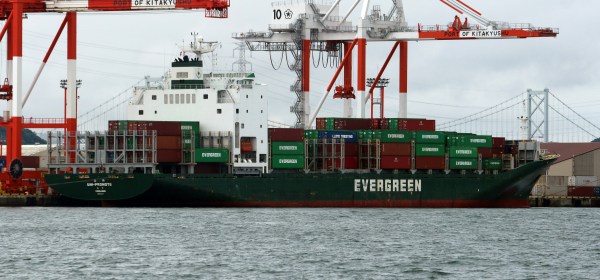
Written by Gunter Schubert. Taiwan’s security is largely determined by the government’s ability to promote the resilience of Taiwan’s high-tech industries, especially semiconductors, to ensure their international competitiveness and crisis resilience. Based on this fact, this article raises two subsequent questions: what strategies are the Taiwanese semiconductor industry pursuing to secure its technological edge and markets in the new global power constellation? And what is the Taiwanese government doing to strengthen the country’s economic security, which arguably depends essentially on maintaining Taiwan’s leading position in the global high-tech industry over the long term? 

How can the WTO mitigate the challenges and difficulties Taiwan is experiencing associated with joining CPTPP?

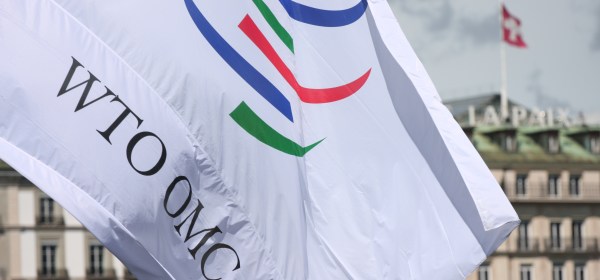
Written by Ming-Cheng Li. This article highlights the WTO as the fundamental economic pathway for Taiwan to join the CPTPP. Taiwan has demonstrated its willingness to conform to international standards of trade policies  and actively engage in the governance of the WTO. It also developed robust partnerships with substantial members of the WTO like Japan, Canada and the UK.

Taiwan’s 2024 Elections: How will China Respond?

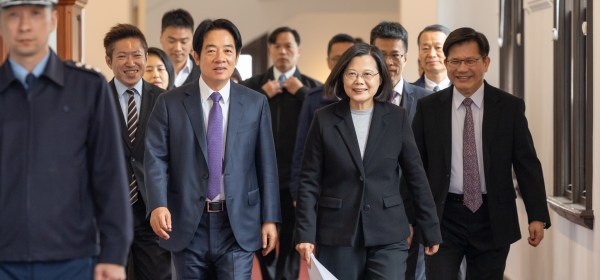
Written by T.Y. Wang. Lai’s victory, nevertheless, is a rebuke to Beijing’s sovereignty claim of the island and a hard pill for Chinese leaders to swallow. In the aftermath of the election, observers are pondering how Beijing will react to Taiwan’s electoral outcomes. Chinese leaders view Lai as a “separatist,” and his affiliated DPP is a secessionist political party. A win by Lai, in their mind, means Taipei will continue its policy of pursuing Taiwan independence in spite of Lai’s pledge to continue the incumbent President Tsai Ing-wen’s policy of maintaining the status quo. Prior to the election, Beijing had magnified a “war and peace” narrative, intensified its military and economic pressure on Taiwan and warned the island citizens to make a “correct choice” in the elections.

Taiwan and the Free World Need A New Strategy To Confront China 

Written by Daniel Jia. Taiwan’s 2024 presidential election has concluded. The Taiwanese people have elected the China-defiant candidate as the new president. For Taiwan, the results of the election are important. But what is more important, in view of the presence of China’s meddling with Taiwan’s election, is to lay out new strategies to mitigate China’s interference in the future.  

Taiwan Election 2024: What it Means for the Island’s Future Engagement with the Asia-Pacific Region

Written by Raian Hossain. Now that the election results are in, the period of intense suspense and electoral speculation has concluded. The issue of cross-strait relations remains unresolved, as the People’s Republic of China (PRC) insists that the Republic of China (ROC), often known as Taiwan, is a separatist province of the mainland and aims for reunification. For the first time in history, Taiwan has re-elected the same political party to govern the democratic island for a third consecutive term. The election of Lai Ching-te on Saturday signifies a strong counter to the People’s Republic of China’s (PRC) forceful stance and intimidation tactics towards the island. The primary challenge now is how Lai’s new government will maintain its relations with Beijing and navigate the complex triangular dynamics of the US, China, and Taiwan.

What Does Taiwan’s Presidential Election Outcome Tell Us About Its Economic Prospects?

Written by Min-Hua Chiang. William Lai (Lai Ching-te) of the Democratic Progressive Party (DPP) secured his election as Taiwan’s 16th president on January 13, 2024. As the DPP extends its rule for another four years, the administration is likely to maintain President Tsai Ing-wen’s economic policies, notably diversifying the economy away from China. Navigating Taiwan’s export-oriented economy through the evolving US-China relationship will pose the most significant challenge for the new administration. 

A lesson from the Russo-Ukrainian war for Taiwan: Connection

Written by Patricia Elnakhal, H.K. Wind and Fengze Strategy. Currently, the controllable intensity on the Taiwan Strait can potentially escalate. The growing frequency of analogous cases that several military aircraft from the mainland flying into the island’s air defence zone cause the intensity on this territory, while the situation is still under control because these actions are mainly for strategic purposes. More importantly, none of the powers is fully prepared for uncontrollable collisions, but the situation’s development indeed keeps invisibly escalating. As a lesson from the Ukraine war, Taiwan has to construct an unbroken and heavy rope connecting itself to the international community to prepare well earlier for various possibilities. The connection between Taiwan and the international community could be observed through two main aspects: the diplomatic interactions connecting to international politics and the economic development connecting to the international market.

Provocations: Taiwan Amidst Trust, Truss and the G7

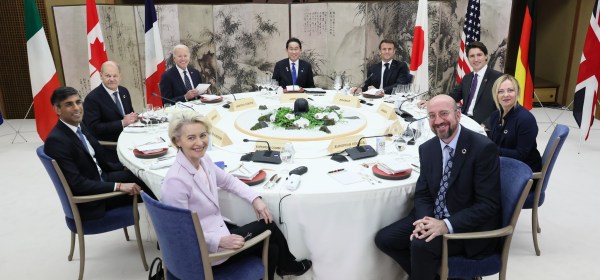
Written by Ian Inkster. Liz Truss led her charge into Taiwan on 16 May with the notion of Britain backing a Taiwan move to join the Pacific trade block, the CPTPP, against the present neutral position of the British Tory government under Rishi Sunak. This immediately provoked the Chinese to label her ‘sinister’. The point being that this was merely a Trussian wedge into her major provocation, that there is a ‘fatalism in the free world that somehow a Chinese takeover of Taiwan is inevitable’. Dangerously, Truss seems to have failed utterly (and almost certainly deliberately) to distinguish commercial and political, even military, aggressions, and to that extent, the danger of such an intervention should, of course, be noted.

Truss Visits Taiwan: Worth or Trouble?

Written by Huynh Tam Sang and Phan Van Tim. Liz Truss’s journey is in the limelight as the first ex-British prime minister to set foot in Taiwan nearly thirty years after Margaret Thatcher’s visits in the 1990s. Nonetheless, the worth of Truss’s five-day sojourn is a contentious issue. From one perspective, Truss’s visit is deemed immensely significant, exemplifying the UK’s unwavering backing for Taiwan amidst escalating Chinese pressure, given her enduring advocacy for a democratic Taiwan. But, conversely, others argue that her visit merely inflamed the already high-strung tensions between China and Taiwan.

Why Does Taiwan’s Development in the Past Century Matter?

Written by Peter C.Y. Chow. By the end of the 20th century, most former colonies had become independent though few qualify as modern states. Taiwan is an exceptional case in modern development history. Although still a Japanese colony until WWII, Taiwan became a modernised country with remarkable achievements in socio-political and economic developments by the end of the 20th century. Its unique development trajectory is worthy of in-depth analysis such that other developing countries can share its experience in the struggle for modernisation.

The Fall of Evergrande: A Case Study of China’s Financial Turmoil in 2022 and the Implication to China-Bound International Capital in 2023 and Beyond

Written by Daniel Jia. In late 2021, international investors felt a real chill from China: China’s real estate giant, China Evergrande Group, defaulted on interest payments on US$1.2B offshore bonds. The Evergrande trouble was shocking, but it was only the tip of a monstrous China iceberg, toward which the Titanic of international investors are headed. What would follow in 2023 and beyond? Is Taiwan prepared?

1 2 3 4 5