Teasing Romantic and Literary Appetite: Reading Taiwan Travelogue

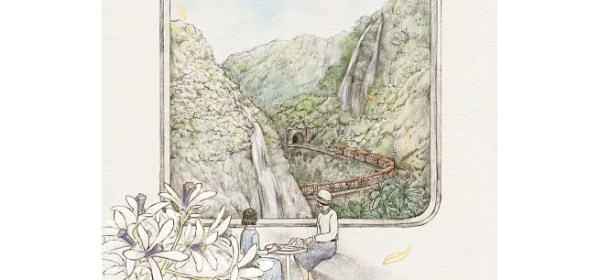
Written by Mu-Hsi Kao Lee. The article explores the experience of reading Taiwan Travelogue as a translated historical yuri novel. Kao Lee reflects on how the narrative, despite its clear genre and straightforward plot, evokes a sense of both satisfaction and longing in the reader. The article highlights the story’s ability to interweave historical and cultural details with the protagonists’ emotional connection, examining themes of desire, identity, and the complexities of relationships within a specific historical context.

Food is politics, and so is travel. 

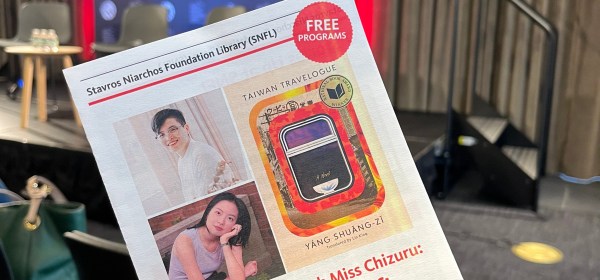
Written by Chee-Hann Wu. This article discusses Taiwan Travelogue and its US book tour earlier this year. It highlights the controversial marketing strategy, the extensive use of footnotes to enrich the historical context, and the categorisation of the novel as queer literature due to the evident, though subtle, romantic undertones between the two female protagonists.

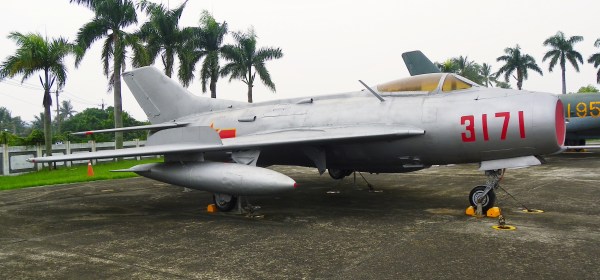
‘Free China’ in History: A Look Back at Cold War Taiwan’s Anti-Communist Defectors 

Written by Andrew Morris. Reflecting on the 2023 IJTS Open Access Award-winning paper, the author revisits his path toward researching the Cold War-era defections from the PRC to Taiwan—stories once celebrated in Taiwan as “anti-communist righteous warriors.” This article shows how these largely forgotten stories offer a rare insight into a fervent hope once shared by millions in Taiwan.

Reflections on “Finding Meaning in Time and Space: Periodisation and Taiwanese-centric History” 

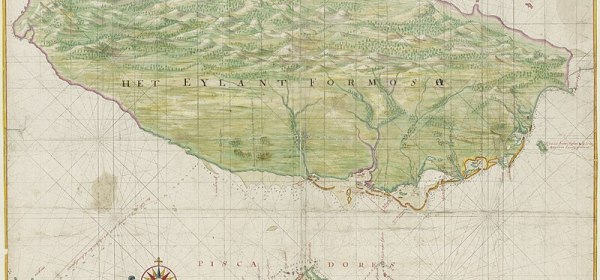
Written by Evan N. Dawley. The 2022 IJTS Open Access Award-winning paper, “Finding Meaning in Time and Space: Periodisation and Taiwanese-centric History,” challenges the conventional state-centric periodisation of Taiwan’s history by proposing a Taiwanese-centric framework that emphasises social transformation and identity formation. This article reflects on this broader trend in Taiwan-focused publications, its influence on the author’s future work, and the strength of this historical approach to understanding Taiwan on its own terms.

Black Cat and Black Dog: Gendered Modernity and Youth Identity in Colonial Taiwan

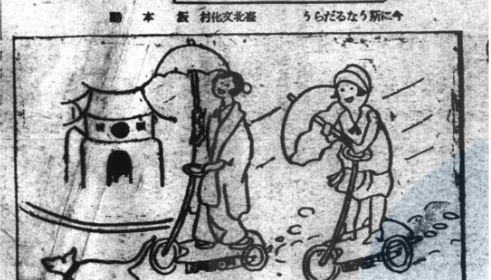
Written by Wei-chi Chen. This article explores the terms “Black Cat” and “Black Dog” in colonial Taiwan during the 1920s and 30s. These terms, originating from a Taiwanese opera song, were used to translate the Japanese “moga” and “mobo,” describing emerging gender identities and a new social identity in modern urban culture. They also reflected a shift towards liberation and a contrast with existing gender norms at that time.

​Taiwan 22: History, Travel, and Talking to Locals: A 2024 Publication by Plum Rain Press

Written by Tyrel Cameron Eskelson. In “Taiwan 22: History, Travel, and Talking to Locals,” the author shares his three-month journey across Taiwan, exploring its history, culture, and the challenges it faces. Through diverse experiences and conversations with locals, he aims to inspire readers to visit the island, connect with its people, and support Taiwan’s pursuit of democracy and freedom in the face of ongoing threats to its sovereignty.

(Re)Writing Taiwan Studies History​

Written by Yu-Han Huang and Li-Ting Chang. This article is about the 30th NATSA Conference’s closing forum, which discussed the historical development of Taiwan Studies as a field, particularly emphasizing its interdisciplinary nature and growing significance in global scholarship. The forum featured four experts who presented their perspectives on Taiwan studies, exploring its evolution through various disciplines such as history, anthropology, ethnomusicology, and medical history. It highlighted the increasing importance of understanding Taiwan within a global context, emphasizing the need to connect its history and experiences with broader international dialogues and discussions.

Taiwanese Psychiatrists’ Cultural Inquiries in the 1950s: Toward a Prehistory of Transcultural Psychiatry and Psychological Anthropology on the Verges of the Japanese and American Empires

Written by Alex Hsu-Chun Liu. This article reviews the cultural inquiries of Taiwanese psychiatrists in the postwar years, a period that saw the birth of transcultural psychiatry. The stories of Hsien Rin and Tsung-Yi Lin revealed the shift from eugenics to socio-cultural psychiatry and contributed to the decolonialisation of psychiatry in a postcolonial society.

An Unseen Legacy: Cold War Liberalism and the Liberal Historiography of Taiwan

Written by Thomas Liang-Chung Wang. This article reviews the discourses of Cold War liberalism in Taiwan, which focuses on the individualistic nature of liberalism. Such a reflection prompts a reappraisal of the present-day concept of the liberal ideal in Taiwan. It questions whether the contemporary vision overlaps with those of refugee liberals, especially on perspectives such as nationalism.

1 2 3 4 15