Why is there so little policy debate in Taiwan’s presidential campaigns?

Written by Gunter Schubert. Taiwan is gearing up for another round of national elections, scheduled for next January. As always, media coverage of election campaigns focuses on the presidential aspect of the national ballot, as this is where elections become most personalized. This is the essence of Taiwanese political culture. All politics becomes personal, involving interactions between candidates and voters, particularly at the local level.

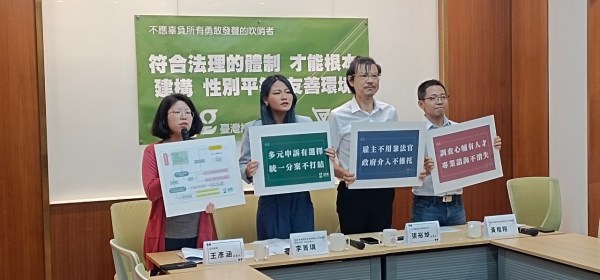
The Green Party Taiwan’s Achievements and Challenges in Promoting Gender Equality

Written by Wang Yan-han, Dafydd Fell and Peng Yen-wen. Founded in January 1996, Green Party Taiwan (GPT) was the first Green Party to be established in Asia. It is one of the oldest movement parties in Taiwan, created through the efforts of student activists and several civil society groups, including activists from the eco-feminist Homemakers United Foundation. One of the main reasons Taiwan has made such impressive progress in the realm of gender equality has been due to civil society activism. Since Green Parties operate on the boundaries between civil and political society, an examination of the GPT’s case can bring a different perspective on Taiwan’s achievements and challenges in the realm of gender equality.

The difficulty of being Hou

Written by Jonathan Sullivan. The KMT’s stellar showing in local elections last November had many in the party dreaming of a return to power in the January 2024 national elections. As has happened in every previous election following a two-term president in Taiwan, a change of party in power (政黨輪替) looked a likely outcome as the DPP haemorrhaged city mayorships and town council seats. In hypothetical polling match-ups at the time, re-elected Xinbei Mayor Hou You-yi handily beat VP Lai Ching-te. Those two and former Taipei Mayor Ko Wen-je have now been formally nominated by their parties to compete for the ROC presidency.

The Fluidity of the Presidential Field

Written by Jonathan Sullivan. Although the main parties have nominated their Presidential candidates, the composition of the field remains fluid and unsettled. On the DPP side, current VP Lai Ching-te long ago locked down the nomination unopposed, and as a continuity candidate enjoying the benefits of incumbency, his campaigning thus far has been relatively smooth. However, Lai’s responsibility for answering any gripes with government policy over the last eight years and the stubborn ceiling to his poll numbers over the last few months suggest substantial challenges to come. But for now, the main uncertainties and drama are on the opposing side of the fence.

Taiwan’s 2024 presidential election candidates: What will Hou or Lai’s election mean for tensions across the Taiwan Strait?

Written by Corey Lee Bell. Taiwan’s main opposition party, the Beijing-friendly Kuomintang (KMT), recently selected its candidate for the 2024 presidential election. With the main competitors for Taiwan’s top job essentially locked in, each has been interrogated on their policies on cross-strait relations in recent weeks. With tensions high across the Taiwan Strait, and between Beijing and Washington, what each candidate stands for could have profound ramifications for, and perhaps even beyond, the Indo-Pacific region.

KMT’s Lost Opportunity to Reinvent Itself Again for Survival

Written by Chieh-Ting Yeh. If—and it’s a big if—the KMT could reinvent itself again, it could find a way to shed the old rifts between the ideological and the opportunistic camps. It could present a platform that is clear in its stance on major social issues. It could take the lead in reviewing its own past as a perpetrator of human rights abuses, even if just to get the issue off its back. It could convince Taiwan’s voters that its China policy is no longer motivated by the older generation’s national identity crisis but based on a pragmatic approach to protecting Taiwan’s sovereignty and security. It could be hopeful. But looking at how the KMT finally settles on its presidential candidate, the KMT still has a very long way to go—and not very much time.

Will the KMT’s Generational Divide Harm its 2024 Election Prospects?

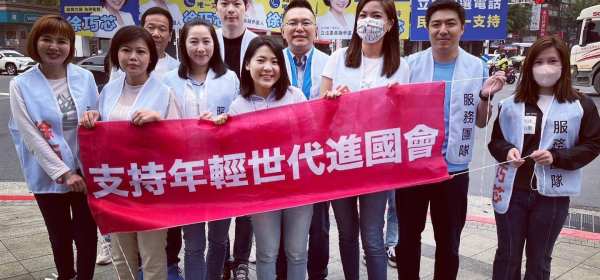
Written by Andrew LaRocca. Caesar, The Planet of the Apes protagonist who incites a rebellion to usher in a new civilization, was recently drawn into the KMT’s internal debates when Taipei City councillor Hsu Chiao-hsin changed her Facebook profile picture to Caesar amidst her escalating battle with senior legislator Fei Hongtai. In the comments, netizens joked: “How many terms can upper leaders serve? How old are those seniors?” Hsu’s Caesar reference reflected a sentiment expressed by many Taiwanese youths: the KMT and its leaders are out of touch with Taiwan’s younger generations.

The KMT Selects Its Presidential Candidate: Can Uniting All Non-Green Friends Make Taiwan Go Blue in 2024?

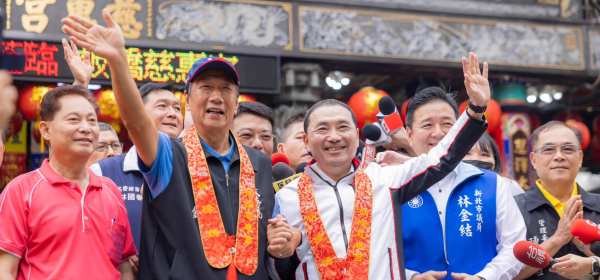
Written by Jasper Roctus. The results of the KMT’s ambiguous drafting (徵召) procedure of its presidential nominee, which commenced after its leadership took control of the process, should be announced by May 20. The KMT’s selection committee nevertheless already appears reluctant to accept Terry Gou’s eccentric rhetoric and, most prominently, fears electoral outfall over his close China ties. Gou himself also frequently alludes to his extensive bonds with the Chinese mainland by boasting about the leverage he holds in solving the hostile status quo across the Taiwan Strait. Considering that the KMT is still reeling from the landslide defeat of Han Kuo-yu in 2020, its last maverick businessman presidential nominee, the selection of the softer-spoken Mayor Hou as its candidate for 2024 appears to be a foregone conclusion. By early April, the KMT had allegedly already reached an internal consensus on its candidate – a clear reference to being ready to select Hou.

Hou You-yi and Terry Gou in the KMT nomination process: electoral prospects for 2024

Written by Mingke Ma. Unlike the nomination process for the General Election in 2020, the Chinese Nationalist Party (中國國民黨, KMT) decided to forgo a party primary election to nominate its presidential candidate for the upcoming General Election in 2024 to ‘avoid internal strife’. New Taipei City Mayor Hou You-yi (侯友宜) and the founder of Foxconn, Terry Gou(郭台銘), have publicly declared their interest in endeavouring for the KMT’s presidential nomination. In this piece, I will show that although Hou seems more likely to receive the KMT’s final nomination, Terry Gou remains an important asset for the KMT’s overall electoral prospects.

Internal Divisions, Regardless of the Outcome: The KMT’s Troubled Candidate Decision-Making Process

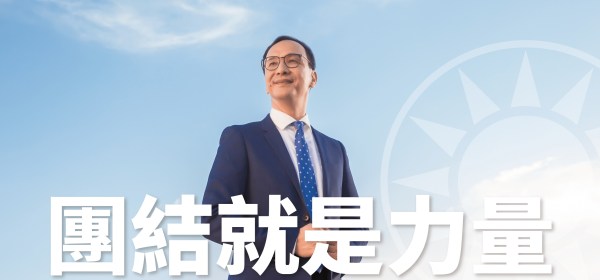
Written by Brian Hioe. At this stage in the election, the KMT has already announced some of its planned legislative candidates. In addition, the KMT is slated to announce its presidential candidate sometime this month, with a party congress planned in July. But the KMT’s process to decide both the presidential and legislative candidates that the party will field in the 2024 elections has already been controversial. Moreover, the primary outcome threatens to further divide the party at a time when the pan-Blue camp is already plagued by in-fighting. Likewise, the controversies that have already occurred reflect the party’s unresolved internal divisions at a time when the party likely needs unity if it hopes to prevail in the 2024 elections.

Battle for the KMT: For election or ideology?

Written by Adrian Chiu. It was generally thought that political parties are either election-based or ideology-based, depending on the factions dominating the party. The Chinese Nationalist Party (KMT), having lost two presidential elections in a row, are now at crossroads to decide which they are for. As a mainstream party in a two-party system, the KMT is generally assumed to be aimed at winning elections. But as a former authoritarian party, adapting to electoral politics has always been tricky for the party. The increasingly vocal ‘deep blue’ faction within the party also seemed to suggest otherwise. As the general elections draw near, the temperature is rising for the battle for the party.

Can Democracy be fed (or fed up)? Economic Factors Towards Democratic Development and Political Efficacy in Taiwan Presidential Election (1996-2020)

Written by The Fengze Strategy. Taiwan’s 2024 presidential election is approaching. Although candidates from different major parties have yet to stand out representing their parties, economic development has been considered an essential issue in every campaign. Some political entrepreneurs thought that democratic values could not be sufficient for economic development; in other words, citizens who prefer economic development the most would consider the so-called democratic value to be “a castle in the sand”. In this article, we will examine the presidential elections in Taiwan from 1996 to 2020 through the basic factor of economic development, the gross domestic product (GDP).

1 2 3 4 5 6 17