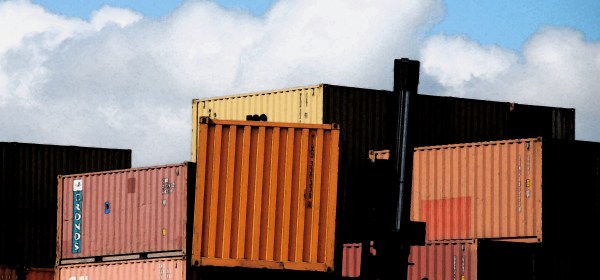
Taiwan’s Trade Dynamics in 2023: Challenges and Partners Shifting 

Written by Yun-Chieh Wang. In 2023, Taiwan’s international trade experienced a decline in growth because of global economic challenges, with a notable dependency on semiconductor exports. Despite this downturn, Taiwan’s trade gap widened positively, attributed to the reshoring of Taiwanese enterprises, and increasing foreign investment. Meanwhile, the Taiwanese government is actively diversifying its trade partners, reducing its reliance on China and forging ties with the U.S. and U.K. through trade agreements.

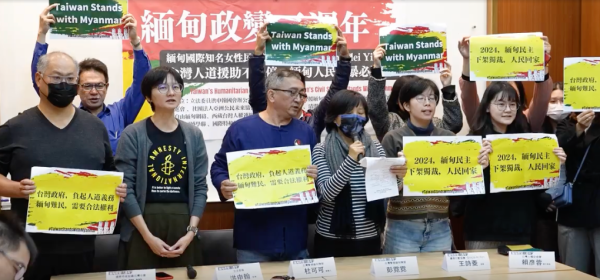
Envisioning Migrant Worker Policy: Toward Dignity and Well-being 

Written by Hang-Tang Chen; translated by Yu-Chen Chuang. Taiwan needs to refine its migrant worker policies to focus not only on labour contributions but also on the well-being and dignity of the workers. Personal stories of migrant workers in this article reveal the necessity for comprehensive policies that address the physical and mental health needs, acknowledging the humanity behind the workforce.

Where’s Post-Election Taiwan Heading?

Written by Plamen Tonchev. The presidential and parliamentary elections held in Taiwan on 13 January 2024 were closely watched globally, as their potential implications could reverberate far beyond the island’s shores. Two oft-quoted arguments relate to the fact that Taiwan is home to a huge chunk of the world’s cutting-edge semiconductors, and the volume of maritime traffic through the 110-mile-wide strip of water between the Chinese mainland and the self-governed island. Add to that the political significance of Taiwan’s subjugation to Beijing’s “national rejuvenation” vision, as well as the geostrategic importance of the first-island chain to the entire Indo-Pacific region.

Taiwan’s 2024 Elections: How will China Respond?

Written by T.Y. Wang. Lai’s victory, nevertheless, is a rebuke to Beijing’s sovereignty claim of the island and a hard pill for Chinese leaders to swallow. In the aftermath of the election, observers are pondering how Beijing will react to Taiwan’s electoral outcomes. Chinese leaders view Lai as a “separatist,” and his affiliated DPP is a secessionist political party. A win by Lai, in their mind, means Taipei will continue its policy of pursuing Taiwan independence in spite of Lai’s pledge to continue the incumbent President Tsai Ing-wen’s policy of maintaining the status quo. Prior to the election, Beijing had magnified a “war and peace” narrative, intensified its military and economic pressure on Taiwan and warned the island citizens to make a “correct choice” in the elections.

Beyond Mayday’s Lip-synching Investigation: Taiwan’s Music Freedom Questioned Under PRC Influences 

Written by Chen-yu Lin. On December 28, 2023, Reuters and CNN​ reported a disconcerting incident involving Mayday, a Taiwanese rock band, who found themselves entangled in a request from Chinese authorities to make pro-Beijing statements. As reported by CNN, the authorities demanded a public statement affirming the unity of China and Taiwan as a single nation. The band’s refusal to comply resulted in consequences related to alleged lip-synching, which is referred to as “deceptive singing (假唱)” in Chinese. This accusation carries the potential for fines or even performance bans under Chinese law. These developments stemmed from their December concert in Shanghai and are potentially connected to Taiwan’s presidential election in January 2024, prompting an ongoing investigation.​ 

Taiwan and the Free World Need A New Strategy To Confront China 

Written by Daniel Jia. Taiwan’s 2024 presidential election has concluded. The Taiwanese people have elected the China-defiant candidate as the new president. For Taiwan, the results of the election are important. But what is more important, in view of the presence of China’s meddling with Taiwan’s election, is to lay out new strategies to mitigate China’s interference in the future.  

Taiwan Election 2024: What it Means for the Island’s Future Engagement with the Asia-Pacific Region

Written by Raian Hossain. Now that the election results are in, the period of intense suspense and electoral speculation has concluded. The issue of cross-strait relations remains unresolved, as the People’s Republic of China (PRC) insists that the Republic of China (ROC), often known as Taiwan, is a separatist province of the mainland and aims for reunification. For the first time in history, Taiwan has re-elected the same political party to govern the democratic island for a third consecutive term. The election of Lai Ching-te on Saturday signifies a strong counter to the People’s Republic of China’s (PRC) forceful stance and intimidation tactics towards the island. The primary challenge now is how Lai’s new government will maintain its relations with Beijing and navigate the complex triangular dynamics of the US, China, and Taiwan.

Three Happy Losers and One Winner: Comments on the 2024 Taiwan National Elections

Written by Chia-hung Tsai. Taiwan’s 2024 presidential and legislative elections, held on 13 January, concluded peacefully, revealing key insights into the electorate’s priorities. The results highlight that voters are influenced by both their sense of Taiwanese/Chinese identity, especially in the context of cross-strait relations, and their pragmatic concerns for personal, tangible interests, for instance, low income, high inflation, high unemployment rate and unaffordable housing prices for average middle class in Taiwan. These transcend ideological or identity boundaries. The dual factors set the stage for the critical governance issues and candidate personalities that defined the election.

What Does Taiwan’s Presidential Election Outcome Tell Us About Its Economic Prospects?

Written by Min-Hua Chiang. William Lai (Lai Ching-te) of the Democratic Progressive Party (DPP) secured his election as Taiwan’s 16th president on January 13, 2024. As the DPP extends its rule for another four years, the administration is likely to maintain President Tsai Ing-wen’s economic policies, notably diversifying the economy away from China. Navigating Taiwan’s export-oriented economy through the evolving US-China relationship will pose the most significant challenge for the new administration. 

Taiwan’s New President: Continuity, Priorities, Vision

Written by Chieh-Ting Yeh. As recent developments transition into a period of stability, the focus shifts towards what lies ahead. The incoming government faces pivotal questions: How will President Lai’s four-year term compare to President Tsai’s preceding eight years? What key challenges await immediate attention from President Lai? Additionally, it’s crucial to consider the direction in which Taiwan is heading to carve its unique identity in the global landscape.

“The Will of the Chinese People”: Beijing’s Narrative of Invading Taiwan

Written by Kuang-shun Yang. For decades, Taiwan has lived under Beijing’s constant military threat of “reunification.” However, Taiwan is often portrayed by Chinese propagandists as a “troublemaker” capable of destabilising the Indo-Pacific region or making China “upset about everything we [Taiwan] do, about our existence,” as Taiwan’s ex-ambassador to the United States Hsiao Bi-khim noted. Taiwan’s independence, be it a political appeal or an objective reality, is provocative to the Chinese Communist Party (CCP). The CCP’s mouthpieces have effectively convinced numerous international observers to discourage Taiwan’s quest for independence and characterised Taiwan’s autonomy as an affront to the Chinese people.

1 10 11 12 13 14 61