Does “Hong Kong Influence” Linger in the 2024 Taiwan Election?

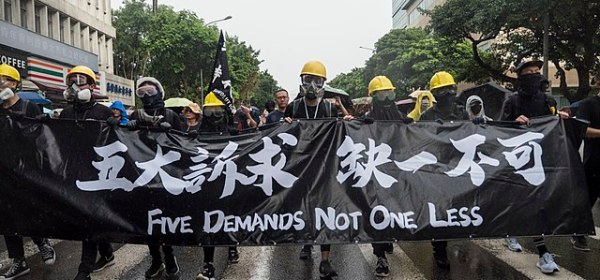
Written by Sanho Chung. It has been widely recognised that Hong Kong’s Anti-Extradition Movement in 2019 was the turning point of the 2020 General Election in Taiwan. In the last general election, Beijing’s hardline crackdown on the protests in Hong Kong gave rise to the Taiwanese’s mistrust of China and finally brought a big win to the Democratic Progressive Party (DPP), which was expected to lose both their majority over the Legislative Yuan and their presidency. But after three years of National Security Law (NSL) enactment in Hong Kong, the Hong Kong issue in this general election seems no longer as focal as it was. How should we make sense of this huge contrast in attention? Has “Hong Kong Influence” faded out totally?

How Czechia Engages Taiwan 

Written by Filip Šebok. While it has been over the past few years that the Czech-Taiwanese relations have grabbed headlines over the world, the two sides’ ties have not come from nowhere. In fact, the recent intensification of cooperation has been built on a very solid foundation jointly forged by the two sides since the early 1990s. Taiwan has become an important investor in the Central European countries already in the 2000s, especially through the investment of electronic manufacturer Foxconn, which has become a major exporter and tax payer in the country.  

Taiwan-Netherlands relations: strong ties with historical weight

Written by Sense Hofstede. Taiwan and the Netherlands share a long history. The island’s central position on the critical trading networks of its time sparked Dutch interests both in the 17th century and today. Dutch-Taiwanese economic ties are strong but also increasingly under intense scrutiny as the chip war heats up. Next to strong trade ties, a 1980s arms sale is the most high-profile of the Netherlands’ maritime ​​​​security involvement with Taiwan. The historical, security and economic ties all touch upon sensitive issues. 

The EU-China Summit and the Future of EU-Taiwan Relations: Reconstructing the Normative Agenda

Written by Dominika Remžová. A few days prior to this year’s EU-China summit (the first to take place in person since the COVID-19 pandemic), the Financial Times has published an opinion piece by Anders Fogh Rasmussen, former Secretary-General of NATO, calling for the Union’s stronger support for Taiwan. The article singles out security considerations as the main reason for such a principled stance, which the author acknowledges has been taken up by only a few Central and Eastern European (CEE) leaders. This focus on security issues and small states is noteworthy, as it provides the most fruitful avenue for further strengthening of ties moving forward.

Cybersecurity and National Security in Taiwan and Japan

Written by Margaret Siu and Tommy Hall. In an era where digital technology permeates every aspect of our lives, national security strategies increasingly hinge on robust cybersecurity measures. This is particularly evident in the approaches of Taiwan and Japan, two democratic governments at the forefront of integrating advanced technological defences against emerging digital threats. The evolving cybersecurity strategies of Taiwan and Japan are not merely reactive measures to emerging threats but are emblematic of broader global trends where digital security is inextricably linked to political stability. Their experiences offer vital insights for other governments grappling with similar challenges, emphasising the importance of agility, technological innovation, and international cooperation in crafting national security strategies for an interconnected digital world.

Digital Governance Perspectives for Taiwanese and Japanese Civil Society

Written by Tommy Hall and Margaret Siu. In the digital age, politics and technology are more intertwined than ever, especially in East Asia. With nations like Taiwan wrestling with the balance between free speech and foreign interference and Japan pivoting towards advanced tech solutions for national security, the right balance remains elusive, and the stakes perennial. By exploring these critical intersections between online spaces and national politics, this work spotlights the challenges and opportunities that lie ahead for these East Asian democracies, as well as connecting the East Asian experience to the world at large.

US-Taiwan Trade Agreement: It is More of Politics than Economic

Written by Raian Hossain. Taiwan has severe military security concerns, and the island has over-trade and investment dependency towards the PRC, which raises the question of economic security. As of 2022, the PRC accounted for 25% of Taiwan’s exports and 20% of its imports, making Beijing still the largest trading partner of Taipei. However, Taiwan made significant progress in growing trade by 25% with the U.S. in 2021 and expanded its trade volume with New South Bound countries under President Tsai Ing-wen. After a year of negotiations aimed at diversifying trade and commerce, the U.S. and Taiwan signed the first part of the US-Taiwan Initiative on 21st Century Trade. Meanwhile, the second round of negotiations has already started.

Taiwan-US Trade Initiative: A good start, but the beginning of a long road

Written by Chieh-Ting Yeh. In 2005, I understood the FTA to be an aspirational long-shot—something that we can press for but not something we should expect to see in the foreseeable future. Recent developments such as the 21st Century Trade Initiative are milestones for sure, but milestones to mark just the beginning of a long road for a true free trade agreement with the US, as well as meaningful participation in regional trade blocs.

The Prospect of a US-Taiwan BTA in an Era of Heightened Political Exchanges

Written by Brian Hioe. The US and Taiwan signed the first stage of the US-Taiwan Initiative on 21st Century Trade in June, paving the path for both to streamline customs and taxation procedures between both sides. The trade agreement will also boost economic cooperation regarding small-to-medium-sized enterprises, while implementing anti-corruption measures. Progress on the trade agreement has continued, with the second negotiating round of the agreement starting in August. In particular, an end to double taxation between the US and Taiwan is a concrete outcome that both sides may pursue, long a stumbling block for those that work and do business in both the US and Taiwan. As progress on the US-Taiwan Initiative on 21st Century Trade has continued, legislation to this effect has been introduced in the US Senate.

Hong Kong’s National Security Law 3 years on – Taiwan should build a defence

Written by Michael MO. Hong Kong’s pro-democracy struggle was a hot-button issue in 2020’s Taiwan presidential election campaign. Both President Tsai and former head of Executive Yuan Su Tseng-chang took the city as a case in their speeches to remind the Taiwanese to defend the island and not turn Taiwan into another Hong Kong. Three years on, specific policies to guard the country against the potential legal and political harassment from the extraterritorial application of the NSL remain non-existent. While the issues of Hong Kong may no longer be a concern in the presidential race, the need to build a robust defence to protect Taiwanese interests in Hong Kong should still be on the political agenda of the island.

Under The Radar: How Taiwan Compares to Sexism in the East

Written by Zoe Parrott. There is no doubt that, as three examples of major developed East Asian countries, Japan, South Korea, and Hong Kong are able to boast of countless laudable achievements. Furthermore, compared to other countries, all of these nations have impressive Human Development Indexes, ranking higher than the United States. However, there is one aspect of each of these nations that often flies under the radar – the infamous gender inequity these nations are characterised by. For concrete examples, look no further than DJSoda, who was sexually assaulted during her show in Osaka, Johnny Kitagawa, who, for decades, dangled “the price of stardom” as an explanation for his sexual abuse, and the four undergraduates who were sexually harassed and/or raped by their older 28-year-old peer at the Education University of Hong Kong.  However, there seems to be one outlier among its peers – Taiwan, otherwise known as the Republic of China.

Taiwan and Europe – Partners of choice, not obligation

Written by Zsuzsa Anna Ferenczy. In January 2024, Taiwan will elect a new president. Facing an existential threat from China, for Taiwan cooperation with the EU as a partner is essential to strengthen its democratic resilience. To expand the partnership however, a better understanding of the complex nature of the EU and developing a greater sense of clarity about what Taiwan wants will be indispensable. 

1 11 12 13 14 15 61