Taiwanese American as an Aesthetic/Academic/Activist Concern 

Organized by I-Lin Liu. Taiwanese American is not a given status but a process of becoming. For first and second-generation Taiwanese Americans, the experience of living in a foreign land and becoming a member of an ethnic minority group often creates occasions for rethinking or reconceptualizing the meanings of being Taiwanese or Taiwanese American. This article focuses on the meaning(s) of Taiwanese American identity, community building, and the future of the Taiwanese American identity.

NATSA: Repositioning Taiwan

Written by Chee-Hann Wu. The North American Taiwan Studies Association (NATSA) is a registered nonprofit organization and the largest scholarly association dedicated to Taiwan Studies in the United States and Canada. It was founded in 1994 when Taiwan Studies became a booming field of research that attracted international attention during the 1990s, a period of rapid political, economic, social, and cultural change in Taiwan. The growing academic interest in Taiwan called for a regular and interdisciplinary academic forum. To establish such a forum, the North American Taiwan Studies Association’s constitution was drafted and ratified at the first annual conference at Yale University in June 1994.

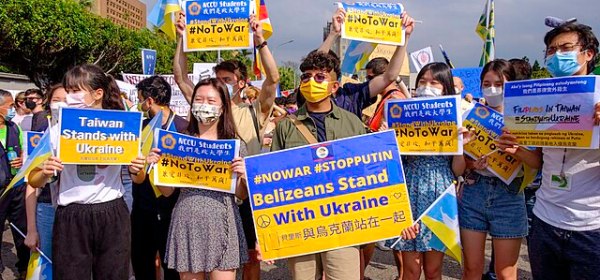
A lesson from the Russo-Ukrainian war for Taiwan: Connection

Written by Patricia Elnakhal, H.K. Wind and Fengze Strategy. Currently, the controllable intensity on the Taiwan Strait can potentially escalate. The growing frequency of analogous cases that several military aircraft from the mainland flying into the island’s air defence zone cause the intensity on this territory, while the situation is still under control because these actions are mainly for strategic purposes. More importantly, none of the powers is fully prepared for uncontrollable collisions, but the situation’s development indeed keeps invisibly escalating. As a lesson from the Ukraine war, Taiwan has to construct an unbroken and heavy rope connecting itself to the international community to prepare well earlier for various possibilities. The connection between Taiwan and the international community could be observed through two main aspects: the diplomatic interactions connecting to international politics and the economic development connecting to the international market.

Unveiling Contemporary Taiwan Identity: What Lesson can we Learn from Dcard’s Responses on the Hong Kong Immigration Wave?

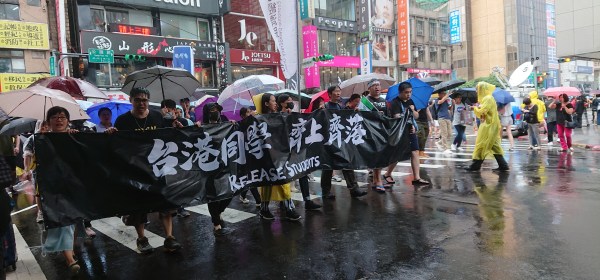
Written by Cheuk Kwan Lau. In January 2023, a BBC news article brought attention to the challenges faced by Hong Kongers who migrated to Taiwan. The news pointed out that Hong Kongers who migrated to Taiwan face institutional obstacles when applying for citizenship. Immigration laws in Taiwan were claimed to be outdated. The migrated Hong Kongers could legally inhabit Taiwan, yet they did not enjoy citizenship and civil rights.  

Instead of exploring the various institutional obstacles they face, this article takes a unique approach by examining the perceptions of the Taiwanese young generation regarding the influx of Hong Kong immigrants. It aims to uncover the contemporary Taiwanese identity constructed by this demographic, previously seen as a strong ally of Hong Kong protestors during the 2019 Anti-Extradition Law Movement.

Ethno-culture in national identity formation: what lesson can we learn from Taiwan?

Written by Olga Daksueva. The Russia-Ukraine war brought back discussions on national identity and how it is formed. National identity consists of two components: ethnocultural and political. Ethno-culture is often viewed as “the core of a nation and national identity,” which includes language, history, culture, and religion. It is argued to become the passé and to be replaced by the political component, which is designed through state sovereignty and territorial boundaries, delimiting the extent of nations and, by doing so, forming commonalities within the nations. However, the fact that we share a common territory is insufficient to get attached to the country. States also utilise various means to shape salient national identity through “rediscovery, reinterpretation and regeneration of [national] community.”

Colonial Nostalgia and the Delegitimisation of Pro-democracy Forces in Hong Kong and Taiwan

Written by Zeng Ee Liew. The term ‘colonial nostalgia’, or 戀殖 (lian zhi), has appeared more and more since the 2000s in the discourse used by Mainland China to describe the politicians or activists who advocate for democracy or even independence in both Taiwan and Hong Kong. Very often, those democracy or independence activists will be described as ‘traitors’ who still harbour lingering love or affection and pander to the former Western or Japanese colonial power and fail to show full patriotic love to the motherland. The use of such discourse can be seen from the lens of a broader effort by the Chinese government to delegitimise those pro-democracy activists, which will be explored further in this article.

Has Taiwan Escaped Nostalgia for Authoritarian Times? Taiwan and Regional Comparisons

Written by Brian Hioe. Contemporary Taiwan is often hailed as a beacon of democracy in the region. Namely, Taiwan today holds free and fair elections after transitioning from its authoritarian past, which saw a history of one-party rule by the KMT. In various indexes of democracy, Taiwan usually scores highly regarding freedom of the press, speech, and expression. Part of the reason why Taiwan scores highly in contemporary indexes of democracy may be to differentiate Taiwan from China at a time of rising tensions between Western powers and China, raising questions about whether this proves a way that the Cold War framing of “free China” has subtly made a comeback. The underlying pressure to differentiate Taiwan from China has always been a substrate of Taiwan’s modern politics, whether in the present or in authoritarian times.

Staging and Restaging Taiwan at the Centre Pompidou: Taiwanese Art on Display 2020 to Present

Written by Gabriela-Alexandra Banica. In the third decade of the 21st century, Taiwanese artists and exhibitions have appeared at the Centre Pompidou in Paris and Metz, and this could serve as a compelling case study of Taiwan’s pursuit of international recognition through arts. Through this exploration, this article aims to address the gaps in the current scholarship related to curatorial practices concerning art from contested territories while enriching the field of France-Taiwan curatorial practices. By analysing the current subject of interest, it is hoped that art from more disputed territories can be made accessible to audiences in France, Europe, and around the globe.

Han-Heterosexual-Male Supremacy across the Pacific? A Critique of The Taiwanese Reminiscence Acrobatic Show

Written by Mark Hsiang-Yu Feng. Busy as usual was Highway number eighty, but Mother’s Day made downtown San Jose unexpectedly quiet. However, in front of the California Theatre, lively chat sounded out of the silence, marking this celebratory moment for the twentieth anniversary of the Taiwanese American Center of Northern California during Asian and Pacific Islander heritage month. Families came to fill most of the seats, and three languages—Hoklo Taiwanese, Taiwanese Mandarin, and English—were spoken to express the identity of these participants. To honour the culture of Taiwanese and Taiwanese Americans, the overall narrative of Taiwanese Reminiscence contextualises a mixture of stunts, acrobatic movements, and dance into a condensed representation of the twentieth history of Taiwan.

Triangulating the Taiwanese Spirit in Southern California: Colonial Hauntings at the 228 Commemorative Concert

Written by Chun Chia Tai. In February, I saw a text message in a Taiwanese group chat promoting a concert commemorating the 228 massacre caused by the Kuomintang dictatorship in Taiwan on February 28th, 1947. The concert was called The Spiritual Day of Taiwan: 2-28 76th Commemorative Concert and was hosted by two Taiwanese American organisations: the Taiwanese United Foundation and the Taiwan Elite Alliance, since 2007. The performers were mainly Taiwanese. Many of them were not professionals but members of local Taiwanese church choirs. Most of the audience was familiar with the songs being performed; therefore, they sang along with the performers.

Reflecting on the Laguna Woods Shooting Tragedy: One Year Later

Written by Wayne Huang. On May 15, 2022, a fatal shooting occurred at the Irvine Taiwanese Presbyterian Church in Laguna Woods, California. During a lunch reception, the gunman locked the doors and opened fire with approximately a hundred people present. The church has been recognised for its significant role in Taiwan’s democratisation and independence movements since the 1970s. It has led to the suspicion that this historical connection motivated the assailant to travel over a hundred miles from Las Vegas to target the church. The shooting resulted in six individuals being shot, including Dr John Cheng, who lost his life while attempting to disarm the gunman. 

1 12 13 14 15 16 61