Europe’s Dream of Strategic Autonomy

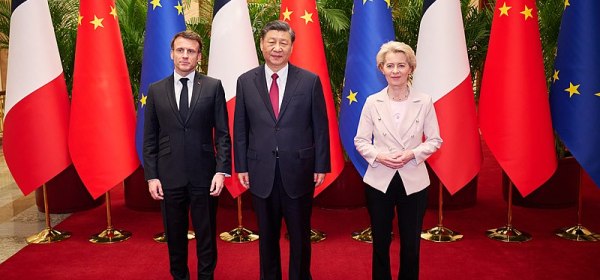
Written by Gunter Schubert. Slowly, the dust settles after French President Emmanuel Macron’s remarkable performance during his state visit to China from April 5-7. However, it is a safe bet that his statements on the danger of the European Union (EU) being drawn into a war by the US because of Taiwan, a place of no interest to Europeans, will have long-lasting repercussions for the transatlantic relationship.

Recognising the ‘Taiwan Issue’: Analysing the Impact of the UK Government’s Integrated Review Refresh

Written by Max Dixon. The British Government’s ‘refreshed’ foreign policy document, released in March 2023, emphasised the increasing parallels drawn between the plight of Ukraine amidst Russian aggression and the threat posed to Taiwan by increasing Chinese assertiveness. The Integrated Review Refresh 2023, the first clear enunciation of British Prime Minister Rishi Sunak’s foreign policy approach, sought to revise the 2021 Integrated Review. The Refresh formally recognises tensions in the Taiwan Strait for the first time in British foreign policy yet addresses Taiwan with a degree of tentativeness that will necessitate greater clarity in the future.

Graduation Trip: From Bland Bureaucrat to Madame Liberty

Written by Chieh-Ting Yeh. In 2011, a relatively unknown politician in Taiwan named Tsai Ing-wen became the presidential candidate for the Democratic Progressive Party, which was at the time the opposition. She was a capable bureaucrat that was most notable for her blandness; she had close to zero personal charisma to speak of.  

Ironically, this was also her strength. The last DPP president, Chen Shui-bian, was seen by American policymakers as an unpredictable populist. He used his charisma to play to his base’s anti-China stance. As a result, when the US was trying to engage China, Chen and the DPP were seen as “troublemakers”, raising “tensions.”

Chinese Military Drills After Tsai-McCarthy Meeting Will Be Used for Political Ammo by Both Camps

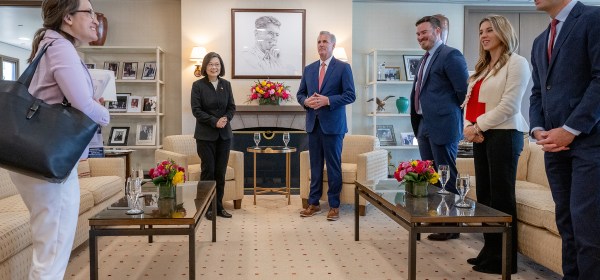
Written by Brian Hioe. One of the striking effects of Pelosi’s visit to Taiwan last August was to what extent it highlighted the perception gap within Taiwan as compared to outside Taiwan.  

At the time, much international discourse acted as though the Pelosi visit could be a prelude to World War III. Drama ensued from the visit’s onset, with the flight that Pelosi took to Taiwan followed by over 700,000 users on flight tracking website FlightRadar24–setting new records. Op-eds in international media outlets such as the New York Times framed Pelosi’s visit as unnecessarily provoking China.

President Tsai Ing-wen’s successful travels, in spite of a Chinese headwind: Solidifying Central American and US relations

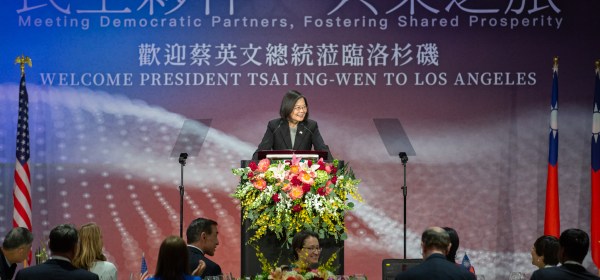
Written by Gerrit van der Wees. From late March through early April 2023, Taiwan’s President Tsai Ing-wen made her seventh foreign trip since becoming President in May 2016. The destinations were the Central American countries Guatemala and Belize, with stopovers in New York (on the way out) and Los Angeles (on the way back). The 10-day trip was her first foreign travel after Covid-19 made it sheer impossible to make such trips during the period 2020 – 2022. This trip became headline news because the CCP government in Beijing voiced major objections, particularly against a planned meeting with US House of Representatives Speaker Kevin McCarthy in Los Angeles. The objections are a continuation of the protests by Beijing against the August 2022 visit to Taiwan by McCarthy’s Democratic predecessor, Nancy Pelosi.

What A 2nd Trump Term Would Mean to Taiwan (and the US)

Written by Daniel Jia. Taiwan does not need and must avoid having a Taiwanese version of Donald Trump. However, Taiwan must be ready for a second Trump term unfavourable to Taiwan’s security. The new Trump administration would resume the economic-centred relationship with China as it did in the first term, likely at the cost of Taiwan’s international status and sovereignty. Taiwan cannot change Trump. But Taiwan can and must show the free world its resolve to defend itself like what Ukraine has been doing. With this unwavering resolution, Taiwan would have the chance to rally international support in the event of a China invasion. Then, and only with this determination, could Taiwan bring the US public and Congress to its side and mandate the lukewarm Trump to act as Biden in the current Ukraine-Russia war.

Japanese Colonial/Occupational Histories in the National Museums: A Comparison Between Taiwan and Singapore

Written by Pin-Yi Li. In the postcolonial Asian context, national museums reflect the countries’ colonial histories and their transformation, offering the country’s incumbent political elites the opportunity to reinvent or adjust the initial museum discourses framed by the colonisers. For example, respectively built by the Japanese and British colonial governments, both the National Taiwan Museum and the National Museum of Singapore are the oldest public museums in each country.

Opportunities abound to ram up UK-Taiwan relations

Written by Huynh Tam Sang and Phan Van Tim. By and large, there are ample opportunities for the UK and Taiwan to deepen their relationship, given Taiwan’s geopolitical importance and rising prominence as a robust democracy and resilient economy. Moreover, should London genuinely devote its time and energy to pushing its “Indo-Pacific Tilt”, engaging with Taiwan would benefit London as it helps the great power establish a firm footprint in the area while demonstrating the country as a responsible stakeholder in the region.

Who are the Allies of the Chinese Communist Party (CCP)? Neologisms, Netizens, and Nationalisms 

Written by Hsin-I Sydney Yueh. Recently, Taiwan’s Ministry of National Defense rejected a Japanese news report suggesting a widespread tendency among retired Taiwanese military officials to “sell out” their country. Wu Sz-Huai, a retired lieutenant general and incumbent opposition KMT party legislator, was among those who denounced this allegation.  

“Are we Chinese spies (共諜)?” Wu angrily asked this rhetorical question during a session of the National Defense Committee at Taiwan’s Legislative Yuan on March 2, 2023. While Wu denied being a Chinese spy, Taiwanese netizens teased him by sharing a photo of Wu and other retired Taiwanese military officials attending a CCP-hosted event, where they had sat attentively and listened respectfully to China’s leader Xi Jinping in 2016. Wu’s use of the term “Chinese spies” reminds us of another similar expression in Mandarin Chinese: “allies of the CCP” (中共同路人). This expression has recently gone viral in Taiwan’s online communities, used for self-mockery and as an attacking label.

Freedom Fighting: Taiwan’s Resistance against China’s Ethnonationalism   

Written by Hsin-I Cheng. In the past decade, the world has heard the resisting voices of dissidents across Asia. From the 2014 Sunflower Movement to the Occupied Central Movement in Hong Kong later in the same year, citizens peacefully held their governments accountable. Since then, we have witnessed mass protests for freedom and transparency in nations. These challenges against authoritarianism generated transnational synergy, as demonstrated in the “#Milk Tea Alliance.” This movement started in 2020 when young Thai netizens fought cyberattacks against two Thai celebrities who expressed support for Taiwan and Hong Kong’s autonomy. Shockingly, two years later, the world witnessed Russia’s further invasion of Ukraine—it is a less militarily powerful neighbouring nation. Against these backdrops, we launched the book: Resistance in the Era of Nationalisms: Performing Identities in Taiwan and Hong Kong.

History was Reconfigured at the Time of Discovery: The Life and Afterlife of Chiang Wei-Shui

Written by Fang-Long Shih. The life and afterlife of Chiang Wei-Shui (蔣渭水 1891–1931) have echoed what the film Rashomon has denoted: “History was not found at the time of its occurrence, but was reconfigured at the time of discovery” (dir. Akira Kurosawa 1950). In 1921, Chiang Wei-Shui founded Taiwan Cultural Association (TCA, 台灣文化協會), the first culture-based organisation in Taiwan’s history. The TCA was established “to promote Taiwan to a position of freedom, equality and civilisation”. The TCA also had a political aim to “adopt a stance of national self-determination, enacting the enlightenment of the Islanders, and seeking legal extension of civil rights”.

For the UK, Taiwan Could Provide an Alternative to Confucius Institutes

Written by Adrienne Wu and Marshall Reid. For the United Kingdom, 2022 was a year of significant change, particularly in its approach to the People’s Republic of China (PRC). Following years of relatively cordial UK-PRC relations, London followed the example of many other European states by shifting to a far more sceptical, confrontational policy toward Beijing. While this transformation was the product of various factors—from growing concerns regarding China’s human rights abuses to rising awareness of the PRC’s coercive economic policies—it was heavily influenced by domestic political manoeuvring. Nowhere was this more evident than in the competition between Liz Truss and Rishi Sunak to succeed Boris Johnson as prime minister, in which both candidates sought to frame themselves as the most tough-on-China. In a move emblematic of this game of China-sceptic one-upmanship, Sunak made the bold claim that he would close all of the UK’s remaining Confucius Institutes, the PRC’s international Mandarin language learning centres.

1 14 15 16 17 18 61