Eighty Years After the Battle of Okinawa, Thousands of Taiwan’s World War II Dead are Still Missing

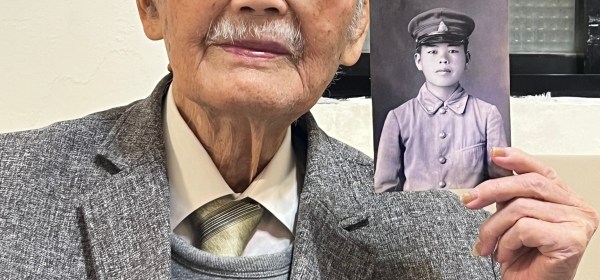
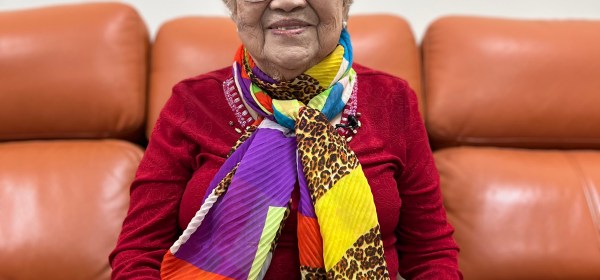
Written by Bryn Thomas. This article interviews one of the thousands of Taiwanese who fought for Japan in the Battle of Okinawa. With at least 1000 Taiwanese troops took part and suffered a casualty rate of over 90% during the battle, the Okinawa Peace Memorial only listed 34 names of Taiwan’s war dead. The postwar political situation in Taiwan made it complex to honour these fallen soldiers.

Taiwan’s Forgotten War: WWII Survivors Remember US Bombing Raid On Taipei

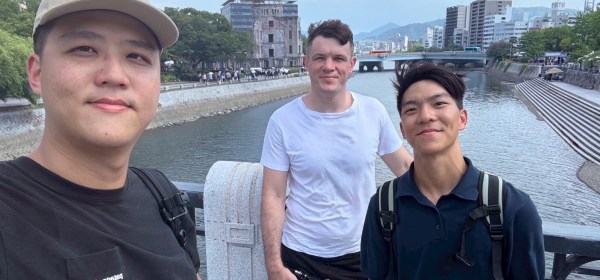
Written by Bryn Thomas. This article remembers the survivors of the US bombing of Taipei in May 1945. Although the day was one of the deadliest in Taipei’s history, there are no public memorials to the Taipei Air Raid. In the 80 years since the war, a combination of political realities and dominant narratives has left it largely forgotten, except by those who lived through it. 

“From Empire to Republic”: Taiwan, WWII, and Making a History Docuseries

Written by Bryn Thomas. This article takes us behind the scenes in the creation of the From Empire to Republic docuseries of TaiwanPlus News and this special issue. Taiwan’s World War II history made it to the headlines time and again in 2025, including President Lai Ching-te marking the 80th VE day in May to Lai drawing parallels between current Taiwan and the 1930s’ democracies when commemorating the VJ day.

When Secrets Collapse: Implications of the China Spy Scandal on UK-Taiwan Relations

Written by Alexandra Whitehead. This article asks what the China spy scandal in the UK means for Taiwan and analyses both its opportunities and risks, including the need to reassess its relations with Beijing and to clarify its legal framework to match its political rhetoric. Putting them together, the case is unlikely to drastically change the course of UK-Taiwan relations. 

The Rise and Exclusion within Multicultural Discourses of Immigrant Integration in Taiwan

Written by Chien-Ping Liu. This article examines how transnational marriage migration has reshaped Taiwan’s demographic and civic landscape since the 1990s. It traces the shift from stigmatisation to multicultural recognition through grassroots advocacy and state developmental agendas. While bottom-up movements advanced inclusion, state-led multiculturalism often instrumentalised difference, reproducing class, gender, and geopolitical hierarchies within Taiwan’s immigrant integration discourse.

NATSA 2025 Opening Forum: Otherwise Relations between Taiwan and Southeast Asia

Written by the NATSA 2025 Programme Committee. This article shares the NATSA 2025 opening forum, “Otherwise Relations between Taiwan and Southeast Asia.” Adopting an “otherwise,” the forum challenges nationalistic views by centring Taiwan’s ongoing entanglements with Indigenous solidarity, migration, gender economics, human rights, and more, urging a new approach to Taiwan Studies.

Taiwan in Global Discussions

Written by Manoj Kumar Panigrahi. This article begins with Philippine President Marcos Jr.’s recent visit to India. It highlights the new bilateral agreements, investment, and his remarks on Taiwan that provoked Chinese and Taiwanese responses. The author then provides a critical examination of the India-China and India-Taiwan relationships, particularly situating Taiwan at the center of evolving regional security and economic dynamics.

Fisheries as a Means of Outward Mobility During Taiwan’s Martial Law Period 

Written by Jess Marinaccio. This article examines Taiwan’s fisheries during martial law, with a focus on the 1976 Jinnan No. 1 incident in New Zealand. Illegal fishing both strained Pacific diplomacy and yet revealed how fishing boats enabled individual mobility. For workers like Zhang Songhuo on Jinnan No. 1, fisheries were not solely a means of livelihood, but also a possible escape route from the authoritarian ROC during the martial law period.

1 2 3 4 61