
Written by Kuo Ta-Hsin
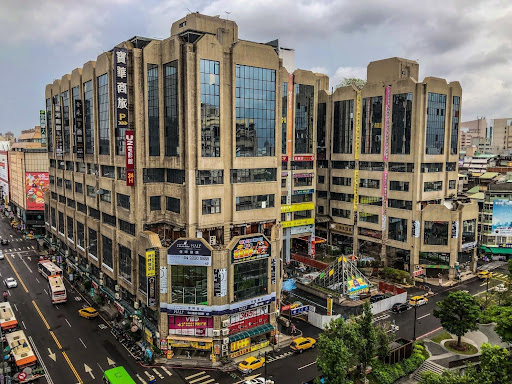
Image credit: Provided by the author. Taichung ASEAN Plaza, 12 May 2022. The building houses the unseen and unheard sounds of the Vietnamese diaspora in Taiwan.
Before Vietnamese migrant labour reshaped public perceptions of migration in Taiwan, quiet movements of people from Vietnam had already begun to take root in the island’s everyday life. In the years following the Vietnam War, small groups of Vietnamese and Sino-Vietnamese gradually found their way to the island—through family networks, trade, or postwar displacement. Their arrival quietly wove the first threads of Vietnam into Taiwan’s cultural tapestry. Works such as Arriving in Ankang: Stories of Vietnamese Immigrants Around Us, My Days as a Judicial Interpreter: Ensuring Migrant Workers’ Rights and Dignity Before the Law, and the documentary A Camp Unknown document these early crossings and the cultural worlds they shaped.
With the large number of cross-national marriages between Taiwan and Vietnam in the late 1990s and early 2000s, along with the rapid rise of Vietnamese students in Taiwan since the mid-2010s, the Vietnamese presence on the island has gradually developed into a multi-layered community that includes early refugees and immigrants, industry and care workers, foreign-spouse families, and a new generation of students and young professionals. These groups not only anchored themselves in labour and family but also helped reshape Taiwan’s cultural landscape in daily life.
Walking the streets of Taiwan today—from the north to the south—one can easily find Vietnamese food from across Vietnam, from Mekong Delta specialities to home-style dishes from central and northern provinces, each reflecting distinct regional flavours and memories. In addition to cuisine, other aspects of Vietnamese culture are also becoming visible in Taiwan’s everyday life. Notably, Taiwanese elementary Chinese textbooks now include Vietnam’s “water puppet theatre”, and in some schools, Vietnamese is offered as part of the New Immigrant Languages programme within native-language education. These cultural fragments push Vietnam beyond a mere “otherness” and into the realm of shared living. Beyond what is visible or tangible lies another world—the world of sound. Vietnamese music, though present, often goes unheard in Taiwan. Who sings the songs of home here, and where are they listened to? Through these voices, individuals reconnect with memory, find comfort, and rebuild a sense of belonging. Music, in this way, becomes a hidden web of emotion, linking scattered lives into a shared space of listening.
From a global perspective, Vietnamese diasporic communities have long cultivated vibrant sonic worlds abroad. During fieldwork in Europe, I spent time in Vietnamese-populated districts of Berlin, Prague, and Bratislava, where music was not just heard—it was lived. It shaped the rhythms of everyday life, sustained social ties, and carried shared memory across generations. In Berlin’s Dong Xuan Centre, Prague’s SAPA Market, and Bratislava’s Miletičova Market, karaoke, pop songs, and festival music transformed commercial spaces into stages of sound—sites where the homeland was not merely remembered but re-voiced through song. Seen in this context, Taiwan now emerges as another sonic node of the Vietnamese diaspora in East Asia, where language and music continue to weave new resonances of belonging across borders.
In my long-term fieldwork since 2015 at “First Plaza” in Taichung (located in front of Taichung Train Station and an important gathering place for Southeast Asian migrant workers and new residents in central Taiwan—officially renamed “ASEAN Plaza” in 2016), I observed a multi-layered commercial building housing Vietnamese, Indonesian, Filipino, and Thai businesses: restaurants, supermarkets, beauty salons, and currency-exchange shops side by side. Many Vietnamese restaurants also include karaoke rooms, making them prime venues for migrant workers and marriage-migrant families to gather on weekends, express homesickness, and share emotions.
In this multilingual, multi-sonic space, I collaborated with the 1095 Migrants Cultural Association to collect and analyse karaoke playlists voluntarily filled out by Vietnamese migrant workers. These song choices not only reflect personal emotions and collective memory but also reveal how Vietnamese in Taiwan maintain connections to language and culture through music. The contents echo those found in the earlier “Sing Sifang” (Singing the Four Directions) programme under 4-Way News. This 2013 series travelled across different regions of Taiwan to collect the voices of Vietnamese migrant workers, who expressed their inner worlds through song. Six episodes were dedicated to Vietnam, presenting a “soundscape” belonging to Taiwan’s Vietnamese community.

Image credit: Provided by the author. A karaoke request sheet filled by Vietnamese participants at a “Singing for Free” event, First Plaza, Taichung, 1 January, 2017. The list captures moments of joy and nostalgia shared among migrant workers far from home.
The data reveal that Vietnamese in Taiwan sing across a wide musical spectrum and layered histories: from the younger generation’s pop songs (nhạc trẻ) and contemporary V-Pop, rooted in urban youth culture and shaped by Korean and Western pop influences, to the romantic-lyric “yellow music” (nhạc vàng), which is rooted in South Vietnam’s pre-1975 urban popular culture and later banned by the state after reunification, to “hometown songs” (nhạc quê hương) centred on nostalgia, homeland, and family ties, and even “red songs” (nhạc đỏ) praising labour and the nation. These diverse genres collectively form the soundscape of the Vietnamese diaspora in Taiwan, illustrating how singing reorganises emotional order and collective memory.
Nhạc trẻ and V-Pop reflect how young migrants and students continue to engage with homeland pop culture by following Vietnamese idols and trends even abroad, using songs to sustain emotional ties with home. Notably, the themes emerging in recent V-Pop resonate deeply with diasporic experiences. Once preoccupied with urban romance, contemporary V-Pop increasingly turns toward homecoming, departure, and return. Songs about Lunar New Year journeys, leaving and going back, longing for family, or confronting personal struggle transform pop narratives into affective maps of belonging. Through them, the experience of “being Vietnamese” extends into new emotional layers; wherever one lives, success or failure, the listener finds in song the sense of “still one of us”.
Meanwhile, nhạc vàng, once marginalised inside Vietnam, has found revival in Taiwanese migrant karaoke rooms—serving as nostalgic love songs through which workers and marriage migrants voice homesickness and temporal loss. Nhạc quê hương evokes rivers, villages, and mothers, sung passionately during festivals and gatherings. Even nhạc đỏ, originally tied to socialist revolutionary ideals, is reinterpreted abroad as pride in the homeland and affirmation of labour. Together, these karaoke playlists function not merely as entertainment but as cultural memory apparatuses: through singing, migrants forge emotional communities and bridge the homeland, history, and present life.
In the karaoke rooms and Vietnamese eateries of Taichung, memory meets reality. Voices turn into acts of belonging, and to sing is to remain Vietnamese, even far from home. Furthermore, these sonic practices are increasingly digitised and publicised. In Taiwan, a “Taichung Studio” once operated by former Vietnamese migrant workers specialised in producing single high-quality recordings in a professional setting, documenting individual performances as part of the community’s musical expression. Through such efforts, the diasporic sound was preserved as a precious audiovisual archive. At the same time, Vietnamese creators used Taichung Park and other local sites as music-video backdrops, performing songs often classified as “yellow music” (nhạc vàng) and transforming the “foreign land” into a new “homeland” image—where visual and sonic terrains together redraw the map of Vietnamese culture.
This re-presentation goes beyond the grassroots. With increasing attention from local governments and enterprises to Southeast Asian culture, the Taichung City Government has organised “ASEAN Good Voice” events, providing performance platforms for Vietnamese and other Southeast Asian migrant workers. In a larger-scale effort, on August 14, 2016, the large-scale “Đại Nhạc Hội Chào Mừng Quốc Khánh Việt Nam” (Vietnam National Day Concert) was held at the Taichung High-Speed Rail Xinwu-ri Plaza, featuring renowned Vietnamese singers such as Đàm Vĩnh Hưng, Phi Nhung, Trấn Thành, Lương Bích Hữu, and Anh Đức performing with the local community in Taiwan. Additionally, agencies have repeatedly invited popular Vietnamese singers to tour Taiwan, allowing both migrants and local audiences to share the emotional sphere of language and music in a common venue.
From intimate karaoke sessions to online videos and large public performances, the Vietnamese in Taiwan have not only reconstructed the soundscape of home but also created new transnational archives of memory and emotion. Through singing, migrants transform everyday spaces, such as eateries, karaoke rooms, and city parks, into resonant sites of belonging. Taiwan thus emerges as a vital node in the renewal of Vietnamese diasporic culture: a space where everyday Vietnamese sounds, once confined to private or marginal spheres, now resonate audibly within the public soundscape, making the unseen and unheard life of the diaspora both present and intelligible.
Yet the story of Vietnamese music in Taiwan does not end here. In recent years, a new voice has emerged. The musician Đào Tử A1J (Tao-Tzu), whose work draws on both Vietnamese and Taiwanese backgrounds. Through songs that weave together Vietnamese and Taiwanese Hokkien, Tao-Tzu transforms diasporic sound into a new idiom of coexistence. Rather than echoing homesickness, this music articulates identity, memory, and belonging across languages. In Belongingness (《尋人》), a 2023 collaboration between Tao-Tzu and Lifloo (Wang Shui-Yuan), Vietnamese and Taiwanese lyrics alternate like two voices searching for home. “When I talk about my identity, there will always be so many doubts”, the song begins to refrain, and cứ mãi đi tìm rồi lại kiếm (always searching, again and again) turns uncertainty into resonance.
Through such music, Vietnam and Taiwan move beyond the binary of homeland and hostland, composing a shared melody of coexistence. What we hear, finally, is not merely the echo of home, but the answer—sung, not spoken—to the question: who sings the songs of home in Taiwan? These voices are no longer distant; they move among us, carrying longing, labour, and love—the intimate pulse of lives in motion. To listen is to realise that the sound of Vietnam has already become part of Taiwan’s sound.
Tahsin Kuo (郭大鑫) is a PhD candidate in Musicology at the University of Vienna. His research focuses on the Vietnamese Bolero revival and transnational soundscapes between Vietnam and Taiwan, combining ethnographic and historical approaches to explore how music shapes memory, identity, and cultural belonging.
This article was published as part of a special issue on ‘Sonic Worlds, Acoustic Politics and Hearing in Taiwan.’
 Taiwan Insight