Cultural Technology and Cultural Communication Sustainability: What Is the Next Step for the “Cultural Technology Agenda”?

The rapid advancement of digital technology has brought immense convenience to human society, transcending geographical boundaries that national and geographical divisions once imposed. Information, communication, and cultural content, as well as film, television, and audio products, can now circulate across vast distances, expanding the reach and influence of transnational culture. Nations that are actively developing cultural technology and communication systems are faced with multifaceted concerns, including issues related to information security, the preservation of national identity and voice, the cultural rights of their citizens, democratic participation, collective memory, artistic creation, labour security, as well as economic and industrial considerations.

Cultural Assets and Spatial Redevelopment for Sustainability 

Since the Ministry of Culture introduced the “Regeneration of Historic Sites” policy in 2017 to harmonise cultural and spatial governance, counties and cities have been grappling with a range of challenges involving restoration, repurposing, operational management, and interdepartmental coordination. While these issues are not new, the substantial investment in the “Regeneration of Historic Sites” policy has shed light on the ongoing struggles in cultural asset management. Today, cultural heritage is no longer solely a cultural concept; it has evolved into a medium and a realm for reflecting and reconstructing urban and rural environments. Whether we refer to it as “cultural heritage” or “cultural inheritance,” the emphasis remains on preserving cultural value. Consequently, alongside the growth of developmentalism, the spirit and techniques of preservation, maintenance, and reuse have become pivotal benchmarks for reshaping urban and rural environments.

Cultural Sustainability as A Practice of Democracy

In the context of sustainable development, culture is seen as an important component of development, along with the economy, society and the environment, which are all interrelated. For the development of a country, it is necessary to go beyond the economic perspective and adopt a cultural approach, incorporating cultural policies as a key element of the development strategy. This also implies the re-democratisation of culture in all policies and actions. To actively participate in cultural activities and give their voices in determining development goals and means of development. The bottom-up approach, with the idea of people as the subject, will promote the shaping of public culture on the one hand and the practice of cultural democracy on the other.  

TACPS Cultural Petition to the 2024 Presidential Election: The Sustainability of Culture and Democratic Governance in Taiwan

People are the mainstay of Taiwan’s culture, and “freedom” is at the centre of people’s thoughts and creations. Since the early 2000s, Taiwan has undergone a series of citizen-led cultural reforms, including a series of citizens’ cultural movements from 2000 to 2010 (such as the advocacy for community development and multicultural policies), the establishment of the Ministry of Culture in 2012, the National Cultural Conference in 2017/2022, and the White Paper on Cultural Policy in 2018. With the promotion of the Cultural Fundamental Act in 2019, Taiwan has, on the one hand, established the prototype of the country’s “cultural governance” system and civic and cultural awareness, and on the other hand, demonstrated its uniqueness in practising sustainable cultural democracy and participatory cultural governance among the global society.

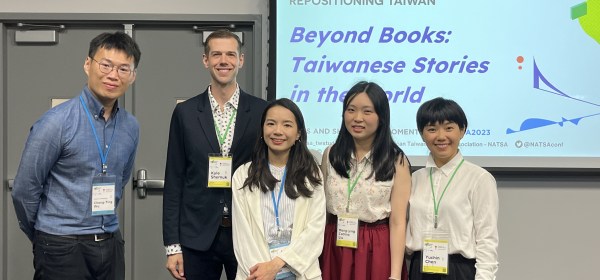
Beyond Books: Taiwanese Stories in the World

Written by Ssu-Chieh Jessica Fan and Cheng-Ting Wu. In recent years, Taiwan literature has experienced a surge in visibility and recognition within the global cultural community. To explore the border-crossing potential of Taiwanese stories, the planning team of the NATSA 2023 conference organized a special event, creating a lively platform for discussing the circulation and reception of Taiwanese fiction and non-fiction works in the international book market and academia.

The Month of Wild Ghosts: Phenomenon and Thoughts on Pudu in Taiwan’s Government Organizations

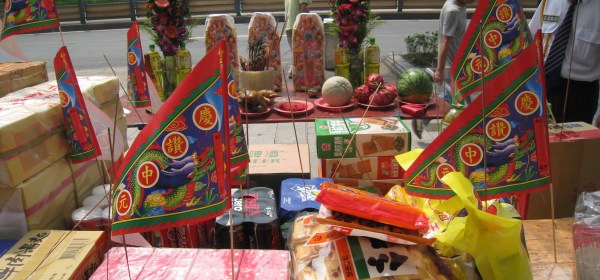
Written by Liang Ting-Yu. Homeless ghosts are also known as “good brothers.” In Taiwan’s civil society, they are not Youying gong​ (有應公) who are sacrificed in ghost temples, but rather a kind of wandering spirits who do not have or appear on memorial tablets, tombstones, or graves, and who are not worshipped by anyone; there are no temples or shrines to which they can return, and no place in which they can take shelter. On the half of the seventh lunar month, commonly known as the “Ghost Month,” local families, stores and companies, temples and Wanshan shrines(萬善祠) offer sacrifices to homeless ghosts in the form of ​Zhongyuan Pudu​(中元普渡)ceremonies and ​Chaodu​ devotions(超渡法會), which are rituals that free ghosts from suffering and reincarnation.

It’s Time for the Ghost Month! 

Written by Chee-Hann Wu. Beliefs in the afterlife and in spirits are universal and exist in different cultures and societies. Naturally, ritual practices, ceremonies, festivals, and customs arise, such as Halloween in Western countries and Día de Muertos in Mexico. Similarly, in Taiwan, the year’s seventh month in the lunar calendar is dedicated to ghosts and the deceased. The Gate of the Ghosts opens on the first day of Ghost Month and closes on the last day, during which the spirits enter through the gate and wander the world of the living.

1 2 3