Digital Governance Perspectives for Taiwanese and Japanese Civil Society

Written by Tommy Hall and Margaret Siu. In the digital age, politics and technology are more intertwined than ever, especially in East Asia. With nations like Taiwan wrestling with the balance between free speech and foreign interference and Japan pivoting towards advanced tech solutions for national security, the right balance remains elusive, and the stakes perennial. By exploring these critical intersections between online spaces and national politics, this work spotlights the challenges and opportunities that lie ahead for these East Asian democracies, as well as connecting the East Asian experience to the world at large.

Invisible Nation Documentary is Making Taiwan More Visible

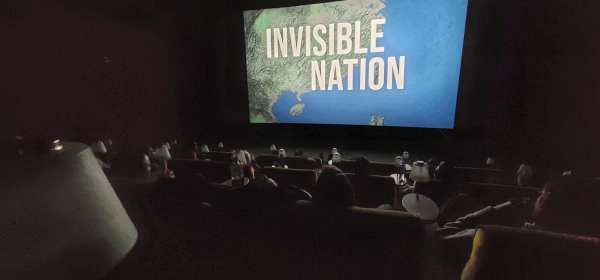
Written by Shawna Yang Ryan and Gerrit van der Wees. During the past weeks, a new documentary about Taiwan, Invisible Nation, has been making the rounds at various film festivals in the United States and Europe, including the International Documentary Film Festival Amsterdam on November 14-18, 2023.  Invisible Nation is the work of Vanessa Hope, who built up the film around the everyday life of President Tsai Ing-wen, in the process creating a fascinating picture of how the low-key President is ably leading Taiwan towards a better future.

Cultural Technology and Cultural Communication Sustainability: What Is the Next Step for the “Cultural Technology Agenda”?

The rapid advancement of digital technology has brought immense convenience to human society, transcending geographical boundaries that national and geographical divisions once imposed. Information, communication, and cultural content, as well as film, television, and audio products, can now circulate across vast distances, expanding the reach and influence of transnational culture. Nations that are actively developing cultural technology and communication systems are faced with multifaceted concerns, including issues related to information security, the preservation of national identity and voice, the cultural rights of their citizens, democratic participation, collective memory, artistic creation, labour security, as well as economic and industrial considerations.

Cultural Assets and Spatial Redevelopment for Sustainability 

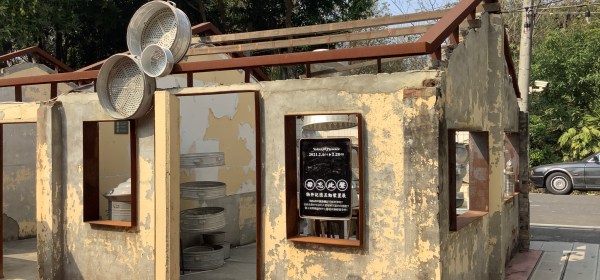
Since the Ministry of Culture introduced the “Regeneration of Historic Sites” policy in 2017 to harmonise cultural and spatial governance, counties and cities have been grappling with a range of challenges involving restoration, repurposing, operational management, and interdepartmental coordination. While these issues are not new, the substantial investment in the “Regeneration of Historic Sites” policy has shed light on the ongoing struggles in cultural asset management. Today, cultural heritage is no longer solely a cultural concept; it has evolved into a medium and a realm for reflecting and reconstructing urban and rural environments. Whether we refer to it as “cultural heritage” or “cultural inheritance,” the emphasis remains on preserving cultural value. Consequently, alongside the growth of developmentalism, the spirit and techniques of preservation, maintenance, and reuse have become pivotal benchmarks for reshaping urban and rural environments.

Cultural Sustainability as A Practice of Democracy

In the context of sustainable development, culture is seen as an important component of development, along with the economy, society and the environment, which are all interrelated. For the development of a country, it is necessary to go beyond the economic perspective and adopt a cultural approach, incorporating cultural policies as a key element of the development strategy. This also implies the re-democratisation of culture in all policies and actions. To actively participate in cultural activities and give their voices in determining development goals and means of development. The bottom-up approach, with the idea of people as the subject, will promote the shaping of public culture on the one hand and the practice of cultural democracy on the other.  

Has Taiwan Escaped Nostalgia for Authoritarian Times? Taiwan and Regional Comparisons

Written by Brian Hioe. Contemporary Taiwan is often hailed as a beacon of democracy in the region. Namely, Taiwan today holds free and fair elections after transitioning from its authoritarian past, which saw a history of one-party rule by the KMT. In various indexes of democracy, Taiwan usually scores highly regarding freedom of the press, speech, and expression. Part of the reason why Taiwan scores highly in contemporary indexes of democracy may be to differentiate Taiwan from China at a time of rising tensions between Western powers and China, raising questions about whether this proves a way that the Cold War framing of “free China” has subtly made a comeback. The underlying pressure to differentiate Taiwan from China has always been a substrate of Taiwan’s modern politics, whether in the present or in authoritarian times.

From Kuomintang to Democracy: The Evolution of Clientelism and Its Legacy

Written by Matthew Yi-Hsiu Lee. The democratic performance in Taiwan today is evident, but this does not mean that it does not have a dark side. Recently, during the by-election of a legislator in Nantou, some people held cameras to supervise whether others voted, which violated the privacy and rights of the general public. These people are brokers and part of a more extensive authoritarian legacy. They monitor whether voters go to vote, which may also involve vote-buying fraud and serving so-called “local factions.” However, what are the mysterious “local factions”? Why do they appear? And what impact do they have on democracy?

Who are the Allies of the Chinese Communist Party (CCP)? Neologisms, Netizens, and Nationalisms 

Written by Hsin-I Sydney Yueh. Recently, Taiwan’s Ministry of National Defense rejected a Japanese news report suggesting a widespread tendency among retired Taiwanese military officials to “sell out” their country. Wu Sz-Huai, a retired lieutenant general and incumbent opposition KMT party legislator, was among those who denounced this allegation.  

“Are we Chinese spies (共諜)?” Wu angrily asked this rhetorical question during a session of the National Defense Committee at Taiwan’s Legislative Yuan on March 2, 2023. While Wu denied being a Chinese spy, Taiwanese netizens teased him by sharing a photo of Wu and other retired Taiwanese military officials attending a CCP-hosted event, where they had sat attentively and listened respectfully to China’s leader Xi Jinping in 2016. Wu’s use of the term “Chinese spies” reminds us of another similar expression in Mandarin Chinese: “allies of the CCP” (中共同路人). This expression has recently gone viral in Taiwan’s online communities, used for self-mockery and as an attacking label.

Chu Yun-han: Influential Political Scientist, Promoter of Taiwan Studies and Sinology in Europe

Written by Dafydd Fell and Robert Ash. It was with the greatest sadness that we heard of the passing of the influential Taiwanese political scientist Chu Yun-han. He died at home on 5 February 2023 – just two days after his 67th birthday. His loss is irreparable: through his own academic research and his tireless efforts as Executive Director of the Chiang Ching-kuo Foundation, he exerted an enormous influence on East Asian Studies throughout Europe, as well as in many other parts of the world.

Chu Yun-han (67), An Eminent Scholar and President of Taiwan’s CCK Foundation, Died on February 5th, 2023

Written by Gunter Schubert. It was a spring day in 2007 when I entered the commercial building at Tun Hua North Road, where the headquarters of the Chiang Ching Kuo Foundation (CCKF) were located on one of the upper floors. I came to meet Chu Yun-han in his capacity as CCKF president and introduce to him my idea to establish a Taiwan research centre at the University of Tübingen. I had prepared a detailed presentation and pondered every detail that could jeopardise my proposal’s consistency.

In Memoriam: Missing Yun-Han

Written by Yu-Shan Wu. Gone is Yun-han, a true friend. We were colleagues at National Taiwan University and Academia Sinica for over half a century. He is a world-class political scientist, a gentle junzi in the finest Confucian sense of the term, a deep thinker who cares about the fate of the country and the world, and a master of delicate tastes in life. These are the four integral aspects of Yun-han’s personality that I am sure Yun-han would like us to keep in mind when thinking of him.

Xi’s 2022-2023 Remarks Deepen Internal Division in Taiwan

Written by Wei-Hsiu Huang. To sum up, based on the address to the 20th National Congress of CPC and the 2023 Lunar New Year Greetings by Xi Jinping, it is explicit that the Chinese mainland will exercise even more robust sharp power and attempt to break up Taiwan from within. Moreover, the Chinese Mainland, which is always wary of foreign powers interfering in Taiwan’s affairs, could use the same sharp power against democratic states such as the US and Japan. This is because many countries, not just Japan, already have developed strong economic interdependencies with the Chinese mainland, creating routes for China’s sharp power. It is an important issue for democracies: how to prevent dictatorships from using sharp power to exploit freedom of speech and collapse democracies from within.

1 2 3 4 5 6 13