Winners and Losers of the Great Recall Election in Taiwan

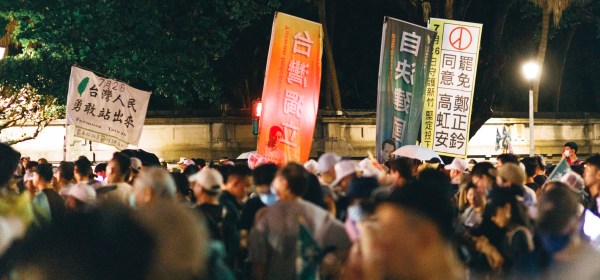
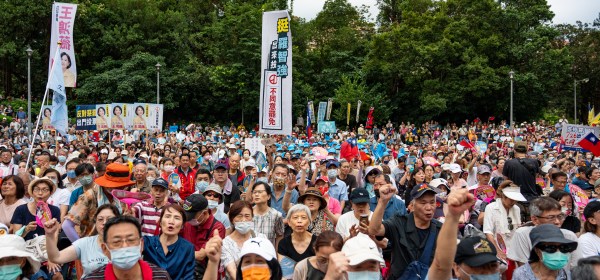
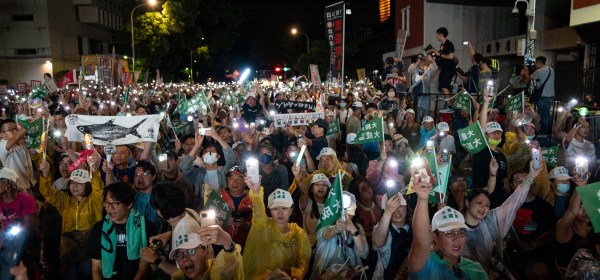
Written by Dr Chieh-chi HSIEH. This article analyses the winners and losers of the great recall election in Taiwan. It argues that while the two opposition parties (KMT and TPP) neither gained nor lost and the DPP is undoubtedly the main loser, the main winner is the Taiwanese society. The self-motivated attempts to recall their respective legislators, albeit unsuccessful, consolidate Taiwan’s democracy.

Choosing Between Confronting China or Reviving the Economy: Why Taiwan’s Recall Campaign Backfired on the Ruling Party

Written by Chang, Chunhao. This article argues that the defeat of the recall campaign indicates that Taiwanese voters are unwilling to reverse electoral outcomes through post-election manoeuvres. The DPP fails to understand the priorities of moderate, unaffiliated, or floating voters. They want responsible governance, not political revenge, and are deeply committed to the democratic process.

Clientelism, Social Movements, and Weak Ideology: Is Institutionalisation in Taiwan’s DPP Comparable with the Philippines’ Liberal Party?

Written by Russell Sherrard-Smith. This article compares Taiwan’s DPP with the Liberal Party of the Philippines, focusing on party institutionalisation and how it contributes to our understanding of the quality of democracy. The author looks at the two parties’ systemness, centralisation, leadership stability and other factors that significantly influence the countries’ democratic development.

Where’s Post-Election Taiwan Heading?

Written by Plamen Tonchev. The presidential and parliamentary elections held in Taiwan on 13 January 2024 were closely watched globally, as their potential implications could reverberate far beyond the island’s shores. Two oft-quoted arguments relate to the fact that Taiwan is home to a huge chunk of the world’s cutting-edge semiconductors, and the volume of maritime traffic through the 110-mile-wide strip of water between the Chinese mainland and the self-governed island. Add to that the political significance of Taiwan’s subjugation to Beijing’s “national rejuvenation” vision, as well as the geostrategic importance of the first-island chain to the entire Indo-Pacific region.

Taiwan’s 2024 Elections: How will China Respond?

Written by T.Y. Wang. Lai’s victory, nevertheless, is a rebuke to Beijing’s sovereignty claim of the island and a hard pill for Chinese leaders to swallow. In the aftermath of the election, observers are pondering how Beijing will react to Taiwan’s electoral outcomes. Chinese leaders view Lai as a “separatist,” and his affiliated DPP is a secessionist political party. A win by Lai, in their mind, means Taipei will continue its policy of pursuing Taiwan independence in spite of Lai’s pledge to continue the incumbent President Tsai Ing-wen’s policy of maintaining the status quo. Prior to the election, Beijing had magnified a “war and peace” narrative, intensified its military and economic pressure on Taiwan and warned the island citizens to make a “correct choice” in the elections.

The 2024 Taiwanese General Elections: Fierce Moderate Lai Prevails While Fluid Kingmaker Ko Rises

Written by Jasper Roctus. The polls have closed, and Lai Ching-te of the Democratic Progressive Party (DPP) has won the Taiwanese presidency, beating Hou Yu-ih of the Chinese Nationalist Party (KMT) and Ko Wen-je of the upstart Taiwan People’s Party (TPP). With Lai’s victory, 2024 became the first (post-democratisation) Taiwanese presidential election, where the same party’s nominee was elected three times in succession. Different from its triumphs of 2016 and 2020, the DPP did not emerge from the elections scot-free. Lai ‘only’ obtained forty per cent of the vote compared to Tsai Ing-wen’s two majority landslides, and the DPP lost the legislative majority it had enjoyed since 2016. Although this result aligned with earlier predictions, there is still a lot that merits further discussion.

A Routine Election with Mixed Results 

Written by Jonathan Sullivan. Taiwan has concluded its eighth direct election of the Republic of China (ROC) President. It was not a pivotal, watershed or critical election, and it was not a contest between war and peace or the embodiment of democracy vs authoritarianism; it was an entirely normal election. The main issues (China, the economy), turnout (71%), the communications environment (parochial and partisan), the candidates’ micro-scandals (this time round requiring knowledge of esoteric building code and land-use regulation), the boisterous rallies and hustings etc were all familiar and part of the routine functioning of Taiwanese democracy. The Central Election Commission once again organised a flawless election. The nuts and bolts of voting stations in temples and school gyms, accurate and fast analogue counts, volunteers getting people lined up and in and out smoothly, etc, are the little things that add up to a big sum. 

Three Happy Losers and One Winner: Comments on the 2024 Taiwan National Elections

Written by Chia-hung Tsai. Taiwan’s 2024 presidential and legislative elections, held on 13 January, concluded peacefully, revealing key insights into the electorate’s priorities. The results highlight that voters are influenced by both their sense of Taiwanese/Chinese identity, especially in the context of cross-strait relations, and their pragmatic concerns for personal, tangible interests, for instance, low income, high inflation, high unemployment rate and unaffordable housing prices for average middle class in Taiwan. These transcend ideological or identity boundaries. The dual factors set the stage for the critical governance issues and candidate personalities that defined the election.

Remembering Shih Ming-teh 

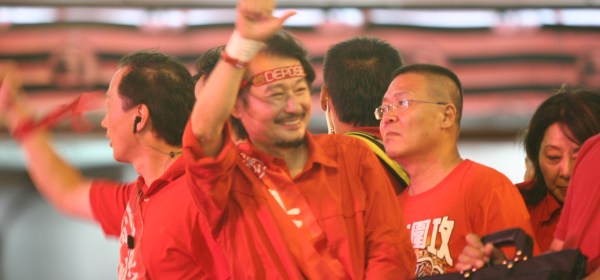
Written by Thomas J. Shattuck. On January 15, 2024, only a few days after the election, longtime democracy and human rights advocate, Nobel Peace Prize nominee, and politician Shih Ming-teh passed away. Given his place in Taiwan’s history and democratic development, it is important to remember him and his legacy. Shih is a widely known figure in Taiwan for his legacy in Taiwan’s democratisation and his role in the Kaohsiung Incident and Tangwai movement. He’s also famous for his role in the anti-corruption protests against then-President Chen Shui-bian in the early 2000s. Shih consistently called for Chen’s resignation and led the “Million Voices Against Corruption-Chen Must Go” campaign. For decades, he held politicians to high standards, and understandably so.  

Taiwan’s New President: Continuity, Priorities, Vision

Written by Chieh-Ting Yeh. As recent developments transition into a period of stability, the focus shifts towards what lies ahead. The incoming government faces pivotal questions: How will President Lai’s four-year term compare to President Tsai’s preceding eight years? What key challenges await immediate attention from President Lai? Additionally, it’s crucial to consider the direction in which Taiwan is heading to carve its unique identity in the global landscape.

1 2 3 11