Beyond Majority Rule: Indigenous Perspectives on Taiwan’s Legislative Controversies 

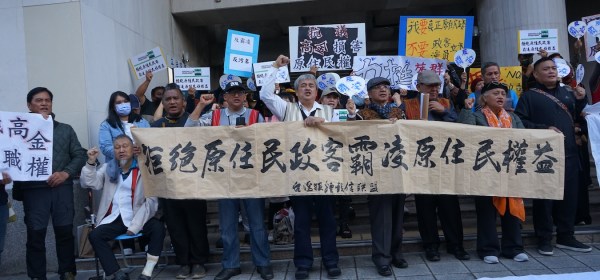
Written by the Taiwan Indigenous Youth Public Participation Association; translated by Yu-Chen Chuang. This article highlights the involvement of Indigenous rights advocacy groups in the Bluebird Movement. They call for Indigenous legislators to prioritise their communities’ rights, foster cross-party collaboration, and address the electoral system’s challenges that hinder effective Indigenous political participation.

Taiwan’s Inevitable Internationalisation in 2024

Written by Zsuzsa Anna Ferenczy. In 2023, Taiwan continued to present itself as a democracy internationally through subnational diplomacy. As it elected a new president and a new parliament in the new year, this article anlayses how the dynamics of cross-Strait relations are driving the internationalisation of Taiwan. It is expected that the two sides are likely to drift further apart in the coming years and this will further strengthen Taiwan’s identity as a democracy.

The 2024 Taiwanese General Elections: Fierce Moderate Lai Prevails While Fluid Kingmaker Ko Rises

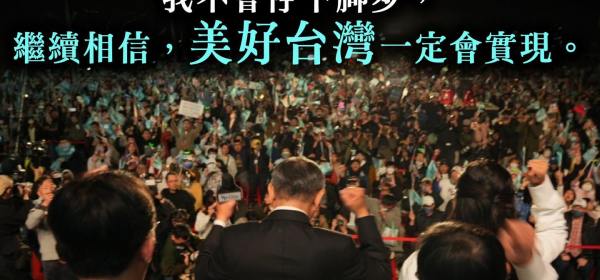
Written by Jasper Roctus. The polls have closed, and Lai Ching-te of the Democratic Progressive Party (DPP) has won the Taiwanese presidency, beating Hou Yu-ih of the Chinese Nationalist Party (KMT) and Ko Wen-je of the upstart Taiwan People’s Party (TPP). With Lai’s victory, 2024 became the first (post-democratisation) Taiwanese presidential election, where the same party’s nominee was elected three times in succession. Different from its triumphs of 2016 and 2020, the DPP did not emerge from the elections scot-free. Lai ‘only’ obtained forty per cent of the vote compared to Tsai Ing-wen’s two majority landslides, and the DPP lost the legislative majority it had enjoyed since 2016. Although this result aligned with earlier predictions, there is still a lot that merits further discussion.

Taiwan Election 2024: What it Means for the Island’s Future Engagement with the Asia-Pacific Region

Written by Raian Hossain. Now that the election results are in, the period of intense suspense and electoral speculation has concluded. The issue of cross-strait relations remains unresolved, as the People’s Republic of China (PRC) insists that the Republic of China (ROC), often known as Taiwan, is a separatist province of the mainland and aims for reunification. For the first time in history, Taiwan has re-elected the same political party to govern the democratic island for a third consecutive term. The election of Lai Ching-te on Saturday signifies a strong counter to the People’s Republic of China’s (PRC) forceful stance and intimidation tactics towards the island. The primary challenge now is how Lai’s new government will maintain its relations with Beijing and navigate the complex triangular dynamics of the US, China, and Taiwan.

Taiwan’s elections over, new hope for Taiwan’s healthcare

Written by Tsung-Mei Cheng. The January 13 presidential election in Taiwan marked a historic moment in the nation’s burgeoning democracy. For the third consecutive term, voters reaffirmed their confidence in the ruling Democratic Progressive Party (DPP), which has been at the helm for the past eight years, entrusting it with the nation’s leadership for another four-year term. High on the agenda of the returning third DPP administration are pressing issues both international, cross-Strait, and domestic. This essay will focus on the future of health care in Taiwan, an important domestic issue that directly impacts the lives of Taiwanese and calls for urgent attention and actions of the new-returning administration and policymakers.

Three Happy Losers and One Winner: Comments on the 2024 Taiwan National Elections

Written by Chia-hung Tsai. Taiwan’s 2024 presidential and legislative elections, held on 13 January, concluded peacefully, revealing key insights into the electorate’s priorities. The results highlight that voters are influenced by both their sense of Taiwanese/Chinese identity, especially in the context of cross-strait relations, and their pragmatic concerns for personal, tangible interests, for instance, low income, high inflation, high unemployment rate and unaffordable housing prices for average middle class in Taiwan. These transcend ideological or identity boundaries. The dual factors set the stage for the critical governance issues and candidate personalities that defined the election.

Taiwan’s New President: Continuity, Priorities, Vision

Written by Chieh-Ting Yeh. As recent developments transition into a period of stability, the focus shifts towards what lies ahead. The incoming government faces pivotal questions: How will President Lai’s four-year term compare to President Tsai’s preceding eight years? What key challenges await immediate attention from President Lai? Additionally, it’s crucial to consider the direction in which Taiwan is heading to carve its unique identity in the global landscape.

Taiwan People’s Party as the Kingmaker: What future holds for the party?

Written by Brian Hioe. The TPP has proven that it is a force with staying power in Taiwanese politics, then–for at least the next four years. Questions about the long-term viability of the party still remain. This is particularly regarding the party’s relationship with its chair, Taipei mayor Ko Wen-je, and how the TPP will relate to the KMT as the larger party in the pan-Blue camp.

Election win for the DPP, but a split legislature 

Written by Gerrit van der Wees. After a hard-fought campaign, the DPP candidate “William” Lai Ching-te and his running mate Hsiao Bikhim emerged victorious in Taiwan’s presidential election race with 40.1 % of the vote. They were elected Taiwan’s President and Vice-President respectively. The total turnout was 71.8% of the eligible voters, a bit lower than the 74.9% in the 2020 elections. The main opposition candidate in the three-way race, Messrs. Hou Yu-ih of the Chinese Nationalist Kuomintang Party, and his running mate, pro-China media personality Jaw Shaw-kang, received 33.5% of the vote, while Mr Ko Wen-je of the Taiwan People’s Party (TPP) and his running mate Cynthia Wang, came in a respectable third with 26.5% of the vote.

A Battle for Survival : The Crossroads of the New Power Party without Huang Kuo-chang

Written by Jonathan Leung. Throughout the years, there has been continuous withdrawal of significant party members. Most of them have joined the DPP or become its affiliates. Some core members quit the party for controversial reasons, like Kawlo Iyun Pacidal and Hsu Yung-ming. Most of the NPP’s notable social influencers, scholars, and intellectuals also withdrew from the party in the past few years. In a nutshell, the NPP is facing a serious problem of decomposition. Yet, the most updated and unexpected news is former leader Huang Kuo-chang, their most iconic and representable figure, defected to the Taiwan People’s Party (TPP) in November right before the legislative nomination. This article will examine the crossroads of the NPP without Huang to project the possible path of the party. 

1 2 3 4