Rosettating Between Minoritised Languages: How Taiwanese Readers Respond to Intermediated Translation

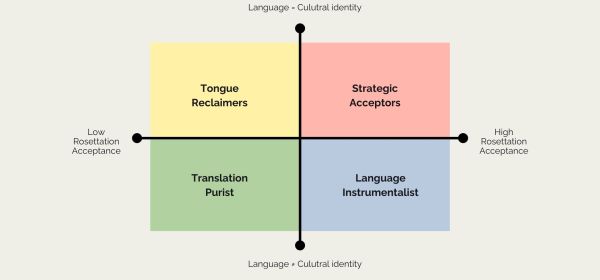
Written by Naomi Sím. The article introduces “rosettation,” a method of translating between minoritised languages like Tâigí and Gaelic via dominant ones. The Tâigael project explores linguistic solidarity, reader responses, and political tensions. Rosettation emerges as both a pragmatic strategy and a literary experiment, which enables new forms of intercultural dialogue despite inherent compromises.
Orchids in the Wild

Written by Lisa LacDonald. This article reflects on orchids in Scotland and Taiwan as metaphors for translation. While Scottish orchids evoke resilience, Taiwanese orchids embody richness and locality. The author highlights the difficulty of conveying cultural nuance across languages, framing translation as both interpretation and resistance, balancing fidelity, accessibility, and the preservation of linguistic diversity.

Grandmother Islands: Oral Memory, Mother Tongues, and Literary Kinship between Taiwan and Scotland

Written by Elissa Hunter-Dorans. This article reflects on how maternal and grandmaternal figures embody the preservation of Taiwanese and Gaelic. Through Tâigael, the author explores oral traditions, familial intimacy, and the “mother tongue” as both metaphor and surrogate caregiver, showing how literature sustains endangered languages and fosters cross-cultural kinship.

Tâigael: Orchids, Maternal Care, and a New Rosetta Stone

Written by Hannah Stevens and Will Buckingham. The article introduces Tâigael: Stories from Taiwanese & Gaelic, a translation project linking two minoritised languages through English and Mandarin as bridges. Writers reflect on linguistic solidarity, maternal legacies in “mother tongues,” risks of reinforcing hierarchies, and ecological fidelity in translation. Together, their essays highlight translation’s generative, resistant, and collaborative potential.