Facing the Uncertainty of Trump’s Taiwan Policy: Taiwan’s diplomatic, economic, and military approaches to address the significant challenge

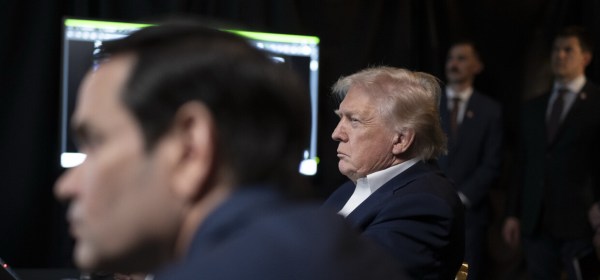
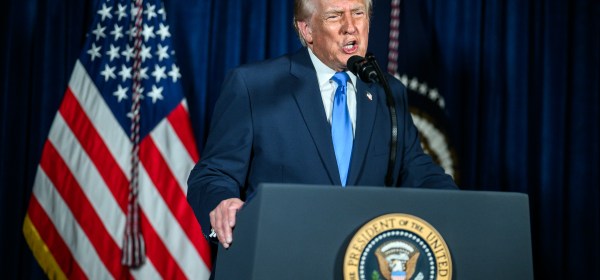
Written by Baosheng Guo. This article analyses Taiwan’s options in the face of Trump’s uncertain and unpredictable Taiwan policy. It suggests that Taiwan should urge the US to provide strategic clarity and strengthen its relationship with Europe. Taiwan should also weaponise the interdependence of its semiconductor industry with the US and prepare to restart its research and development of nuclear weapons.

Time to Reposition Taiwan within Europe’s Indo-Pacific Vision

Written by Laura Bonsaver. This article proposes that Europe should move beyond threat-centric framings of Taiwan and recognise it as an innovative, democratic, and technologically advanced partner. It recommends de-hyphenating Taiwan from militaristic narratives, normalising its role in Indo-Pacific strategies, and reframing Europe-Taiwan relations as mutually beneficial collaborations rather than dependency or crisis management.

Taiwan’s Arctic Imperative: Navigating a New Global Frontier

Written by Aileen A. Espiritu, Marc Lanteigne, and Tse-Kang Leng. This article argues that Taiwan should construct a clear, multifaceted Arctic policy to safeguard its future prosperity and strengthen the country’s international standing. It outlines multiple areas where Taiwan can contribute and benefit, including trade, climate, science, diplomacy, Indigenous communities and geopolitics. An inclusive Arctic policy is not distant curiosity but a strategic aspiration.

When Secrets Collapse: Implications of the China Spy Scandal on UK-Taiwan Relations

Written by Alexandra Whitehead. This article asks what the China spy scandal in the UK means for Taiwan and analyses both its opportunities and risks, including the need to reassess its relations with Beijing and to clarify its legal framework to match its political rhetoric. Putting them together, the case is unlikely to drastically change the course of UK-Taiwan relations. 

Fisheries as a Means of Outward Mobility During Taiwan’s Martial Law Period 

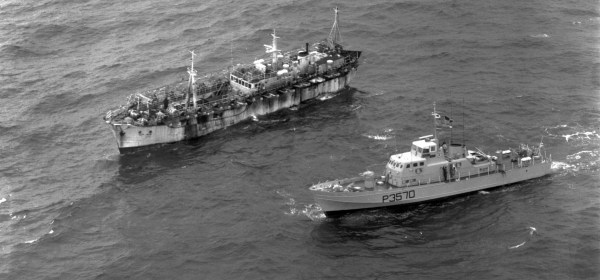
Written by Jess Marinaccio. This article examines Taiwan’s fisheries during martial law, with a focus on the 1976 Jinnan No. 1 incident in New Zealand. Illegal fishing both strained Pacific diplomacy and yet revealed how fishing boats enabled individual mobility. For workers like Zhang Songhuo on Jinnan No. 1, fisheries were not solely a means of livelihood, but also a possible escape route from the authoritarian ROC during the martial law period.

Distant Allies? Explaining U.S. Allies’ (In)action Over the Prospect of a Taiwan Strait Contingency

Written by Carlos Francisco Torres Morales. Using an alliance framework, this commentary argues that Tokyo and Seoul’s reluctance to convey support to Taipei publicly stems from strategic caution, since this could provoke the undesired effects they would seek to deter by extending clear security assurances, but also to retain flexibility in their redefining their stances vis-à-vis Taiwan (and China).

Making History but Not as One Chooses: The Trump Administration and Challenges for US Taiwan Policy in an Era of Difficult Deterrence

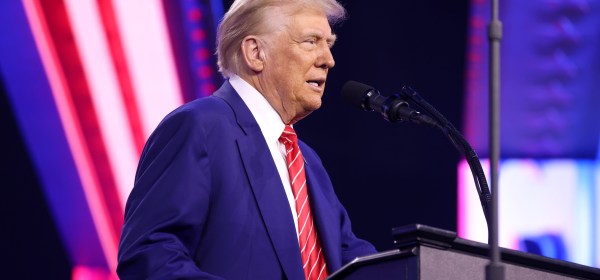
Written by Jacques deLisle. Amidst the focus on potential radical impact under the second Trump administration, this article examines some fundamental trends and challenges in US-Taiwan relations and US-China-Taiwan dynamics. The longstanding US policy of strategic ambiguity is becoming increasingly harder to hold and Taiwan’s capacity to navigate is waning. 

Taiwan in 2024: Geopolitical Uncertainties

Written by Dr Chieh-chi HSIEH. This article argues that the path dependencies of the Taiwanese, US, Japanese, and South Korean governments encountered a change of political leadership in 2024, which created some uncertainties for Taiwan in 2025. They are compounded by the conservative stance of President Lai Ching-te towards President Trump since the latter’s election.

Taiwan in South Asia: Engagement, Opportunities & Constraints

Written by Raian Hossain. This article examines Taiwan’s relations and engagement in South Asia, with reference to the cases of India and Bangladesh. It argues that Taiwan has great potential in the region. Taiwan should strategise to interact with different South Asian countries based on their own merit and limitations and find areas of mutual interest to increase its regional footprint.

1 2 3 6