En route to the new beginning of Taiwan and Exiled Tibetan Relations?

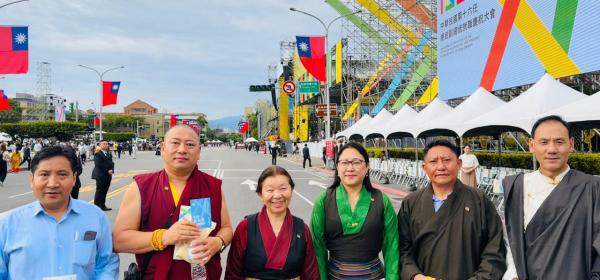
Written by Dolma Tsering. President Lai’s administration could mark a new beginning for Taiwan and exiled Tibetan relations by inviting the representatives of the Tibetan government in exile to attend the inauguration. This article reviews subtle changes that have been happening under the Tsai administration in its approach to dealing with Tibet and suggests reasons for optimism for positive relations under Lai.

Taiwan’s Future under Lai Ching-te’s Leadership: Democracy, Unity, and Uncertainty

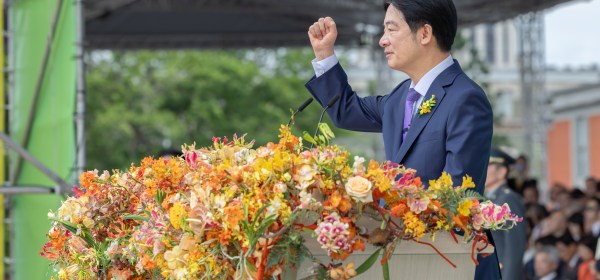
Written by Huynh Tam Sang. This article reviews President Lai address’ focus on peace and democracy amidst multiple challenges facing the new president. In particular, the lack of majority in the Legislative Yuan could proved to be a barrier to unity in terms of domestic reforms and foreign policy. His experience and statecraft is demanded to navigate the early days of the administration.

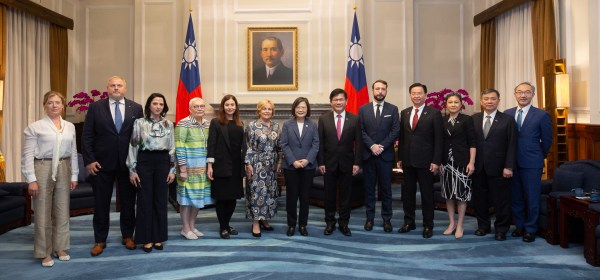
How Czechia Engages Taiwan 

Written by Filip Šebok. While it has been over the past few years that the Czech-Taiwanese relations have grabbed headlines over the world, the two sides’ ties have not come from nowhere. In fact, the recent intensification of cooperation has been built on a very solid foundation jointly forged by the two sides since the early 1990s. Taiwan has become an important investor in the Central European countries already in the 2000s, especially through the investment of electronic manufacturer Foxconn, which has become a major exporter and tax payer in the country.  

Taiwan-Netherlands relations: strong ties with historical weight

Written by Sense Hofstede. Taiwan and the Netherlands share a long history. The island’s central position on the critical trading networks of its time sparked Dutch interests both in the 17th century and today. Dutch-Taiwanese economic ties are strong but also increasingly under intense scrutiny as the chip war heats up. Next to strong trade ties, a 1980s arms sale is the most high-profile of the Netherlands’ maritime ​​​​security involvement with Taiwan. The historical, security and economic ties all touch upon sensitive issues. 

The EU-China Summit and the Future of EU-Taiwan Relations: Reconstructing the Normative Agenda

Written by Dominika Remžová. A few days prior to this year’s EU-China summit (the first to take place in person since the COVID-19 pandemic), the Financial Times has published an opinion piece by Anders Fogh Rasmussen, former Secretary-General of NATO, calling for the Union’s stronger support for Taiwan. The article singles out security considerations as the main reason for such a principled stance, which the author acknowledges has been taken up by only a few Central and Eastern European (CEE) leaders. This focus on security issues and small states is noteworthy, as it provides the most fruitful avenue for further strengthening of ties moving forward.

Taiwan-US Trade Initiative: A good start, but the beginning of a long road

Written by Chieh-Ting Yeh. In 2005, I understood the FTA to be an aspirational long-shot—something that we can press for but not something we should expect to see in the foreseeable future. Recent developments such as the 21st Century Trade Initiative are milestones for sure, but milestones to mark just the beginning of a long road for a true free trade agreement with the US, as well as meaningful participation in regional trade blocs.

The Prospect of a US-Taiwan BTA in an Era of Heightened Political Exchanges

Written by Brian Hioe. The US and Taiwan signed the first stage of the US-Taiwan Initiative on 21st Century Trade in June, paving the path for both to streamline customs and taxation procedures between both sides. The trade agreement will also boost economic cooperation regarding small-to-medium-sized enterprises, while implementing anti-corruption measures. Progress on the trade agreement has continued, with the second negotiating round of the agreement starting in August. In particular, an end to double taxation between the US and Taiwan is a concrete outcome that both sides may pursue, long a stumbling block for those that work and do business in both the US and Taiwan. As progress on the US-Taiwan Initiative on 21st Century Trade has continued, legislation to this effect has been introduced in the US Senate.

Taiwan and Europe – Partners of choice, not obligation

Written by Zsuzsa Anna Ferenczy. In January 2024, Taiwan will elect a new president. Facing an existential threat from China, for Taiwan cooperation with the EU as a partner is essential to strengthen its democratic resilience. To expand the partnership however, a better understanding of the complex nature of the EU and developing a greater sense of clarity about what Taiwan wants will be indispensable. 

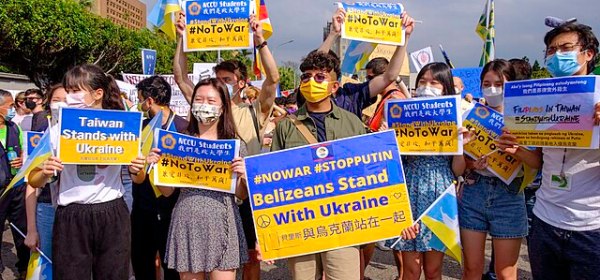
A lesson from the Russo-Ukrainian war for Taiwan: Connection

Written by Patricia Elnakhal, H.K. Wind and Fengze Strategy. Currently, the controllable intensity on the Taiwan Strait can potentially escalate. The growing frequency of analogous cases that several military aircraft from the mainland flying into the island’s air defence zone cause the intensity on this territory, while the situation is still under control because these actions are mainly for strategic purposes. More importantly, none of the powers is fully prepared for uncontrollable collisions, but the situation’s development indeed keeps invisibly escalating. As a lesson from the Ukraine war, Taiwan has to construct an unbroken and heavy rope connecting itself to the international community to prepare well earlier for various possibilities. The connection between Taiwan and the international community could be observed through two main aspects: the diplomatic interactions connecting to international politics and the economic development connecting to the international market.

How Does Recipients’ Corruption Taint the International Image of Taiwan’s Foreign Aid?

Written by Ernie Ko. Taiwan’s foreign aid, officially known as official development assistance (ODA), has rarely been mentioned as a good practice in the circle of international press and international aid agencies. On the contrary, corruption, inefficiency, non-transparency, and unaccountability are often associated with the recipient countries of Taiwan’s aid. So, the question is, does this negative stereotype unavoidable?

Recognising the ‘Taiwan Issue’: Analysing the Impact of the UK Government’s Integrated Review Refresh

Written by Max Dixon. The British Government’s ‘refreshed’ foreign policy document, released in March 2023, emphasised the increasing parallels drawn between the plight of Ukraine amidst Russian aggression and the threat posed to Taiwan by increasing Chinese assertiveness. The Integrated Review Refresh 2023, the first clear enunciation of British Prime Minister Rishi Sunak’s foreign policy approach, sought to revise the 2021 Integrated Review. The Refresh formally recognises tensions in the Taiwan Strait for the first time in British foreign policy yet addresses Taiwan with a degree of tentativeness that will necessitate greater clarity in the future.

1 2 3 4 5 6