Fisheries as a Means of Outward Mobility During Taiwan’s Martial Law Period 

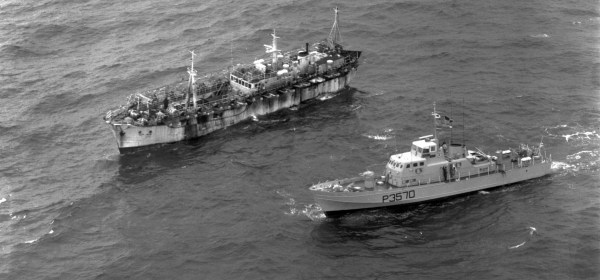
Written by Jess Marinaccio. This article examines Taiwan’s fisheries during martial law, with a focus on the 1976 Jinnan No. 1 incident in New Zealand. Illegal fishing both strained Pacific diplomacy and yet revealed how fishing boats enabled individual mobility. For workers like Zhang Songhuo on Jinnan No. 1, fisheries were not solely a means of livelihood, but also a possible escape route from the authoritarian ROC during the martial law period.

Introduction to Island X

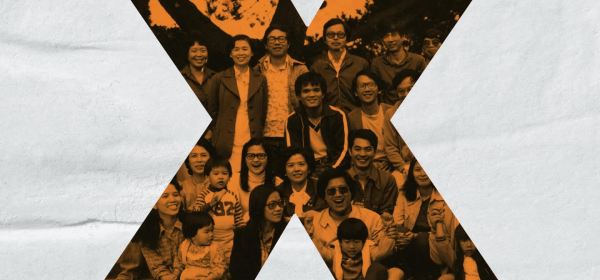
Written by Wendy Cheng. This article introduces Cheng’s 2023 book Island X: Taiwanese Student Migrants, Campus Spies, and Cold War Activism. The book tells the political history of a generation of Taiwanese who migrated to the US as students from the 1960s to the 1980s during the late Cold War and KMT martial law, and who became politically active in struggles for democracy, human rights, and Taiwan independence.

The Intercultural Resonance between Taiwan and Q: A Night at the Kabuki (2022) 

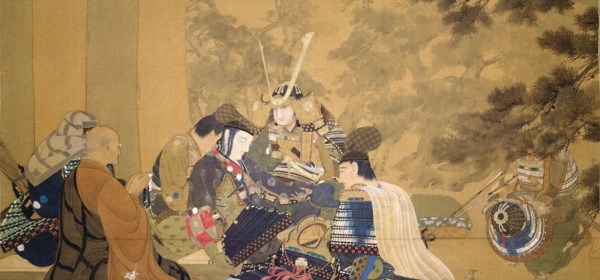
Written by An-Ru Chu. In the second half of 2022, when Taiwan was gradually relieved from the waves of omicron subvariant-induced outbreak, the country experienced an unprecedentedly large quantity of theatrical productions and cultural events since many of them should have been presented earlier but rescheduled because of the pandemic. Meanwhile, a Japanese staged play, ​Q: A Night at the Kabuki, broke National Theatre (NT) box office record in Taipei. NT sold 12,000 tickets in merely twenty minutes for the first time in thirty-five years. When applauding the artistic achievement of the play per se, most posts also mentioned the following two aspects: first, the strong emotions evoked by seeing one of the leading actresses, ​​​​Takako Matsu, in person, which echoes how the show had extensively grabbed the media’s attention since last May.

Artists and the Unruly Bodies: Performances in 1980s Taiwan 

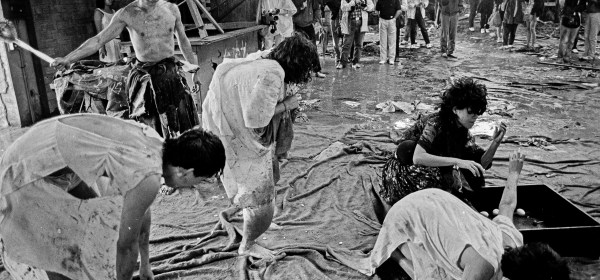
Written by Chee-Hann Wu. 2023 marks the 40th anniversary of the Taipei Fine Arts Museum (TFAM). Founded in 1983, the museum has witnessed the vicissitudes of Taiwanese society and its democratisation since the 1980s. The Wild Eighties: Dawn of a Transdisciplinary Taiwan, the first curated exhibition celebrating the Museum’s 40th anniversary, reconfigures the socio-political environment of the 1980s in conversation with the cultural scenes. Opening in December 2022, 25 years after the lifting of martial law, The Wild Eighties shows how the political transition inspired artists and creators to experiment with new forms of artistic expression grounded in rebellion and revolution and reimagined the meaning and relationship between art and society.  

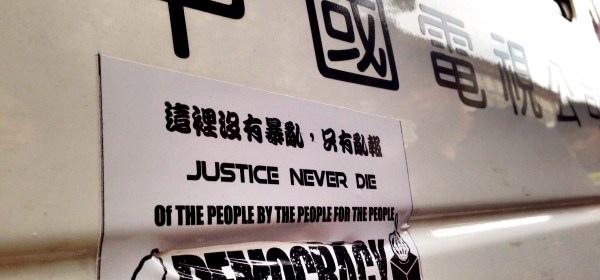
What’s Exactly Wrong with Taiwanese Media?

Written by Ti Wei. To solve the Taiwanese media problem, the first step is to recognise that the problem is unique and not like any other case in the world. Moreover, this problem could not be explained by any Western theories. Therefore, we need to carefully clarify and re-examine the nature of the problem and study society and the audiences thoroughly. Then, based on the re-acquainted knowledge, we may draw a new and reflective plan for rebuilding the media system. The only thing for sure is that it is neither commercial nor public in the Western sense. In addition, the latest development of media platformatisation and the new audience generation should be considered. The task is tough, but any endeavour to pay should be worthy when we think of how much hardship Taiwanese media have been through.