The TaiwanPlus Controversy: Press Freedom, Political Influence, and the 2024 U.S. Election Coverage 

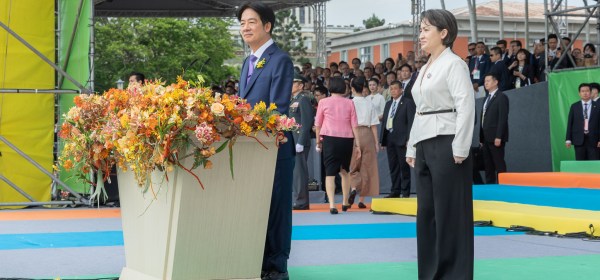
Written by Chiaoning Su. This article examines the reporting controversy faced by TaiwanPlus, a government-funded English-language news platform in Taiwan, following the U.S. election. It highlights how Taiwan’s coverage of the U.S. election goes beyond geopolitical and economic considerations to address issues of press freedom. The article emphasizes the need for Taiwan’s public media to reinforce its independence and create a better environment for press freedom.

Words of Influence: PRC terms and Taiwanese identity 

Written by Karen Huang. This article explores the growing use of PRC terms in Taiwan Mandarin and the social reactions to this trend. While some Taiwanese view this trend as a natural result of language contact, others perceive these terms as a form of cultural invasion. The debate among Taiwanese netizens reflects broader concerns about cultural identity, political influence from China, and the implications for younger generations in Taiwan.

The Digital Evolution in Taiwan and Japan: Implications for Political Communication

Written by Tommy Hall and Margaret Siu. The digital era has revolutionised political communication, with profound effects in Asian democracies, notably Japan and Taiwan. This exploration delves into the intricacies of how political entities in these countries harness digital platforms. It aims to unpack the varied strategies they employ, the challenges they confront, and the opportunities they seize within the digital realm. Our analysis will not only highlight the distinct tactics and responses shaped by each country’s unique cultural, legal, and historical contexts but also examine the broader implications these digital transformations hold for political engagement and democratic discourse in the region.

#MeToo Cases Lead to Legal Hotline for Victims. But Will This Change Engrained Social Attitudes?

Written by Darice D. Chang, Caritta Lin, and Rita Jhang. The #MeToo movement blossomed in Taiwan in May 2023 partly due to a successful TV show, Wave Makers, which features sexual harassment in the political world and partly due to several high-profile sexual harassment cases brought to light in Taiwanese politics around the same time. While increased social awareness and scandal brought swift legislative action and increased support for victims in the form of both social support and legal aid, which we will delve into more detail, amendments to laws that have failed victims previously and increasing support are not a definitive solution to an entrenched social issue — instead, we should consider the various factors that have contributed to a society where power based gender violence could be an open secret.

Three Musketeers against Mis/disinformation: Assessing Citizen-led Fact-checking Practices in Taiwan 

Written by Chiaoning Su and Wei-Ping Li. From sophisticated disinformation campaigns to patriotic trolling and clickbait, the flood of mis/disinformation has become a global phenomenon. Studies have shown that Taiwan’s young democracy ranks as one of the countries most exposed to misleading viewpoints or false information from foreign forces, especially China. These campaigns often seek to demonise high-profile Taiwanese politicians and divide Taiwanese society. They also aim to steer Taiwan away from anti-China policies or international alliances, notably with the United States.  

Who are the Allies of the Chinese Communist Party (CCP)? Neologisms, Netizens, and Nationalisms 

Written by Hsin-I Sydney Yueh. Recently, Taiwan’s Ministry of National Defense rejected a Japanese news report suggesting a widespread tendency among retired Taiwanese military officials to “sell out” their country. Wu Sz-Huai, a retired lieutenant general and incumbent opposition KMT party legislator, was among those who denounced this allegation.  

“Are we Chinese spies (共諜)?” Wu angrily asked this rhetorical question during a session of the National Defense Committee at Taiwan’s Legislative Yuan on March 2, 2023. While Wu denied being a Chinese spy, Taiwanese netizens teased him by sharing a photo of Wu and other retired Taiwanese military officials attending a CCP-hosted event, where they had sat attentively and listened respectfully to China’s leader Xi Jinping in 2016. Wu’s use of the term “Chinese spies” reminds us of another similar expression in Mandarin Chinese: “allies of the CCP” (中共同路人). This expression has recently gone viral in Taiwan’s online communities, used for self-mockery and as an attacking label.


“Governing by Memes”: COVID-19, Conspiracy, and Digital Democracy in Taiwan 

Written by Wen Liu and Hsin-I Sydney Yueh. The COVID-19 pandemic has significantly rearranged our social relations and affective connections. Amid disinformation and virus-origin conspiracy theories circulating across the social landscape, governmental responses to the pandemic have included various public health measures, such as lockdowns and mask mandates, and political measures, such as escalating geopolitical conflicts between the United States and China. Around the world, fear has been one of the most prominent affective responses to the pandemic, as driven by disinformation practices, intensified geopolitics, and our raw psychic fear about the unknown.

1 2 3