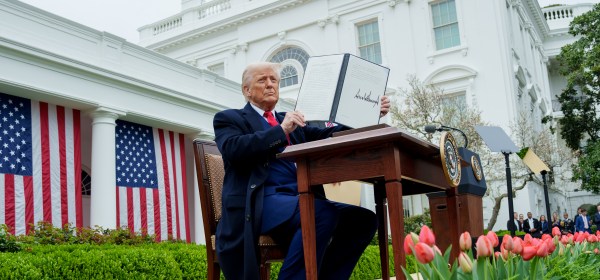
Facing the Uncertainty of Trump’s Taiwan Policy: Taiwan’s diplomatic, economic, and military approaches to address the significant challenge

Written by Baosheng Guo. This article analyses Taiwan’s options in the face of Trump’s uncertain and unpredictable Taiwan policy. It suggests that Taiwan should urge the US to provide strategic clarity and strengthen its relationship with Europe. Taiwan should also weaponise the interdependence of its semiconductor industry with the US and prepare to restart its research and development of nuclear weapons.
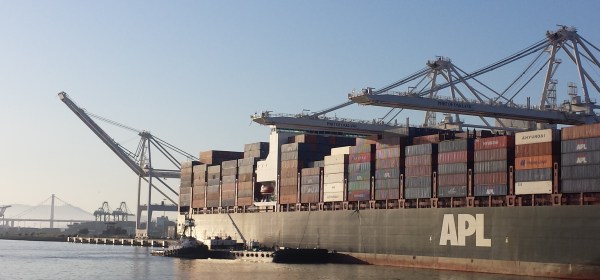
The Impact of Trump’s Tariff Policy on Global Trade and Its Geopolitical Ramifications

Written by Peter C.Y. Chow. This article assesses the impact of Trump’s tariffs from a global trade perspective. It argues that the effects of tariffs in reducing trade deficit remain indeterminate. Applying it to all trading partners will affect US relations with its allies, including Taiwan, and challenge the rules-based trade system that the US nurtured since the end of World War II. 

The Impact of Trump’s Recent Tariffs on Taiwan’s Trade, Investment, and Economic Prospects

Written by Alexander C. Tan. This article argues that Taiwan finds itself in a uniquely vulnerable position in the shifting landscape of international trade. The Taiwanese economy is heavily reliant on international trade. Taiwan is also excluded from major regional trade agreements such as the RCEP and CPTPP, limiting its options for diversifying trade relationships and mitigating the impact of tariffs.

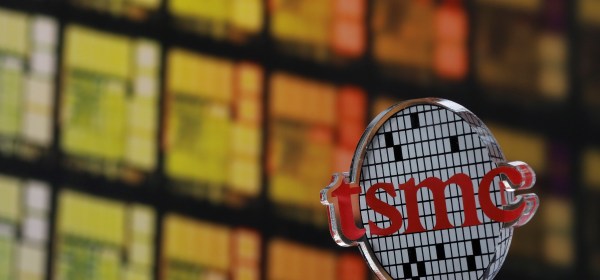
TSMC: The Enduring Silicon Shield of Taiwan’s Economy

Written by Min-Hua Chiang. This article argues that the TSMC will continue to be Taiwan’s silicon shield, despite its US$100 billion investment pledge in the US, as most of the more advanced chips will be fabricated in Taiwan. That is also why Taiwan faces challenges from the US tariff threat in the near term. TSMC remains Taiwan’s best chip in its negotiations with the US.

Trump’s Tariffs 2.0: New Effects and Implications to Taiwan

Written by Guan-Yi Leu. This article analyses the effects of Trump’s tariffs on Taiwan economically and geopolitically. The main concern in Taiwan was the uncertainty and unpredictability caused by the policy. It also discusses Taiwan’s response to it, both in terms of government and businesses. Taiwan’s economy has shown resilience amidst geopolitical risks and has weathered previous conflicts.

How can the WTO mitigate the challenges and difficulties Taiwan is experiencing associated with joining CPTPP?

Written by Ming-Cheng Li. This article highlights the WTO as the fundamental economic pathway for Taiwan to join the CPTPP. Taiwan has demonstrated its willingness to conform to international standards of trade policies  and actively engage in the governance of the WTO. It also developed robust partnerships with substantial members of the WTO like Japan, Canada and the UK.

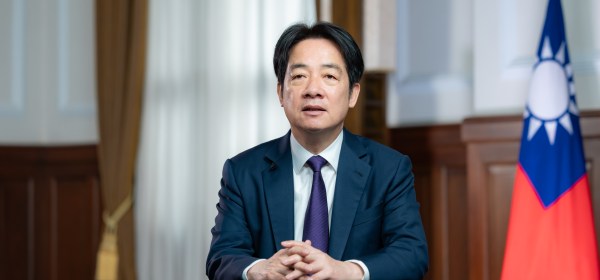
Taiwan Election 2024: What it Means for the Island’s Future Engagement with the Asia-Pacific Region

Written by Raian Hossain. Now that the election results are in, the period of intense suspense and electoral speculation has concluded. The issue of cross-strait relations remains unresolved, as the People’s Republic of China (PRC) insists that the Republic of China (ROC), often known as Taiwan, is a separatist province of the mainland and aims for reunification. For the first time in history, Taiwan has re-elected the same political party to govern the democratic island for a third consecutive term. The election of Lai Ching-te on Saturday signifies a strong counter to the People’s Republic of China’s (PRC) forceful stance and intimidation tactics towards the island. The primary challenge now is how Lai’s new government will maintain its relations with Beijing and navigate the complex triangular dynamics of the US, China, and Taiwan.

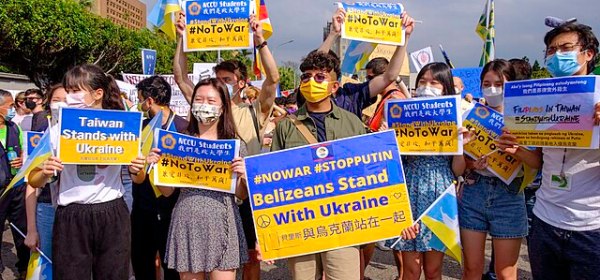
A lesson from the Russo-Ukrainian war for Taiwan: Connection

Written by Patricia Elnakhal, H.K. Wind and Fengze Strategy. Currently, the controllable intensity on the Taiwan Strait can potentially escalate. The growing frequency of analogous cases that several military aircraft from the mainland flying into the island’s air defence zone cause the intensity on this territory, while the situation is still under control because these actions are mainly for strategic purposes. More importantly, none of the powers is fully prepared for uncontrollable collisions, but the situation’s development indeed keeps invisibly escalating. As a lesson from the Ukraine war, Taiwan has to construct an unbroken and heavy rope connecting itself to the international community to prepare well earlier for various possibilities. The connection between Taiwan and the international community could be observed through two main aspects: the diplomatic interactions connecting to international politics and the economic development connecting to the international market.

Provocations: Taiwan Amidst Trust, Truss and the G7

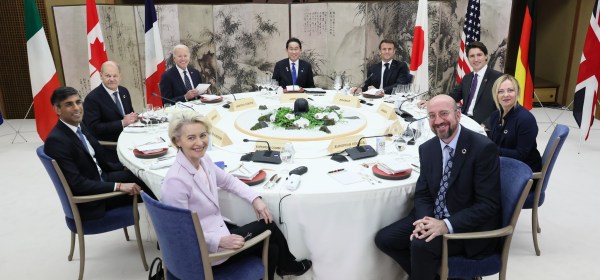
Written by Ian Inkster. Liz Truss led her charge into Taiwan on 16 May with the notion of Britain backing a Taiwan move to join the Pacific trade block, the CPTPP, against the present neutral position of the British Tory government under Rishi Sunak. This immediately provoked the Chinese to label her ‘sinister’. The point being that this was merely a Trussian wedge into her major provocation, that there is a ‘fatalism in the free world that somehow a Chinese takeover of Taiwan is inevitable’. Dangerously, Truss seems to have failed utterly (and almost certainly deliberately) to distinguish commercial and political, even military, aggressions, and to that extent, the danger of such an intervention should, of course, be noted.

1 2