‘Free China’ in History: A Look Back at Cold War Taiwan’s Anti-Communist Defectors 

Written by Andrew Morris. Reflecting on the 2023 IJTS Open Access Award-winning paper, the author revisits his path toward researching the Cold War-era defections from the PRC to Taiwan—stories once celebrated in Taiwan as “anti-communist righteous warriors.” This article shows how these largely forgotten stories offer a rare insight into a fervent hope once shared by millions in Taiwan.

Taiwan Insight–IJTS Special Issue on ‘IJTS Open Access Awards’ 

Written by Dr Ming-Yeh T. Rawnsley. This article is an introduction to the Taiwan Insight–IJTS Special Issue on IJTS Open Access Awards, an initiative recognising high-quality Taiwan-focused research by granting open-access status to the selected articles. This Special Issue showcases six award-winning articles, highlighting their contribution across multiple disciplines beyond Taiwan Studies.

Taiwan Studies Teaching: The Experience of Connecting Teaching and Event Programmes at SOAS University of London

Written by Dafydd Fell. The article traces the establishment of the Taiwan Studies Programme at SOAS and explores how it integrates Taiwan Studies courses with an extensive event program, including lectures, film screenings, and alumni talks. The strategy enhances student engagement, sustains interest in Taiwan-related studies, and fosters academic-community interaction. By combining teaching with real-world experiences, the Taiwan Studies Programme at SOAS successfully maintains a long-term and sustainable environment for Taiwan studies.

Teaching Taiwan by teaching languages – Performative Interpretation Strategies for Taiwanese Language Learning – A Case Study at Inalco

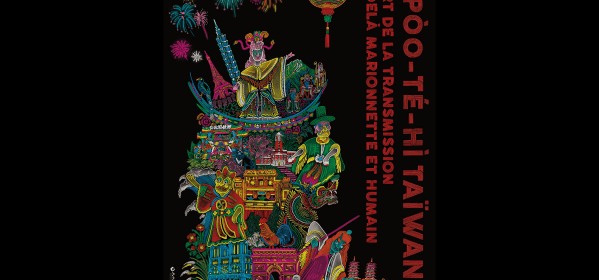
Written by Chan-yueh Liu. This article emphasizes the importance of teaching Taiwan through its multilingual heritage, advocating for the inclusion of Taiwanese languages (Tâi-gí in academic programs. It introduces “Performative Interpretation Strategies” at Inalco in France, which engages students through performance, music and digital content creation. The approach enhances language learning by fostering creativity, cultural immersion, and communicative competence.

“Mapping Taiwan Teaching” at Trier University: Teaching Taiwan in Script, Speech, and Performance

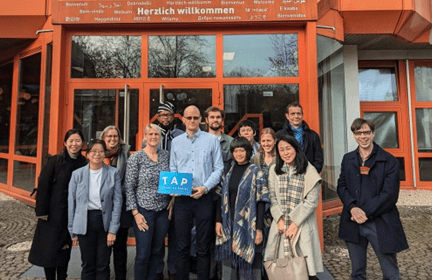
Written by Thomas Fliß. This article introduces the workshop “Mapping Taiwan Teaching – Teaching Taiwan in Script, Speech and Performance” at Trier University, which focused on teaching Taiwan through language, culture, and performance. Scholars and educators explored Taiwan’s geopolitical significance, linguistic diversity, and cultural identity. The event featured interdisciplinary panels on Taiwan’s literature, theatre, and education, highlighting the need for expanded Taiwanese language courses and intercultural learning methods.

NATSA: Repositioning Taiwan

Written by Chee-Hann Wu. The North American Taiwan Studies Association (NATSA) is a registered nonprofit organization and the largest scholarly association dedicated to Taiwan Studies in the United States and Canada. It was founded in 1994 when Taiwan Studies became a booming field of research that attracted international attention during the 1990s, a period of rapid political, economic, social, and cultural change in Taiwan. The growing academic interest in Taiwan called for a regular and interdisciplinary academic forum. To establish such a forum, the North American Taiwan Studies Association’s constitution was drafted and ratified at the first annual conference at Yale University in June 1994.

In memory of Prof. Ian Inkster

Written by Chun-yi Lee. The deep sorrow of never receiving another book proposal from Ian is everlasting. But I know in my heart that his influence will continue: his thoughts will inspire further contributions to Taiwan-related studies. Thank you, Ian. We learned so much from you when you were with us, both in person and through email communications, and we will keep learning from your writings every time we read your publications. And yes, I always, always give you my positive vibes!

Reflections on the Twentieth Anniversary of the European Association of Taiwan Studies

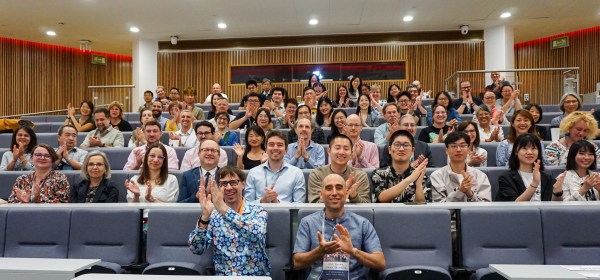
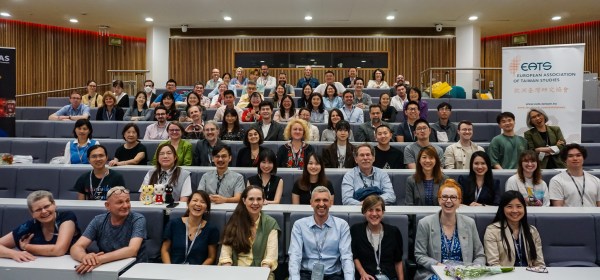
Written by Dafydd Fell. It was a special moment to open the 2023 European Association of Taiwan Studies (EATS) Conference back at SOAS twenty years after we started planning the first conference. The venue for the opening in June 2023 was even the same as the first 2004 conference in the SOAS University of London’s Khalili Lecture Theatre. It was also wonderful to see many people at this year’s conference who had also been involved in the early history of the association. Reflecting back over the last twenty years, it is remarkable how European Taiwan Studies has developed, and EATS has played a critical role in this Taiwan Studies miracle.

Taiwan Studies in Europe in 20 years: Looking forward to another 20 years

Written by Isabelle Cockel and Chun-yi Lee. The 20th Annual Conference of the European Association of Taiwan Studies (EATS) was held at the School of Oriental and African Studies (SOAS), University of London, on 26th – 28th June 2023. More than 120 participants joined this intellectual festival. A fire drill flushing out all the participants from the SOAS Main Building on the second day added a memorable highlight to the otherwise smooth proceeding of a panel-packed conference. Taiwan Insight featured four conference papers from the 3rd to the 12th of July as part of the celebration. This postface reflected upon the steady growth of Taiwan Studies, as demonstrated by them, in the past twenty years in Europe and beyond.

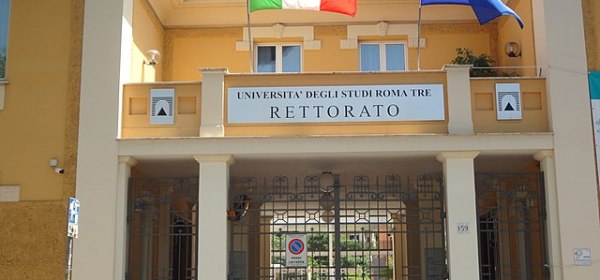
The Development of Taiwan Studies at Roma Tre University

Written by Rosa Lombardi and Silvia Schiavi. Since 2012, Roma Tre University carried out a series of activities to promote the knowledge and dissemination of Taiwanese culture and literature, contributing to the development of Taiwan studies in Italy. Before that, there was very little or no space devoted to Taiwanese literature in Italian universities, and courses in modern and contemporary Chinese literature mainly still deal with Chinese mainland literary production. Given this scarcity of studies on Taiwan in Italy, Prof. Rosa Lombardi and Dr Silvia Schiavi have promoted and implemented a series of events to raise awareness about the island and foster a better understanding of the Sinophone world through the introduction of Taiwan’s rich culture, history and literature to the students and the general public.

Taiwan Studies: An experience from India

Written by Manoj Kumar Panigrahi. The government and academicians must work upon a little academic knowledge of Taiwan in India. To begin with, Taiwan Studies can make space for itself within existing programmes or research centres in Northeast Asia or East Asia. Once it gains a stronghold, it can take off as a separate entity. I am optimistic about collaborating with other Taiwan Studies programmes worldwide to enhance India’s new front of research. The primary and most important goal now thus is to initiate and cultivate interest in Taiwan in India. Whether the interest in Taiwan is coming independently or clubbing it with other studies should not matter at the current stage. The debate of whether it shall be clubbed with “China studies” or be called “Sinitic” study can be taken up later.

Taiwan Studies and Sinology: A Curriculum Perspective

Written by Henning Klöter. The contributions by Perkuhn and Chien, Wang and Achen and again Chien mention some successful examples of Taiwan studies centres and associations in the US, the UK and mainland Europe. The core of Wang’s and Achen’s argument is that all of them can and should do without sinology. So far, so good. But if we look at the sustainability of Taiwan studies, we need to look beyond centres and associations and ask how the field can attract new cohorts of students and what they expect to learn. In other words, we need to discuss how the study of Taiwan should be integrated into existing curricula or whether Taiwan needs a curriculum in its own right.

1 2 3