When Secrets Collapse: Implications of the China Spy Scandal on UK-Taiwan Relations

Written by Alexandra Whitehead. This article asks what the China spy scandal in the UK means for Taiwan and analyses both its opportunities and risks, including the need to reassess its relations with Beijing and to clarify its legal framework to match its political rhetoric. Putting them together, the case is unlikely to drastically change the course of UK-Taiwan relations. 

A New Era for UK-Taiwan Relations: Explaining the UK’s New Interests in the Indo-Pacific and Taiwan

Written by Peter (Hung-Yao) Chu. This article explores the development of UK-Taiwan relations since the Tsai Ing-wen administration until the current William Lai administration. It suggests that Brexit and China’s increasing assertiveness serve as two of the most important factors that contribute to the UK’s reassessment of its approach toward the Indo-Pacific and Taiwan.

The Strategic Defence Review 2025: Is The United Kingdom Finally Sticking Up For Taiwan?

Written by Alexandra Whitehead. This article assesses the importance of Taiwan in the UK’s Strategic Defence Review (SDR) published in June 2025. It argues that the SDR recognises Taiwan’s global significance in the context of countering China, both in security and economic terms. However, it lacks explicit contingency planning to support Taiwan and remains ambiguous towards China.

Optimism From One Island to Another: Prospects for UK-Taiwan Relations Under the New Labour Government

Written by Mariah Thornton. This article presents an optimistic case for Taiwan-UK relations under the new government. Labour’s holistic view of security offers room for Taiwan to provide valuable technical insight and support. The new administration’s refreshed security commitments and Keir Starmer’s personal experience of visiting Taiwan will inform the government’s policy towards Taiwan.

The Ties That Bind: The UK in The Indo-Pacific

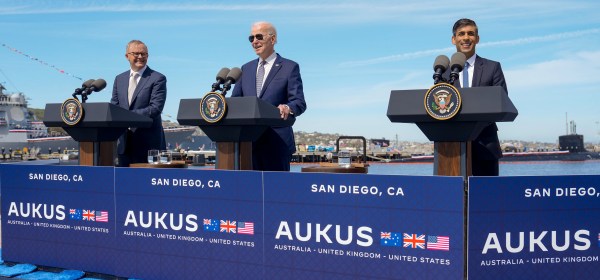
Written by Joshua Wilkes. This article focuses on the UK’s interest in stability across the Taiwan Strait in terms of defence and security. It examines two UK’s security partnerships in the region, AUKUS and GCAP, and how they are impacted by, and impact onto, Taiwan. Taipei should notice the circumstances and work to provide a more compelling environment for Taiwan-UK ties to flourish.

Continuity More Likely Than Change, but Questions Remain About Labour’s Approach to Taiwan

Written by Gray Sergeant. Although continuity is likely to dominate when it comes to HM government’s core cross-Strait positions, there is wide scope for the new Labour government to expand UK-Taiwan ties and support peace and stability across the Taiwan Strait. However, there is still uncertainty hanging over the UK’s commitment to Indo-Pacific security, subject to the China audit and defence review.

Taiwan will be the true test of the UK’s Indo-Pacific ambitions

Written by Andrew Yeh. This article argues that the new UK government should turn its attention to China’s escalating greyzone tactics against Taiwan, from large-scale military drills to cyber-attacks and coercive economic diplomacy. The UK and its allies should raise the cost of PRC’s aggressions, strengthen Taiwan’s resilience and work with allies to reaffirm the international rules-based order.

Progressive, Realist or both? British foreign policy and Taiwan under a Labour Government

Written by Max Dixon. This article argues that dealing with Taiwan is central to the new Foreign Secretary David Lammy’s notion of progressive realism, including its security commitment to Japan and South Korea, to the AUKUS pact and economic commitment to the CPTPP. Though Labour is conventionally focused on relations with Europe, the Taiwan issue is increasingly inevitable in the British approach to the Indo-Pacific.

Progress or Not? An Assessment of the Significance of Liz Truss’ Taipei Visit

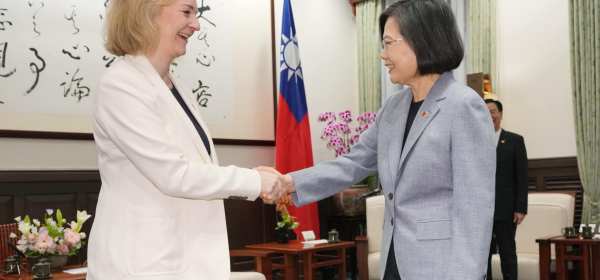
Written by Milo Hsieh and Wei Azim Hung. At a time when Downing Street seeks to recalibrate its relationship with Beijing, Liz Truss’ Taipei trip has raised eyebrows and controversy in London as well as provoked strong condemnation from Beijing. For Taiwan, the trip shows that yet another former official sees Taiwan as an important part of their agenda as world leaders increasingly make Taiwan a priority destination.

Provocations: Taiwan Amidst Trust, Truss and the G7

Written by Ian Inkster. Liz Truss led her charge into Taiwan on 16 May with the notion of Britain backing a Taiwan move to join the Pacific trade block, the CPTPP, against the present neutral position of the British Tory government under Rishi Sunak. This immediately provoked the Chinese to label her ‘sinister’. The point being that this was merely a Trussian wedge into her major provocation, that there is a ‘fatalism in the free world that somehow a Chinese takeover of Taiwan is inevitable’. Dangerously, Truss seems to have failed utterly (and almost certainly deliberately) to distinguish commercial and political, even military, aggressions, and to that extent, the danger of such an intervention should, of course, be noted.

Liz Truss: Fighting for Taiwan or Personal Credibility?

Written by John Burn. It was already clear from her recent speech to conservative think tank The Heritage Foundation in Washington DC that Liz Truss – the UK’s shortest-serving Prime Minister of all time – is trying to develop her image beyond the country’s shores. Being responsible for one of the most disastrous economic policy outlines in the UK’s history in her mini-budget upon coming to office, she lost public confidence and the confidence of the Conservative Party in very short order, resulting in her dismissal after 44 days in office.

1 2