Three Happy Losers and One Winner: Comments on the 2024 Taiwan National Elections

Written by Chia-hung Tsai. Taiwan’s 2024 presidential and legislative elections, held on 13 January, concluded peacefully, revealing key insights into the electorate’s priorities. The results highlight that voters are influenced by both their sense of Taiwanese/Chinese identity, especially in the context of cross-strait relations, and their pragmatic concerns for personal, tangible interests, for instance, low income, high inflation, high unemployment rate and unaffordable housing prices for average middle class in Taiwan. These transcend ideological or identity boundaries. The dual factors set the stage for the critical governance issues and candidate personalities that defined the election.

What Does Taiwan’s Presidential Election Outcome Tell Us About Its Economic Prospects?

Written by Min-Hua Chiang. William Lai (Lai Ching-te) of the Democratic Progressive Party (DPP) secured his election as Taiwan’s 16th president on January 13, 2024. As the DPP extends its rule for another four years, the administration is likely to maintain President Tsai Ing-wen’s economic policies, notably diversifying the economy away from China. Navigating Taiwan’s export-oriented economy through the evolving US-China relationship will pose the most significant challenge for the new administration. 

Remembering Shih Ming-teh 

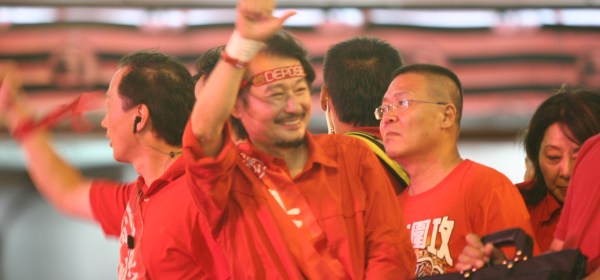
Written by Thomas J. Shattuck. On January 15, 2024, only a few days after the election, longtime democracy and human rights advocate, Nobel Peace Prize nominee, and politician Shih Ming-teh passed away. Given his place in Taiwan’s history and democratic development, it is important to remember him and his legacy. Shih is a widely known figure in Taiwan for his legacy in Taiwan’s democratisation and his role in the Kaohsiung Incident and Tangwai movement. He’s also famous for his role in the anti-corruption protests against then-President Chen Shui-bian in the early 2000s. Shih consistently called for Chen’s resignation and led the “Million Voices Against Corruption-Chen Must Go” campaign. For decades, he held politicians to high standards, and understandably so.  

Taiwan’s New President: Continuity, Priorities, Vision

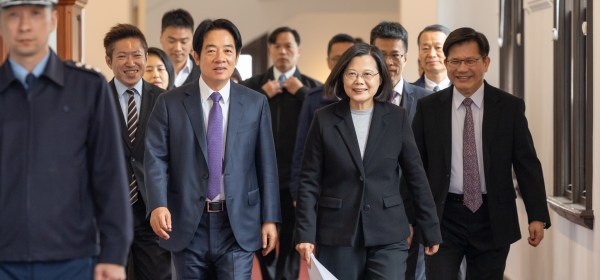
Written by Chieh-Ting Yeh. As recent developments transition into a period of stability, the focus shifts towards what lies ahead. The incoming government faces pivotal questions: How will President Lai’s four-year term compare to President Tsai’s preceding eight years? What key challenges await immediate attention from President Lai? Additionally, it’s crucial to consider the direction in which Taiwan is heading to carve its unique identity in the global landscape.

Election win for the DPP, but a split legislature 

Written by Gerrit van der Wees. After a hard-fought campaign, the DPP candidate “William” Lai Ching-te and his running mate Hsiao Bikhim emerged victorious in Taiwan’s presidential election race with 40.1 % of the vote. They were elected Taiwan’s President and Vice-President respectively. The total turnout was 71.8% of the eligible voters, a bit lower than the 74.9% in the 2020 elections. The main opposition candidate in the three-way race, Messrs. Hou Yu-ih of the Chinese Nationalist Kuomintang Party, and his running mate, pro-China media personality Jaw Shaw-kang, received 33.5% of the vote, while Mr Ko Wen-je of the Taiwan People’s Party (TPP) and his running mate Cynthia Wang, came in a respectable third with 26.5% of the vote.

“The Will of the Chinese People”: Beijing’s Narrative of Invading Taiwan

Written by Kuang-shun Yang. For decades, Taiwan has lived under Beijing’s constant military threat of “reunification.” However, Taiwan is often portrayed by Chinese propagandists as a “troublemaker” capable of destabilising the Indo-Pacific region or making China “upset about everything we [Taiwan] do, about our existence,” as Taiwan’s ex-ambassador to the United States Hsiao Bi-khim noted. Taiwan’s independence, be it a political appeal or an objective reality, is provocative to the Chinese Communist Party (CCP). The CCP’s mouthpieces have effectively convinced numerous international observers to discourage Taiwan’s quest for independence and characterised Taiwan’s autonomy as an affront to the Chinese people.

How Czechia Engages Taiwan 

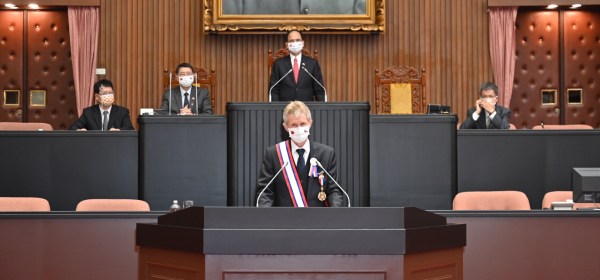
Written by Filip Šebok. While it has been over the past few years that the Czech-Taiwanese relations have grabbed headlines over the world, the two sides’ ties have not come from nowhere. In fact, the recent intensification of cooperation has been built on a very solid foundation jointly forged by the two sides since the early 1990s. Taiwan has become an important investor in the Central European countries already in the 2000s, especially through the investment of electronic manufacturer Foxconn, which has become a major exporter and tax payer in the country.  

Taiwan-Netherlands relations: strong ties with historical weight

Written by Sense Hofstede. Taiwan and the Netherlands share a long history. The island’s central position on the critical trading networks of its time sparked Dutch interests both in the 17th century and today. Dutch-Taiwanese economic ties are strong but also increasingly under intense scrutiny as the chip war heats up. Next to strong trade ties, a 1980s arms sale is the most high-profile of the Netherlands’ maritime ​​​​security involvement with Taiwan. The historical, security and economic ties all touch upon sensitive issues. 

The EU-China Summit and the Future of EU-Taiwan Relations: Reconstructing the Normative Agenda

Written by Dominika Remžová. A few days prior to this year’s EU-China summit (the first to take place in person since the COVID-19 pandemic), the Financial Times has published an opinion piece by Anders Fogh Rasmussen, former Secretary-General of NATO, calling for the Union’s stronger support for Taiwan. The article singles out security considerations as the main reason for such a principled stance, which the author acknowledges has been taken up by only a few Central and Eastern European (CEE) leaders. This focus on security issues and small states is noteworthy, as it provides the most fruitful avenue for further strengthening of ties moving forward.

Digital Governance Perspectives for Taiwanese and Japanese Civil Society

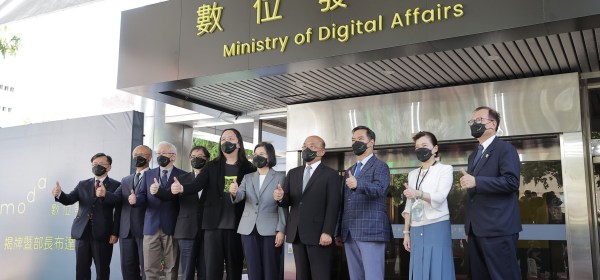
Written by Tommy Hall and Margaret Siu. In the digital age, politics and technology are more intertwined than ever, especially in East Asia. With nations like Taiwan wrestling with the balance between free speech and foreign interference and Japan pivoting towards advanced tech solutions for national security, the right balance remains elusive, and the stakes perennial. By exploring these critical intersections between online spaces and national politics, this work spotlights the challenges and opportunities that lie ahead for these East Asian democracies, as well as connecting the East Asian experience to the world at large.

Invisible Nation Documentary is Making Taiwan More Visible

Written by Shawna Yang Ryan and Gerrit van der Wees. During the past weeks, a new documentary about Taiwan, Invisible Nation, has been making the rounds at various film festivals in the United States and Europe, including the International Documentary Film Festival Amsterdam on November 14-18, 2023.  Invisible Nation is the work of Vanessa Hope, who built up the film around the everyday life of President Tsai Ing-wen, in the process creating a fascinating picture of how the low-key President is ably leading Taiwan towards a better future.

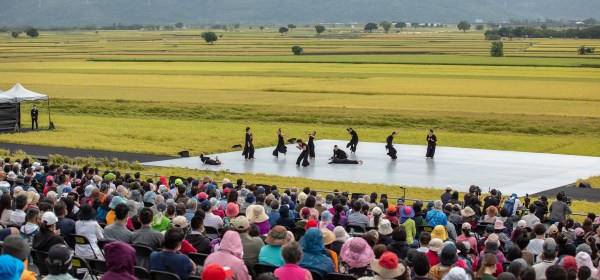
Improving Conditions of Artistic Labour and Local Economic Sustainability 

The essence of cultural policy lies in nurturing and stimulating social creativity, which involves both the preservation of classics and the kindling of future possibilities. The durability of policy development hinges on the transmission of memory and skills. Rather than being a political display, citizens occupy a central role in artistic performance, whether as creators or audience members. Does the support for creators aim to ensure the vitality and competitiveness of society, to enhance cultural production, or does its impact merely extend to safeguarding welfare measures? 

1 10 11 12 13 14 40