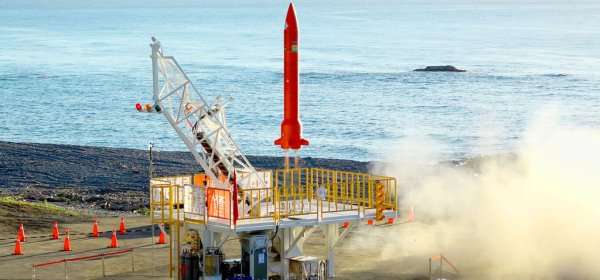
Stepping Through the Door: Taiwan’s Space Future in Motion (2)

Written by Andie Wang. The second part of this two-part article examines two critical aspects of Taiwan’s space ambitions: international partnerships and talent development, analysing both current initiatives and future opportunities. It argues that through strategic partnership development and systematic talent incubation mechanisms, Taiwan can become a more established space power and a significant contributor to the global space ecosystem.

Stepping Through the Door: Taiwan’s Space Future in Motion (1)

Written by Andie Wang. This two-part article explores the future of Taiwan’s space development. This paper examines two critical aspects of Taiwan’s space development: enhanced cross-agency coordination and vertical industry integration. It argues that strengthening governmental coordination mechanisms and developing comprehensive capabilities across the space industry value chain are essential foundations for Taiwan’s space leadership.

Floating in a Most Peculiar Way: Taiwan’s Struggles in Space Development

Written by Jiun-Ru Chiang. This article examines the geopolitical constraints of Taiwan’s space development, exploring how China use political and economic power to shape broader geopolitical restraints in order to obstruct Taiwan’s space development. While struggling in space development and international cooperation, Taiwan must pursue a more calculated and diversified approach.

Commencing Countdown: Taiwan’s Journey in Space Development

Written by Jiun-Ru Chiang, Fan Su, and Jie-Yun Hung. This article reviews Taiwan’s journey in space development, reflecting a strategic evolution from experimental satellite projects to a structured, policy-driven industry. Examining the evolution of Taiwan’s space sector provides insight into how government initiatives, industrial expertise, and diplomatic challenges have intertwined to influence the country’s strategic direction. 

Tell a Taiwan Story to an American: A Recap at the Creative and Collaborative Workshop

Written by Dah-Wei (David) Yih. This article describes a workshop hosted at the NATSA conference that aimed to empower participants to communicate Taiwan’s significance to American audiences. The workshop emphasised Taiwan’s multifaceted importance to the United States, ranging from economic and geopolitical ties to shared democratic values and technological cooperation. It used interactive activities and facilitated discussions to help attendees understand why Taiwan matters and how to communicate this understanding to others effectively.

Taiwan’s Semiconductor Industry in the “Chip Wars” Era 

Written by Gunter Schubert. Taiwan’s security is largely determined by the government’s ability to promote the resilience of Taiwan’s high-tech industries, especially semiconductors, to ensure their international competitiveness and crisis resilience. Based on this fact, this article raises two subsequent questions: what strategies are the Taiwanese semiconductor industry pursuing to secure its technological edge and markets in the new global power constellation? And what is the Taiwanese government doing to strengthen the country’s economic security, which arguably depends essentially on maintaining Taiwan’s leading position in the global high-tech industry over the long term? 

Cybersecurity and National Security in Taiwan and Japan

Written by Margaret Siu and Tommy Hall. In an era where digital technology permeates every aspect of our lives, national security strategies increasingly hinge on robust cybersecurity measures. This is particularly evident in the approaches of Taiwan and Japan, two democratic governments at the forefront of integrating advanced technological defences against emerging digital threats. The evolving cybersecurity strategies of Taiwan and Japan are not merely reactive measures to emerging threats but are emblematic of broader global trends where digital security is inextricably linked to political stability. Their experiences offer vital insights for other governments grappling with similar challenges, emphasising the importance of agility, technological innovation, and international cooperation in crafting national security strategies for an interconnected digital world.

Computational Propaganda and Democracy in Taiwan: AI’s Impacts on Pre-Existing Challenges

Written by Tommy Hall and Margaret Siu. When generative, artificial intelligence (AI) programmes are used with malicious intent in the realm of politics, the resulting “deepfakes” can be both convincing (at a glance) and extremely damaging to the target’s image. This article will argue that a unified and proactive response is necessary for Taiwan to successfully navigate the gauntlet of challenges created by AI in a democratic political environment.

The Digital Evolution in Taiwan and Japan: Implications for Political Communication

Written by Tommy Hall and Margaret Siu. The digital era has revolutionised political communication, with profound effects in Asian democracies, notably Japan and Taiwan. This exploration delves into the intricacies of how political entities in these countries harness digital platforms. It aims to unpack the varied strategies they employ, the challenges they confront, and the opportunities they seize within the digital realm. Our analysis will not only highlight the distinct tactics and responses shaped by each country’s unique cultural, legal, and historical contexts but also examine the broader implications these digital transformations hold for political engagement and democratic discourse in the region.

Digital Governance Perspectives for Taiwanese and Japanese Civil Society

Written by Tommy Hall and Margaret Siu. In the digital age, politics and technology are more intertwined than ever, especially in East Asia. With nations like Taiwan wrestling with the balance between free speech and foreign interference and Japan pivoting towards advanced tech solutions for national security, the right balance remains elusive, and the stakes perennial. By exploring these critical intersections between online spaces and national politics, this work spotlights the challenges and opportunities that lie ahead for these East Asian democracies, as well as connecting the East Asian experience to the world at large.

1 2 3 5