
Written by Chee-Hann Wu.
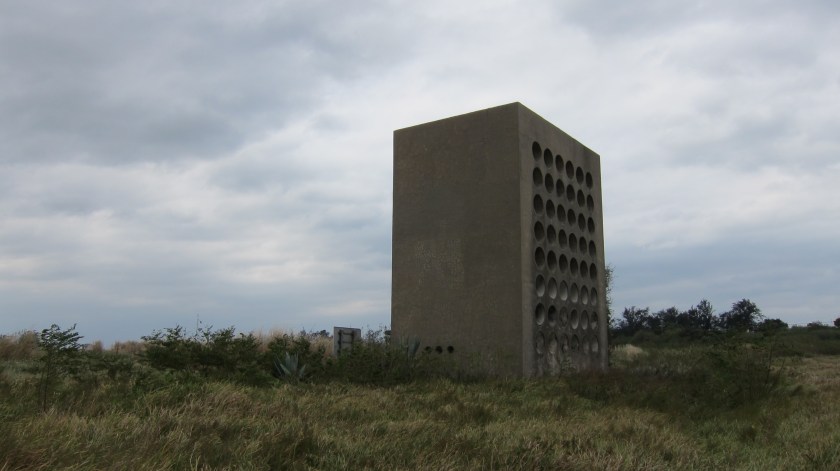
Image credit: 古寧頭 北山斷崖 廣播台 by jeff~. / Flickr, license: CC BY 2.0 DEED.
A few days ago, before I started drafting this article, on 18 March 2024, two Taiwanese fishers drifted into Chinese waters near Quanzhou, Fujian, in foggy conditions, where the Chinese Coast Guard picked them up. One was soon released, while the other remained detained. Less than a month earlier, in February, a vessel carrying four Chinese anglers entered prohibited waters off the coast of Kinmen. Two Chinese fishermen drowned during a pursuit by the Taiwan Coast Guard. In addition, there have been several other incidents around Kinmen that have raised serious national security concerns, led to rising tensions between China and Taiwan, and caused dissonance in Taiwan’s parliament and public.
This is Kinmen, a small group of islands 10 kilometres from the city of Xiamen in Fujian, China, and almost 200 kilometres from the main island of Taiwan. Kinmen and Xiamen, both a part of Fujian Province, belong to two opposing states. They are close but also far. The small islands of Kinmen connect Taiwan and China but also separate them. The ambivalent nature of Kinmen is probably what inspires S. Leo Chiang’s short documentary, Island in Between (2023).
Island in Between, a 19-minute documentary, was released on YouTube as a part of The New York Times’ Op-Doc series and nominated for the 2024 Oscar in the documentary short category. The documentary traces director S. Leo Chiang’s journey and tells the story of Kinmen through a personal and intimate narrative—growing up in both Taiwan and the US, moving back to Taiwan in 2017, and during the COVID-19 pandemic, being drawn to Kinmen where his father served in the military and before immigrating to the US. He explains in the narration, “After so many years away, I am still figuring out my relationship to Taiwan and China. Kinmen connects Taiwan to China but also keeps them apart. Maybe that is why I am drawn to this place. I want to make sense of it.”
The words “in-between” in the title nicely capture the core message of this documentary. Facing the Pacific Ocean with the Asian continent at its back, Taiwan has been a crucial transpacific connecting point; at the same time, Taiwan has been overlooked due to its liminal position on the edge of both continent and ocean. The term China, zhongguo, literally means “central state.” Chinese historical discourse embraces Sinocentrism and imposes a negative valuation on Taiwan as a peripheral borderland on the edge of the Pacific and outside the mainland, emphasising Taiwan’s marginality and even challenging its legitimacy. If Taiwan has historically been positioned on the periphery, then Kinmen is even more stuck on the edge, being an eternal frontier, whether to Taiwan or China. Kinmen is always defined by its liminality, being neither here nor there, and sometimes both here and there, and such liminality is not solely geographical but also political and ideological.
One audience asked Chiang the reasons why he used the word “Between” in the documentary’s English title. He responds, “We cannot control our future. I think ‘Between’ has a similar meaning. Whether it is Kinmen or Taiwan-Penghu-Kinmen-Matsu, what the people want should be something we can fight for ourselves. We are passive; that is, we have no choice but to be controlled by others, and this is an extremely unpleasant feeling for an individual.” Between or in between denotes a certain sense of instability and lack of belonging, but also difference, alternative, and indefinability.
The in-betweenness of Kinmen somehow resonates with Chiang’s personal experience as a Taiwanese American, particularly the fluidity and diversity of his identities. In a scene of Island in Between, Chiang shows the camera his Taiwan passport, US passport and the Taiwan compatriot permit, which is a travel document issued by China’s Ministry of Public Security to nationals of the Republic of China because passports issued by Taiwan are not considered to be valid travel documents by China. These different travel documents demonstrate the complexity of Taiwanese identity, specifically that for Kinment residents, and also Chiang’s identities and positionality in this documentary.
Kinmen’s proximity to China is mentioned throughout Island in Between. At the end of it, Chiang says that the people of Kinmen are “forever caught in between”. This can very likely echo Chiang’s experience. He constantly mentions that he grew up in Taiwan but also expresses feeling alienated from Taiwan after moving to the US when he was 15, being caught in between. Yet, it is certainly such in-betweenness that inspires Chiang to tell the story of Kinmen through his lens.
Undoubtedly, Island in Between shows shared sentiments with many diaspora narratives. It is, as Chiang acknowledges, aimed more at an international audience than a Taiwanese one. It is particularly noteworthy that the Chinese title of the documentary is completely different from the English one. The Chinese title is simply Kinmen 金門, while the English title is Island in Between. There is a clear connotation in the latter, as “island in between” refers to both Kinmen and Taiwan. It then raises a critical question: is Kinmen the epitome of Taiwan as a whole? This issue of representation is also mentioned in Brian Hioe’s article. The (likely intentional) lack of specificity of the English title leaves spaces for interpretation and imagination of Taiwan’s geopolitics. Perhaps this is the goal of this documentary.
In addition to the messages embedded in Island in Between, what really caught my attention were the contrasts portrayed in the documentary: intense military presence vs the casualness of local life and work, political propaganda vs tourism, mountains vs. ocean, the bustle of urban spaces vs. nature, the resilience of Kinmen residents vs. the vulnerability of peace, and more. The documentary begins with an abandoned tank on the beach and ends in the same place but at sunset. The serenity of these shots is somehow unsettling. The waters around Kinmen have not been peaceful in recent months. I wonder how precious the peace we have now is and how long we can keep it, both in terms of national security, geopolitical conflicts, and Taiwan’s internal affairs. The recent incidents in Kinmen have further widened the disparity within the government and among the public.
Regardless, this is probably what Chiang hopes audiences will see in Island in Between—not an attempt to find answers, but a self-exploration, a reflection on how to position oneself in such a complex situation. To end with his words: “It’s not just a problem in Taiwan, it’s a problem all over the world. It is quite easy to put people in a 100% yes or no position, but it does not work that way. There have to be people who believe it is true, people who support it, and people who think, ‘I don’t really agree with it’”.
Chee-Hann Wu is an assistant professor faculty fellow (postdoc) in Theatre Studies at NYU. She received her Ph.D. in Drama and Theatre from the University of California, Irvine. Chee-Hann is drawn to performance by and with nonhumans including but not limited to objects, puppets, ecology, and technology. Her current book project considers puppetry a mediated means to narrate Taiwan’s cultural and sociopolitical development, colonial and postcolonial experiences, as well as Indigenous histories. Chee-Hann’s most recent work explores video games and VR through the lens of theatre and performance.
This article was published as part of a special issue on ‘Kinmen-An Island in Between‘.
 Taiwan Insight