
Written by Min-Hua Chiang.
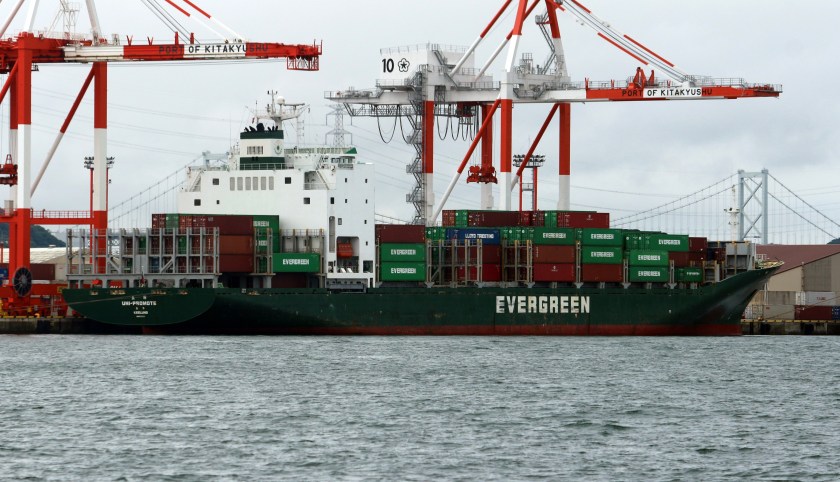
Image credit: UNI-PROMOTE by -EZEK/ Flickr, license: CC BY-ND 2.0.
Taiwan’s economy has shown a robust recovery since the latter half of 2023, thanks to the growing merchandise exports. The island’s strength in fabricating advanced chips is likely to ensure further its export momentum during the Artificial Intelligence (AI) boom. However, the President-elect of the United States (US) – Donald J. Trump – claimed to raise tariffs on all imported goods during the election campaign. This could hurt Taiwanese exporters eyeing the US market. Hence, Trump’s election cast doubts on whether Taiwan could continue its export-oriented economic growth.
Taiwan’s latest official statistics reckon that the US has become its second-largest export destination, accounting for 24% of Taiwan’s total exports in the first 10 months of 2024, ascending from 15% in 2020. In comparison, China and Hong Kong’s shares in Taiwan’s total exports shrank from 44% to 32% during the same period.
Taiwan’s expanding exports to the US began after America started setting higher tariffs on certain Chinese goods in 2018. Taiwanese manufacturers had to move their manufacturing and export capacity from China to either Taiwan or other developing countries to avoid the higher tariffs aimed at Chinese imports.
As a result of shifting the export platform back to Taiwan, the shares of information and communications technology (ICT) products (such as smartphones, tablets, computers, etc) in Taiwan’s total exports increased significantly from 13% in 2019 to 28% in 2024 (Jan-Oct), according to Taiwan’s Ministry of Finance.
Meanwhile, the relocation of the export platform to other developing countries reduced Taiwan’s exports of key components to China for the final assembly. In addition, the US ban on selling advanced chips to China further cut down Taiwan’s exports of key components to Chinese companies (such as Huawei) for assembling their electronic devices with high technology intensity.
In short, Taiwan has benefitted from the US trade war with China during the first term of the Trump administration and the Biden administration as the island takes over some production capacity from China. The US ban on selling advanced semiconductor chips and equipment to Chinese tech companies has also retarded China’s technological advancement. It will now take a longer time for China to catch up with Taiwan’s level of technology. Strategically, the more distant Cross-Strait economic relations give China less leverage to force Taiwan to make political concessions.
Many people are concerned that Taiwan will suffer from the higher tariffs during President Trump’s second term. However, Taiwan will not be the only country to be imposed with higher tariffs. All the major countries that have developed their economies through exports to the US market over the past few decades could suffer greatly from the additional levies. The global economic recession, due to the export slump, will not benefit the US either. Given the potentially huge impact of extra tariffs on the global economy, how the US trade policy is going to play out is still uncertain.
Although the US has been trying to draw back manufacturing production from overseas countries, it will take time to develop its domestic manufacturing production. In the short term, America still needs to import a large amount of final consumption goods from abroad to meet domestic demand. Yet, the higher tariffs will reduce consumer benefits. Simply put, Americans might not be happy to pay more for the same products sold in other countries unless the wages could increase in tandem with the prices.
More importantly, the more expansive imports could make inflation in the US even worse. The higher inflation would stall the current development of interest rate cuts since September 2024. Higher inflation and elevated interest rates are unfavourable conditions for boosting the economy.
Indeed, imposing higher tariffs is to mitigate the source of the government’s revenue from American taxpayers to American consumers. While lowering corporate tax could encourage companies to invest more and stimulate the economy, the government would collect less tax revenue from businesses. Even though the US can make foreign countries, instead of the US consumers, pay for the extra import duties, the fiscal shortfall cannot be simply filled through the higher tariffs.
Exporting countries in Asia and Europe used to use their trade surplus, generated from the massive exports, to purchase US treasury bonds. Hence, the US could finance its debt thanks partially to the treasury bonds sold to foreign countries. In 2023, foreigners accounted for nearly one-third of US debt held by the public, increasing from 5% in 1970. If the higher tariffs discourage their exports to America, the US is likely to lose a significant amount of treasury bonds that could potentially be sold to foreign countries and make its debt sustained.
In this highly fragmented global supply chain network, another likely scenario is that each manufacturer located in different counties would share the extra production costs derived from the higher tariffs. In this case, both the US and the global economy would continue to operate with less volatility. Nevertheless, large companies such as Apple and TSMC might have greater bargaining power, which would allow them to bear less of a cost-sharing burden. Small companies in Taiwan and elsewhere would probably have to lower the cost by relocating manufacturing production to developing countries with a cheap labour force. The labour in developing countries will be exploited even more to allow large companies to keep their profit margin intact. The US might still heavily rely on imports if the international division of labour proved more efficient than producing in America.
In sum, the US gains from imposing higher tariffs on imports might not be as straightforward. It might take some time for the new administration to find a balance between higher import duties and its domestic economy.
Unlike the uncertain import tariffs on Taiwanese products exported to the US, what is more certain is the US hostility towards China. Taiwanese manufacturers aimed at exporting goods to the US market could leave China more rapidly if the new Trump administration implemented 60% tariffs on Chinese goods. In other words, the US policy under President Trump is likely to return to “de-coupling” with China from “de-risking” during the Biden administration.
President Trump is also likely to force Taiwan’s high-value-added manufacturing to move to the US. Other countries might follow suit and persuade Taiwanese high-tech firms to invest in their territory. The greater investment in the US and other countries might not be disadvantageous for Taiwan. This is evidenced by Taiwan’s moderate economic expansion, while its outward investment in foreign countries other than China has been increasing in the past few years.
On the one hand, Taiwan’s export-oriented economy could remain resilient as its manufacturing strength, which has accumulated over the last few decades, is not easy to replicate. On the other hand, investing in manufacturing industries in overseas countries could reduce Taiwan’s production burden to fulfil the global demand and help to connect Taiwan more closely with America and the rest of the world. Overall, Taiwan’s strong manufacturing prowess has put it in an advantageous position in the current restructuring of global political and economic relations.
The US-China reconciliation in the late 1970s is a historical change in global power relations that contributed to the development of the Cross-Strait economic rapprochement over the last few decades. Taiwan’s mounting investment in China since the mid-1990s has not only enlarged Taiwanese firms’ business scale but also increased their international visibility. The new geopolitical setting 40 years later will provide Taiwan with a new opportunity to redefine its role in the global economy. Taiwanese firms’ decades-long manufacturing experiences, incomparable production flexibility, and nimble business strategies are Taiwan’s most important assets that will continue to drive its economy forward amid the dynamism of geopolitical relations.
Min-Hua Chiang is a non-resident fellow at the Taiwan Research Hub, University of Nottingham.
This article was published as part of a special issue on ‘US Election: Implications for Taiwan’.
 Taiwan Insight