
Written by Chieh-Ting Yeh.
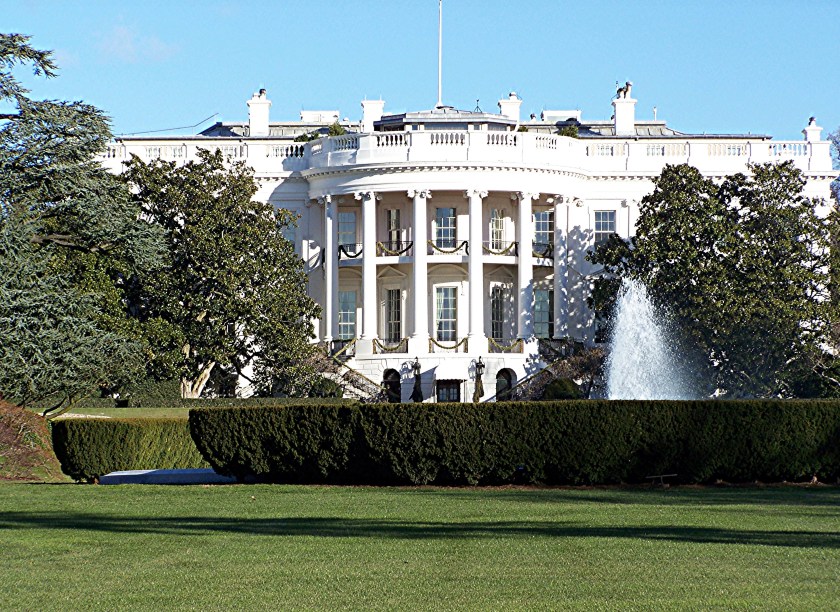
Image credit: ‘The White House’ by Loco Steve/ Flickr, license: CC BY 2.0.
As I mentioned in a piece in Taiwan Insight after the Taiwan presidential elections in January, Taiwan will have to engage the US in much more substantive negotiations over security cooperation and trade. US-Taiwan relations have entered a phase where it is not enough to simply engage in dialogue; but those dialogues have to start producing results.
This challenge for Taiwan is compounded, of course, by a change in administration on January 20 of next year. Since this summer, it is clear that no matter what, there will be a new president by next year; since earlier this month, it is clear that that president will be former President Donald Trump.
Reactions to Trump’s re-election in Taiwan have been mixed, sitting somewhere between cautious optimism and hesitant anxiety.
Certainly, Trump has many fans in Taiwan. For the people in Taiwan who despise China, the United States under the first Trump Administration was thought to have fundamentally altered its course towards China, shifting from a strategy of engagement and deepening relations to a posture of competition and rivalry. The first President Trump launched a trade war with China and accused China of the Covid-19 pandemic.
On Taiwan itself the first president Trump picked up was Taiwan President Tsai Ing-wen’s congratulatory call, which was a nod to Taiwan that broke with longstanding taboos. The first Trump Administration also broke the tradition of disallowing senior level officials to travel to Taiwan, as well as authorising up to 15 billion dollars of arms sales to Taiwan.
Understandably, pro-defence and China-sceptical folks in Taiwan welcome a second Trump Administration. However, President Donald Trump may very well be much more isolationist, protectionist, and less interested in forging new international agreements, even compared to his first term.
Ungrateful beggars
Unlike the warm reception he gave Taiwan eight years ago, Trump’s campaign rhetoric this time centred on a sceptical, even suspicious, attitude towards Taiwan. He accused Taiwan of two things: “stealing” America’s semiconductor business and what essentially amounted to Taiwan being an ungrateful beggar for America’s protection.
These attitudes towards Taiwan are dangerous, first and foremost, because there is no reason to doubt they are Trump’s honest feelings. They are also in line with Trump’s mantra “Make America Great Again”—the narrative is that Taiwan stealing America’s business made America not great anymore; it follows that America has to claw back this business from Taiwan in order to make America great again.
Some policy indications under the current Biden Administration already fuel this narrative. The current commerce secretary, Gina Raimondo, has said that more than 90% of the advanced chips used in the US are manufactured in Taiwan, which is an “untenable,” “unsafe,” and “vulnerable” situation for the US. Under the new Trump Administration, these kinds of statements claiming Taiwan is causing US vulnerability are very likely to be more prominent.
On the security front, Trump has claimed that Taiwan needed to raise its defence spending to 10% of its GDP, which is roughly equivalent to over 80% of Taiwan’s current annual national budget. While this is clearly a hyperbolic statement, the sentiment is true—that Trump believes Taiwan is not willing to be responsible for its defence and rather is leeching off of the US. This falls in line with Trump’s known attitude towards other multilateral alliances such as NATO. It is less about showing leadership by example and more about disdain for other countries. Clearly, Taiwan is now among those countries on Trump’s watch list of ungrateful beggars.
Internal turmoil
Another area to watch for under a second Trump Administration is the internal turmoil that could arise in the United States from Trump’s drastic policy changes. While these policies do not have a direct causal relationship to foreign affairs, they would take away the American public’s attention from important questions of how to best support Taiwan and manage China.
If Trump follows through on his most substantial campaign promises, America is likely to be embroiled in controversy. One of Trump’s centrepiece policy proposals is a mass deportation of undocumented immigrants, up to 1 million people per year. Trump plans to mobilise National Guard troops to the border to place a record number of people in mass detention camps or send them to neighbouring countries like Mexico, which does not welcome this plan. The American Civil Liberties Union and other groups are already gearing up for legal challenges.
Another centrepiece issue is abortion. Although Trump has said he will not sign a federal-level abortion ban, experts expect abortion rights and access to be further limited through more specific actions such as limiting access to abortion medication.
These deep-seated domestic controversies in the US are very likely to occupy the American public’s attention and further polarise the nation. As the public becomes more polarised, it also becomes more difficult to act rationally on China and Taiwan issues. Furthermore, Trump’s rhetoric on China is often tinged with appeals to racism, giving his opponents, as well as Beijing, a strong counterargument to his China policy.
On the international stage, in many ways, the personal attributes of the national leader become associated with the nation itself. Just as Tsai Ing-wen’s quiet confidence became Taiwan’s quiet confidence as it weathered the pandemic and Chinese aggression, Donald Trump’s personality will reflect on America’s international personality as a whole. Trump’s worst qualities—his bravado, hyperboles, lack of moral compass, xenophobia, disrespect for the established order, penchant for conspiracy, and philandering—will hopefully not become how America is known around the world.
Taiwan’s response
In the face of increased volatility, Taiwan will do well to find a set of principles and mid-term strategic goals with respect to US-Taiwan relations. Taiwan should also continue to develop its value, regardless of the everyday whims of statements coming out of Washington or posted to X or Truth Social.
Even with new administrations on both sides of the Pacific, what has not changed is the fact that the US and Taiwan share common interests and common values. That is why Taiwan remains one of the handful of issues enjoying bipartisan support in the US. It remains to be seen whether cautious optimism or hesitant anxiety about the future of US-Taiwan relations will win the day. Still, more importantly, Taiwan has what it takes to thrive.
Chieh-Ting Yeh is a venture investor in Silicon Valley and a director of US Taiwan Watch, an international think tank focusing on US-Taiwan relations. In addition, he is a co-founder and the editor of Ketagalan Media and an advisor for the Global Taiwan Institute and National Taiwan Normal University’s International Taiwan Studies Center.
This article was published as part of a special issue on ‘US Election: Implications for Taiwan’.
 Taiwan Insight