
Written by Ian Yi-Rong Su.
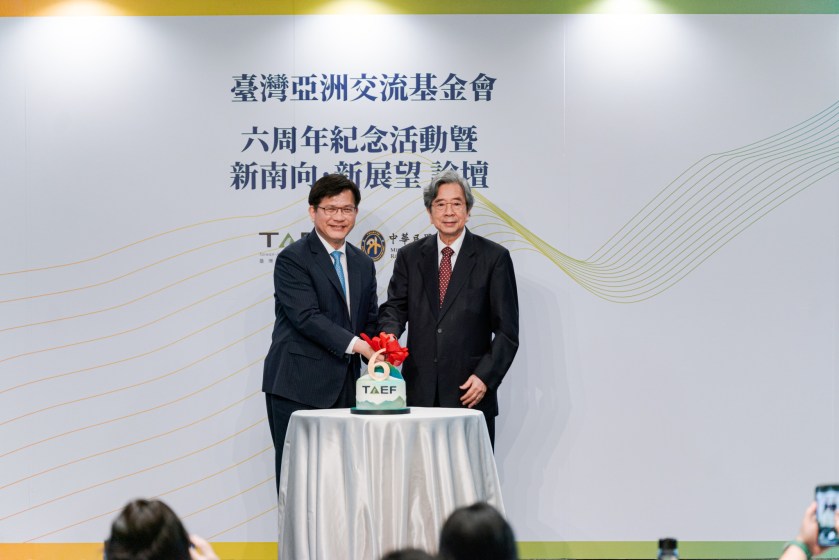
Image credit: Taiwan-Asia Exchange Foundation.
Amid rising Chinese communist threats, Taiwan has been resisting in the frontline, strengthening its New Southbound Policy (NSP) together with think tanks and NGOs, bringing like-minded partnered countries together through sharing economy, innovative technology and people-centred collaborations such as youth empowerment, based on common values, ensuring our world to a better place.
Questions have arisen regarding the potential global impact of Taiwan’s fall, particularly concerning the collapse of the world’s supply chain and value chain. These concerns highlight Taiwan’s significant role in the international community, especially in areas such as the sharing economy, innovative technology, semiconductor supply chain, and collaborative efforts in medicine and public health with like-minded partners. This is attributed not only to the country’s capabilities but also to its people, who actively promote Taiwan to the world amidst increasing pressures from the People’s Republic of China.
It has been 60 years since Prof. Ming-min Peng and other Taiwanese advocates introduced the “Declaration of Formosan,” which was among the first to suggest the concept of “One China, One Formosa (Taiwan).” This declaration emphasised the necessity for Taiwan to achieve political and economic independence from China. Until now in “Trends in Core Political Attitudes among Taiwanese,” a survey conducted by the Election Study Centre at NCCU indicates that nearly 65 per cent of the respondents identify themselves as Taiwanese, and about 30 per cent of them identify themselves as both Taiwanese and Chinese, shouting out to the world Taiwanese people’s growing identification with Taiwan.
In 2016, former President Ing-wen Tsai, the first president in Asia to legalise same-sex marriage, was elected. She subsequently decided to launch the New Southbound Policy (NSP), positioning it as “Taiwan’s Asia Strategy.” This initiative aimed to redefine Taiwan’s role in the Indo-Pacific region amidst the political and economic challenges posed by the People’s Republic of China.
Through structured approaches of economic and trade collaboration, talent exchanges, resource sharing, and institutional links and connectivity, the NSP has strengthened relationships between Taiwan and ten ASEAN countries, six South Asian countries, Australia, and New Zealand, with the aim of building an economic community.
At the 2018 East Asia Summit, Asian leaders reached a consensus on Southeast Asia’s strategic importance and its central role in shaping Asia’s future. This recognition aligns with both the strategic value and ongoing necessity of Taiwan’s NSP. The NSP has become especially vital as China escalates its propaganda campaign and military intimidation aimed at isolating Taiwan from the international community. According to the Executive Yuan, Taiwan has tightened economic ties with NSP partners, with a 355,000,000 USD trade surplus in 2024, which benefited from the growing semiconductor industry, drawing a promising tomorrow for Taiwan’s economy and economic freedom. In addition, together with the Taiwan-Asia Exchange Foundation (TAEF), an NSP-oriented think tank’s advocacy, the policy has been more tangible for both our partners and Taiwanese people through the thought exchanges. Led by TAEF, The Asia Engagement Consortium (AEC) has connected think tanks and NGOs in Taiwan and across Asia, serving as the platform for future partnerships and further people-centred collaborations.
Upon assuming office in 2024, President Lai Ching-te emphasised the significance of Taiwan through a focus on a sharing economy and innovative technology diplomacy. The NSP will undoubtedly play a crucial role in realising President Lai’s vision. Therefore, it is expected that his blueprint for the NSP is NSP+, a more structured strategy covering more comprehensive corridors ranging from domains of youth empowerment to the innovative technology and semiconductor supply chain. Prof. Hsin-Huang Michael Hsiao, the Chairman of TAEF, envisions that the NSP+ would strategise collaborations on the smart city and Artificial Intelligence (AI), maximising Taiwan’s impact and strategic importance nowadays.
President Lai’s NSP+ aims to create an improved global environment. Alongside his strategy to enhance prosperity among partner nations through Taiwan’s competitive industries, the NSP+ seeks to strengthen relationships between democratic countries and expand the international presence of Taiwan’s industries. Especially in the high-tech era, Taiwan’s leading semiconductor industry is the base of the digital community and provides the cornerstone for the next generation.
In addition, think tanks and NGOs’ advocacy has also paved the way for the NSP+ through community engagements and nongovernmental exchanges. Last year, TAEF hosted the SEASAT Youth Camp, inviting nearly 40 people from 10 NSP-partnered countries to have deep conversations about the future of Asia through keynote speeches, workshops, and group presentations, catalysing the Taiwan-NSP partners’ relationships. On the last day, TAEF and the National Human Rights Commission co-hosted the “Human Rights in Asia: A Multigenerational Dialogue” and invited panellists from Taiwan and the SEASAT youth to share difficulties and opportunities they have faced about human trafficking, LGBTQ+, and so on, enabling the youth to shape a better future for Asia.
Despite the predictable geopolitical challenges in this rapidly evolving world, particularly with China’s ongoing propaganda campaign and military intimidation aimed at altering the narrative in the Indo-Pacific region, the New Southbound Policy (NSP) has been pivotal in strengthening ties between Taiwan and Southeast Asia, South Asia, Australia, and New Zealand. This is achieved through people-centred collaborations that help stabilise the region with the soft and warm power continuously coming from the democratic “value chain.” For example, in the post-pandemic era, Taiwan continues to strengthen its NSP, demonstrating that “Taiwan can help” and “Taiwan is helping” the world through medical and public healthcare collaborations. As of November 2024, Taiwan has trained nearly 350 medical personnel designated to our partnered countries. That is to say, the NSP is now and will continue to empower the medical capacity of Taiwan and its partners so as to ensure a prosperous tomorrow for the people.
Moreover, according to The New York Times, the United States is structuring an enhanced international high-tech supply chain to face China-related problems threatening the stability of not only the industry but the world as a whole, where Taiwan’s companies such as Taiwan Semiconductor Manufacturing Company (TSMC) and Nvidia are playing an irreplaceable role in the innovative technology and semiconductor “supply chain.” Especially when ASEAN countries are rising in the innovative technology and semiconductor supply chain from manufacturing to assembling, the NSP+ is the way for the U.S., Taiwan and our NSP partners to reshape the international innovative technology and semiconductor supply chain, ensuring the prosperous future of the people.
In the face of the rising Chinese profile in the Indo-Pacific region, it is evident that the NSP+, a more structured strategy covering more comprehensive corridors ranging from youth empowerment to the innovative technology and semiconductor supply chain, with the advocacy of think tanks, will ensure us to live in a world defined by Democracy, Peace, and Prosperity.
Ian Yi-Rong Su is currently an intern of Taiwan-Asia Exchange Foundation (TAEF), the policy-oriented think tank advocating for Taiwan’s New Southbound Policy (NSP) and NSP+ that connect Taiwan and the world. Enrolling in the interdisciplinary program of International Relations and Diplomacy, he has learned the strategic importance of Taiwan in this fast-changing world. Thus, in face of PRC’s threats, he firmly believes that it’s imperative for the people of Taiwan to stand out and tell everyone a Taiwan story!
 Taiwan Insight