
Written by Wei-Jie Liao.
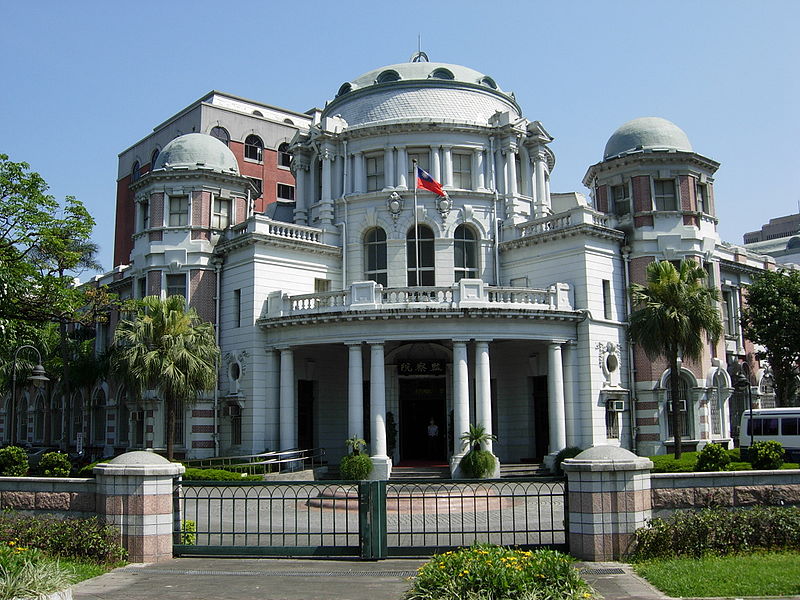
Image credit: Control Yuan, Taipei, Taiwan / Wikimedia, license: CC BY 2.5.
In January 2025, Taiwan’s opposition-controlled legislation (the Legislative Yuan) passed the central government budget for the fiscal year 2025, implementing an unprecedented budget cut. The opposition parties, the Kuomintang (KMT) and the Taiwan People’s Party (TPP), reduced the central government budget by NT$207.5 billion (approximately US$6.3 billion), representing about 6.63% of total expenditures. Over the past two decades, budget cuts each year were less than NT$40 billion or 2% of total expenditures. This year’s cuts include across-the-board cuts in each ministry’s travel funding and advertising and promotion expenses, as well as targeted cuts to specific ministries, such as the Ministry of National Defence, the Ministry of Digital Affairs, and the Ministry of Foreign Affairs. Additionally, subsidies to the Taiwan Power Company and the Taiwan Public Television Service Foundation are also being reduced. Given the controversy surrounding this year’s budget cuts, this article will evaluate their reasonableness.
The Budget Process in Taiwan and Principles of Budget Cuts
According to the Constitution and the Additional Articles of the Constitution, the central government (the Executive Yuan) must submit the budget for the next fiscal year to the Legislative Yuan at least three months before the fiscal year begins. When reviewing the budget, legislators may only make cuts and cannot increase expenditures. If the Executive Yuan disagrees with the approved budget, it may request the Legislative Yuan to reconsider it. However, if the Legislative Yuan upholds its decision, the Executive Yuan must accept it.
In theory, budget cuts should be made based on the necessity of each budget item and the performance of agencies and programs. In Taiwan, governmental bodies generally adhere to incremental budgeting practices, wherein budget allocations are primarily determined based on the preceding year’s budget. While this approach is politically feasible because it minimises drastic changes, prolonged reliance on incremental budgeting can lead to the accumulation of unnecessary spending. To address inefficiencies, governments can incorporate principles of zero-based budgeting, which require a systematic evaluation of each budget item to identify and eliminate unnecessary spending.
Another approach to budget cuts is performance-based budgeting, where funding decisions are tied to the performance of agencies or programs. Under this model, well-performing agencies or programs receive increased funding as an incentive, while those with poor performance may face budget cuts. However, a key criticism of performance-based budgeting is the risk of a vicious cycle—cutting the budget of an underperforming agency or program may further degrade its performance due to resource constraints. Therefore, before implementing budget cuts, legislators should assess whether mediocre performance stems from mismanagement or insufficient funding.
According to Articles 22 and 63 of Taiwan’s Budget Act, once the Legislative Yuan cuts a budget item, the executive branch cannot use reserves or other budget items to fund the deleted item. Therefore, budget cuts can have a significant impact on the executive branch, and the Legislative Yuan should exercise caution when making budget cuts.
How Were the Budget Cuts Actually Made?
This time, the opposition parties submitted nearly 3,000 budget-cut proposals. Although they withdrew most of them following public criticism, 700 proposals still advanced to the final voting stage.
Many of these proposals were unjustifiable and based on flawed reasoning. For instance, the KMT proposed cutting the Ministry of Culture’s “Culture Points” program—meant to encourage youth participation in cultural events—because too many young people used the funds to buy books instead of attending other activities. This rationale ignores that reading is a vital cultural pursuit. Similarly, the TPP proposed freezing the Ministry of Education’s budget for general education and publishing, citing dissatisfaction with elementary school lunches. However, this justification is a categorical mismatch, as the funding in question directly supports educational resources and literacy rather than school meal programs. Both proposals lacked sound policy justification and risked undermining important cultural and educational initiatives based on tenuous or irrelevant concerns.
Furthermore, opposition parties advocated for budget cuts primarily as a means of expressing their dissatisfaction with specific ministries and programs. For example, they proposed reducing the Ministry of Foreign Affairs’ budget, citing the lack of progress in the resumption of diplomatic relations following Honduras’ decision to end ties with Taiwan. Additionally, they called for cuts to subsidies for the Taiwan Public Television Service (PTS) Foundation, citing concerns over certain dramas and accusing PTS of bias in its social media presence.
In some cases, opposition parties attempted to justify their proposals using performance-related arguments, but these, too, were unjustifiable. For example, the KMT proposed cutting funding for gender equality initiatives, pointing to the prevalence of sexual harassment cases in schools. The TPP called for reductions in the Criminal Investigation Bureau’s fraud prevention budget, arguing that fraud cases had increased in recent years. Similarly, they sought cuts to the Ministry of Transportation and Communications’ railway safety budget, citing past train derailments. However, addressing these issues requires more resources, not budget cuts. Cutting funding for these programs could exacerbate the very issues the opposition parties claim to address, ultimately making it more difficult for agencies to fulfil their responsibilities and protect public welfare.
The Legislative Yuan also experienced delays in approving the 2025 budget. Legislators had more than three months to review the Executive Yuan’s proposed budget, yet the budget for fiscal year 2025 was passed after the fiscal year had already begun. Moreover, the Legislative Yuan made cuts without thorough deliberation. On 21 January 2025, legislators voted on 700 proposals in a single day without detailed discussions on each one. Legislators from the ruling party who had objections to certain proposals were denied the opportunity to discuss them. The opposition parties continuously modified the proposals, and in some cases, legislators were uncertain about what they were actually voting on.
Takeaways from the 2025 Budget Cuts
The budget process demands accountability not only from the executive branch but also from the legislative branch. Just as the executive branch must justify each expenditure when proposing a budget, legislators should be held to the same standard when making budget cuts. It is essential that they clearly communicate the rationale behind their decisions, explaining why specific budget items are deemed unnecessary or why certain programs are targeted for reductions. If cuts are made due to concerns over performance, legislators should provide evidence that the inefficiencies stem from mismanagement rather than budget constraints. Furthermore, all budget cut proposals should be subjected to thorough discussion and scrutiny to ensure that decisions are made with careful consideration of their long-term impacts.
As engaged citizens, we must actively monitor legislative budget decisions and advocate for a more transparent and deliberative process. Public scrutiny plays a crucial role in holding legislators accountable, ensuring that budgetary decisions reflect both fiscal responsibility and societal needs. The widespread opposition expressed by citizens against certain budget cuts this year is an encouraging sign of civic engagement. However, continued public involvement is necessary to strengthen the integrity of the budgeting process. By amplifying diverse voices and fostering open discussions, we can work toward a more transparent, equitable, and just approach to public budgeting.
Dr Wei-Jie Liao is an Assistant Professor in the Department of Public Management at CUNY John Jay College of Criminal Justice. His specialisations are in public budgeting and public policy. His research interests include citizen participation in public budgeting, fiscal health, capital budgeting, and debt management.
This article was published as part of a special issue on ‘Taiwan’s Budget Crisis’.
 Taiwan Insight