
Written by Hsin-Hsun Huang.
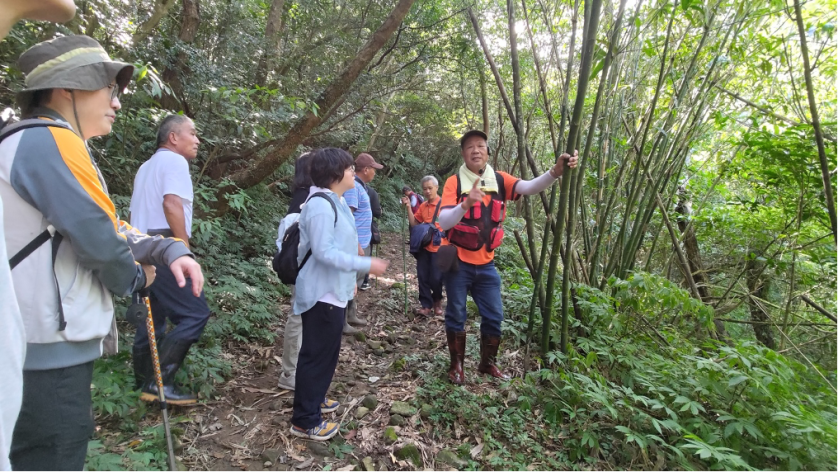
Image credit: Sanzhi partners jointly lead a community tour in 2023, practising guided interpretation through hands-on interaction and experiential learning. Photo courtesy of Hsin-Hsun Huang.
Climate change, resource depletion, environmental pollution, biodiversity loss, poverty, and health issues constitute today’s major sustainability challenges. These issues are interconnected and cannot be addressed in isolation, particularly when it comes to conserving nature. The Satoyama Initiative aims to promote the sustainable use and conservation of socio-ecological production landscapes and seascapes (SEPLS) in rural areas, with the goal of realising a sustainable vision of societies in harmony with nature. The initiative, therefore, serves not only as an important international conservation strategy but also as a rural development strategy. Since its introduction to Taiwan in 2010, the concept has gained broad support across Taiwanese society. Initiated by the National Dong Hwa University and supported by the Forestry and Nature Conservation Agency under the Ministry of Agriculture, the Taiwan Partnership for the Satoyama Initiative (TPSI) was established in 2015. The Dharma Drum Institute of Liberal Arts (DILA) serves as the Northern regional exchange base of the Taiwan Partnership for the Satoyama Initiative (TPSI-N).
DILA focuses on strengthening partnerships in northern Taiwan and fostering a local conservation alliance along the North Coast. Since launching the “North Coast Satoyama Co-learning Network” in 2020, it has supported local organisations in the region through co-learning, platform building, and community empowerment. This has gradually strengthened the connections and collaborations in Satoyama landscape stewardship among six local partners across four districts—Jinshan, Shimen, Sanzhi, and Tamsui. These six local partners include three community development associations, one eco-farm, one organic tea plantation and one agricultural social enterprise. All of them are concerned with the environment and agriculture.
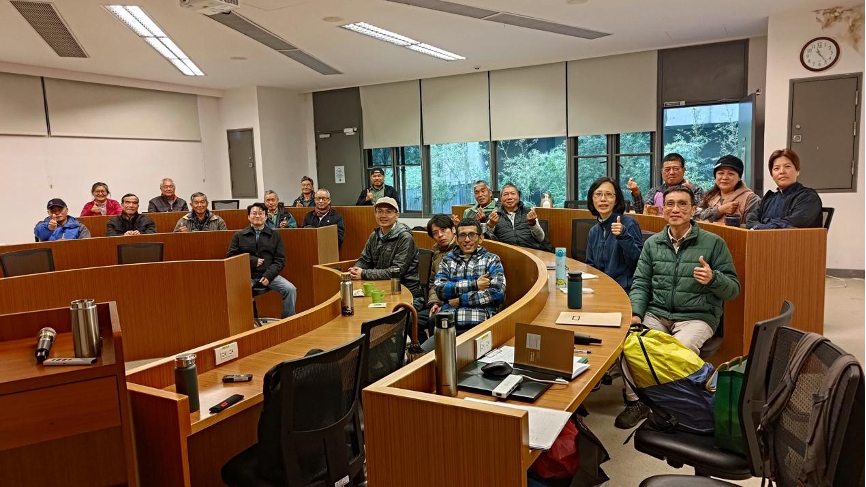
To support this network, TPSI-N regularly organises thematic co-learning sessions, bringing together scholars and practitioners to explore main issues such as environmental education, ecotourism, agricultural ecosystem, sustainable rural development, and the cultivation of relational populations. TPSI-N organises mutual on-site visits among partners to understand each other’s work and challenges (Fig. 1). It also arranges visits to other counties, such as the Taiwan Biodiversity Research Institute and the Miaoli Agricultural Research and Extension Station.
Satoyama landscape conservation is closely tied to rural development. Facing ageing and declining rural populations, TPSI-N attracts the attention of local partners to the concept of sustainable rural development, highlighting the importance of semi-natural environments for Taiwan’s sustainability. These environments, such as traditional farmlands and community forests, where human activity coexists harmoniously with nature, provide vital ecosystem services and foster vibrant communities. Therefore, rebuilding a wholesome rural environment is good for rural residents and the rest of society. The strategy of sustainable rural development focuses on building relational populations through cultivating relational values and emotional, cultural, and moral ties to the land. Satoyama landscapes offer ideal settings for environmental and agri-food education, helping foster positive human–land relationships and a strong sense of place. Because of the context-specificity of relational values, people may desire to maintain the relationship with or connection to a place even after leaving it. Those who maintain such a relationship become part of the relational population.
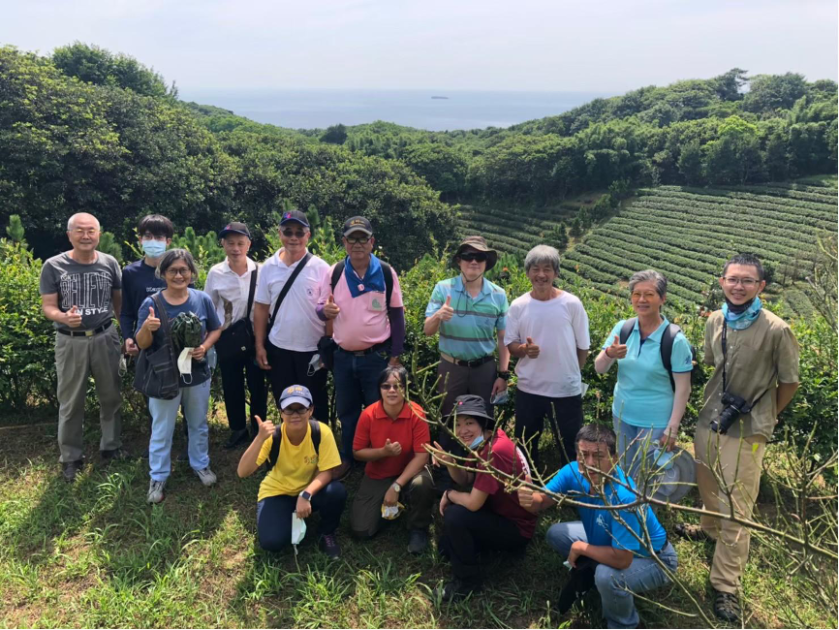
Based on this key goal of fostering a relational population, TPSI-N’s long-term strategy, developed in collaboration with North Coast partners, focuses on the three pillars. First, internal cultivation involves collaborating with local schools to cultivate relational values through education. North Coast partners welcome students to visit their farms, allowing them to learn more about agriculture and the environment beyond textbook knowledge. Second, inter-partner co-creation promotes cooperation among North Coast partners to build regional connections through regular communications and co-learning activities (Fig. 2). Through peer-to-peer exchanges, we support each other in accomplishing tasks, overcoming challenges, and creating new opportunities. Finally, external linkage aims to attract non-local participants and frequent visitors to the area (e.g., from urban areas) to expand relational ties and mutual understanding. Together, these pillars create a comprehensive framework for nurturing a deeper connection between people and the revitalised Satoyama landscape.
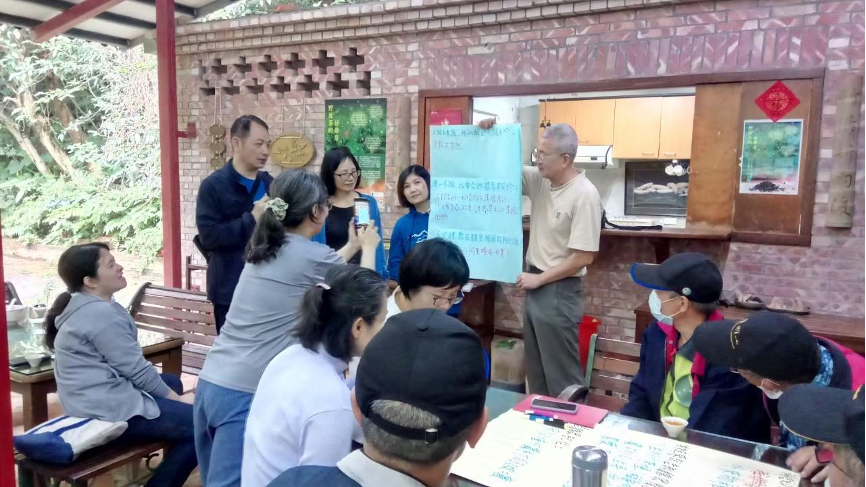
A key aspect of the long-term strategy is supporting each North Coast partner in becoming an experiential learning site. These North Coast partners engage in conservation through various methods, including environmentally friendly farming and environmental education. Through these different approaches, they not only sustain agricultural production and healthy ecosystems but also expand public awareness about rural areas. Through educational visits such as ecotourism or green rural tours (Fig. 3), more people can experience the beauty of Satoyama landscapes and understand the social and ecological values embedded within them, all while contributing to local livelihoods.
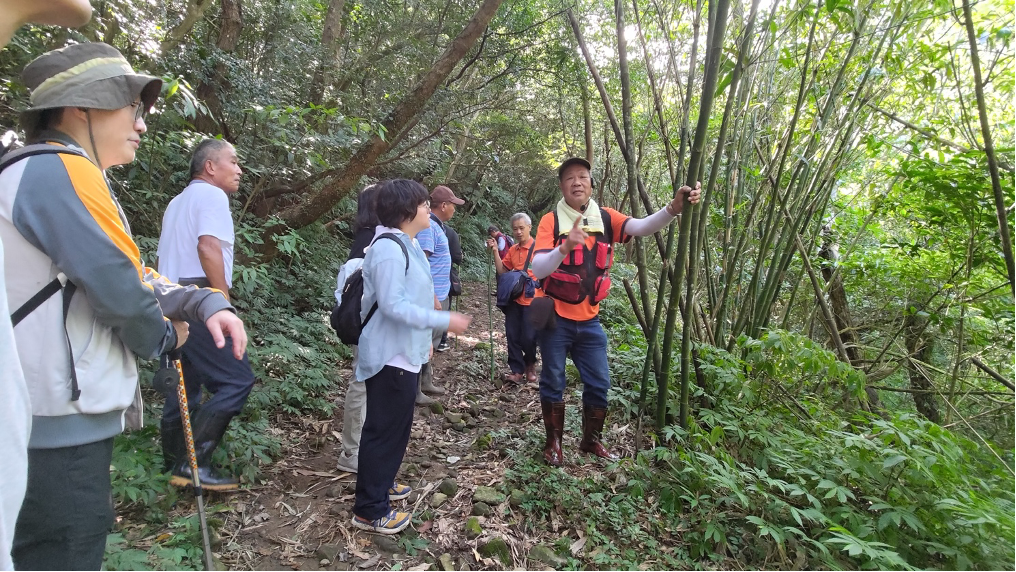
Through these ongoing efforts, partners along the North Coast have gradually formed a “Satoyama Alliance,” also known as the “Mountain-Sea-Wind Network”. The name comes from our shared natural characteristics: the Yangming Mountain, the North Coast and the Northeast monsoon. Together with TPSI-N, they are now planning seasonal events (Fig. 4) and small rural tours that highlight local culture and nature. These activities invite people to explore rural life more deeply, strengthen connections between urban areas and the countryside, and encourage a greater appreciation and participation in sustainable living and environmental protection.
Looking into the future, DILA hopes to help the North Coast partners establish a Satoyama Academy — a shared learning platform that brings together knowledge, experience, and resources. The Satoyama Academy will aim to become a key hub within Taiwan’s TPSI network, deepening the practice and expanding the impact of the Satoyama Initiative.
Hsin-Hsun Huang is an Assistant Professor in the Graduate School of Humanities and Social Sciences at Dharma Drum Institute of Liberal Arts. He is the organiser of the Northern Regional Exchange Base of the Taiwan Partnership for the Satoyama Initiative (TPSI-N).
This article was published as part of a special issue on ‘Co-Weaving Taiwan Ecological Network: Satoyama in Practice‘.
 Taiwan Insight