Written by Chang, Chunhao.
Image credit: 2025.07.19 重返青島! 護國大遶境-護國保台晚會 69 by KOKUYO/ Wikimedia Commons, license: CC BY-SA 4.0.
In a dramatic political reversal, Taiwan’s ruling Democratic Progressive Party (DPP) suffered a sweeping defeat in its recent recall campaign against opposition lawmakers. On July 26, voters decisively rejected all 24 recall motions that were part of a broader effort to target legislators primarily from the Kuomintang (KMT). Seven additional recall votes are scheduled for August 23, but the political message is already clear: Taiwanese voters are not willing to let electoral outcomes be reversed through post-election manoeuvres.
Following the January 2024 general election—where the DPP won the presidency but lost its parliamentary majority—the party and civic groups moved quickly after the new legislature convened to initiate recall motions targeting opposition KMT lawmakers. Although the recalls were formally submitted by civil groups, they were perceived as politically coordinated efforts by the DPP and affiliated activists to regain control of the legislature. To many voters, this appeared as an attempt to overturn the results of a democratic election, triggering widespread institutional concern and civic pushback.
The core miscalculation was the DPP’s failure to understand the evolving priorities of Taiwanese voters. In the final stages of the recall campaign, the party reverted to its familiar rhetoric of “resisting China and protecting democracy,” portraying the KMT-led parliamentary reforms as signs of democratic backsliding and pro-Beijing interference. However, this framing did not resonate with a majority of voters, whose concerns had shifted decisively toward domestic economic pressures.
Inflation, soaring housing prices, stagnant wages, and worsening export conditions have come to dominate the public’s attention. Taiwan’s export-dependent economy is increasingly vulnerable to global uncertainty, especially amid renewed U.S.–China tensions and the reality of Donald Trump returning to the White House. His pledge to reinstate high tariffs on China raises the spectre of economic disruption across Asia, with Taiwan caught in the geopolitical crossfire. While the DPP has long positioned itself as pro-U.S. and anti-China, this strategy risks losing its appeal if it does not deliver tangible economic gains—such as trade agreements, tariff relief, or investment support.
For many middle- and working-class voters, geopolitical slogans no longer suffice. They are demanding results in their daily lives. In this climate, the DPP’s recall campaign, which emphasised ideological confrontation over economic response, seemed increasingly out of touch.
Equally important was the electorate’s reaction to the nature and timing of the recalls. Taiwanese voters, though politically diverse, are institutionally conservative. They value stable procedures and expect political actors to respect electoral outcomes. While the recall mechanism is enshrined in Taiwan’s constitution as a democratic safeguard, it is traditionally reserved for instances of gross misconduct or betrayal of public trust—not policy disagreements or ideological opposition.
Launching 31 recall cases just months after a national election struck many as an abuse of this constitutional tool. The DPP’s willingness to use recalls as a form of political retaliation—rather than persuasion or performance—was widely seen as a violation of democratic norms. The backlash was strong: all 24 recalls voted on in July were rejected, with many districts showing high turnout in opposition. In seven cases, the number of “no” votes actually exceeded the votes those lawmakers had received in the January general election, suggesting that the electorate was broadly mobilised in defence of institutional stability—not necessarily in support of individual politicians.
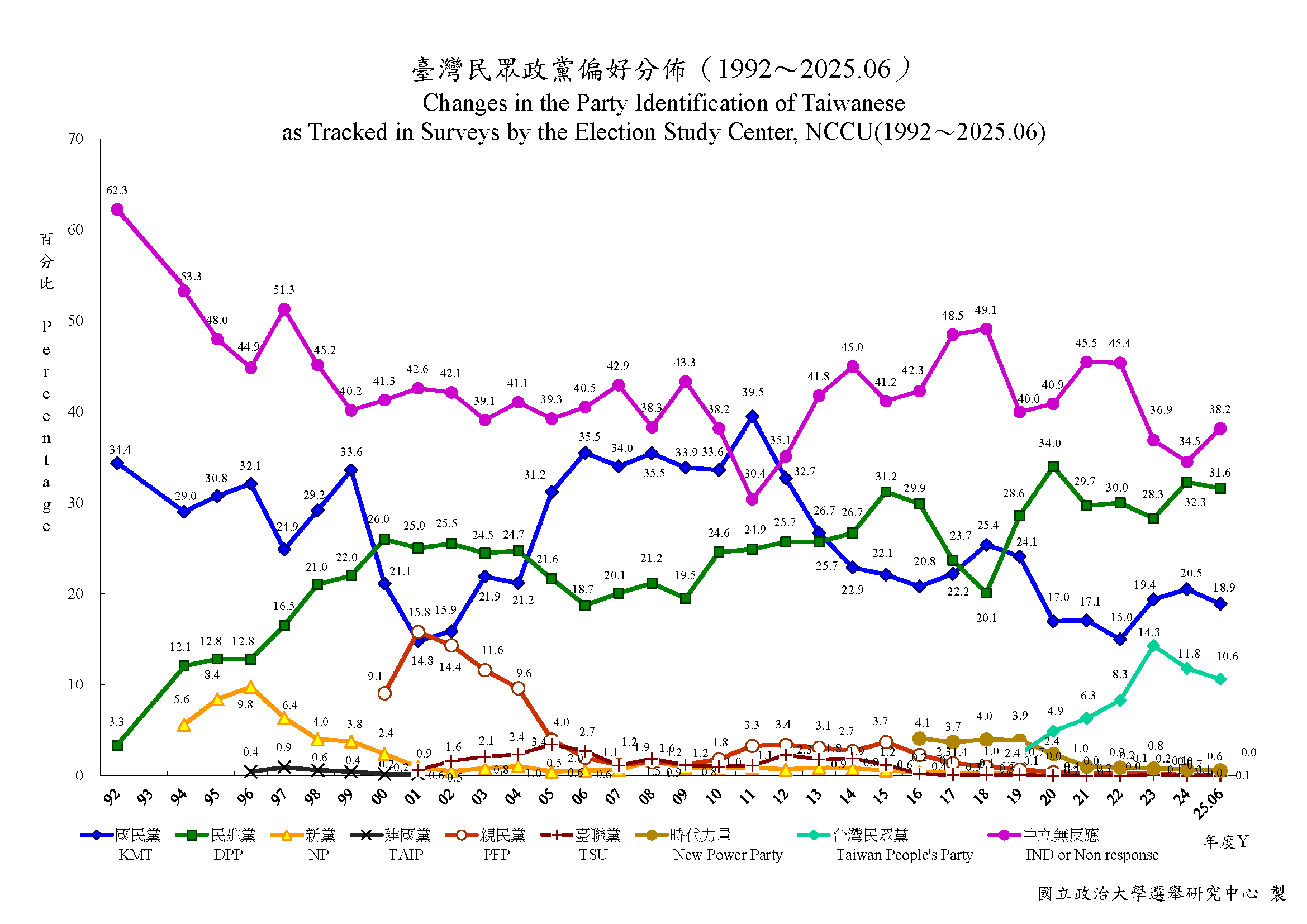
Some analysts credited the Taiwan People’s Party (TPP), a centrist alternative, for organising the opposition to the recalls. But polling shows that the TPP’s support has declined since January, making it unlikely they were decisive. More plausibly, a wide coalition of moderate, unaffiliated, or “floating” voters rallied to reject what they saw as a dangerous precedent. These voters are not strictly aligned with either the KMT or the DPP, but they are increasingly influential—and deeply committed to the democratic process.
The DPP also misjudged the organisational landscape. Although presented as grassroots movements, many of the recall campaigns were in fact spearheaded by newly formed citizen groups with little to no prior political experience. Rather than being backed by established NGOs or advocacy networks, several efforts were coordinated by ad hoc volunteer teams or individual constituents—sometimes local influencers—without organisational infrastructure, partisan affiliation, or field mobilisation capacity. This lack of experience and grassroots outreach significantly limited their ability to generate effective voter engagement on the ground. In contrast, the KMT deployed its well-established local networks to reinforce a simple message: that the DPP, having lost the legislature, was trying to reverse the result through unconventional means. That narrative gained traction and reinforced the perception of political overreach.
Moreover, the speed with which the DPP pivoted from electoral defeat to aggressive recall efforts unsettled many voters. Instead of accepting the outcome and preparing for the next electoral cycle, the party appeared to be seeking a shortcut to regain power. In a democracy as young yet resilient as Taiwan’s, such tactics are viewed with deep scepticism. Since its first democratic transition in 2000, Taiwan has undergone multiple peaceful transfers of power. Voters have grown increasingly protective of the rules of the game and wary of actors who appear to bend them for partisan gain.
This episode also reveals how Taiwan’s electorate has matured. Voters are no longer easily swayed by fear-based narratives or identity-driven mobilisation. They are increasingly pragmatic and expect political parties to deliver measurable outcomes, especially in economic performance and policy competence. The DPP’s reliance on its traditional ideological framing failed to meet this standard. In the absence of effective economic responses, voters viewed the recall campaign as a distraction—if not an outright threat to democratic equilibrium.
The implications for the DPP are serious. If the party fails to reconnect with centrist and economically focused voters, it risks long-term erosion of support. Taiwan’s political centre is growing stronger, and its appetite for ideological confrontation is shrinking. Voters want responsible governance, not political revenge.
As Taiwan approaches the second wave of recall votes on August 23, the outcome of the July round offers a cautionary tale. Voters are not rejecting oversight or civic action—but they are drawing a line against perceived abuse of democratic mechanisms. They are sending a message that recalls must not become tools for electoral reversal.
Ultimately, the choice facing Taiwanese voters was not merely between parties or ideologies. It was a choice between political instability and institutional continuity, between symbolic confrontation and economic realism. They chose to uphold the system—not because it is perfect, but because it remains their best guarantee of democratic resilience.
Chang, Chunhao is a Professor and Chair at the Department of Political Science, Tunghai University, Taiwan.
This article was published as part of a special issue on ‘Recall elections: Practice or problem for Taiwan’s democracy?‘.
 Taiwan Insight