
Written by Yi-Ling Chen.
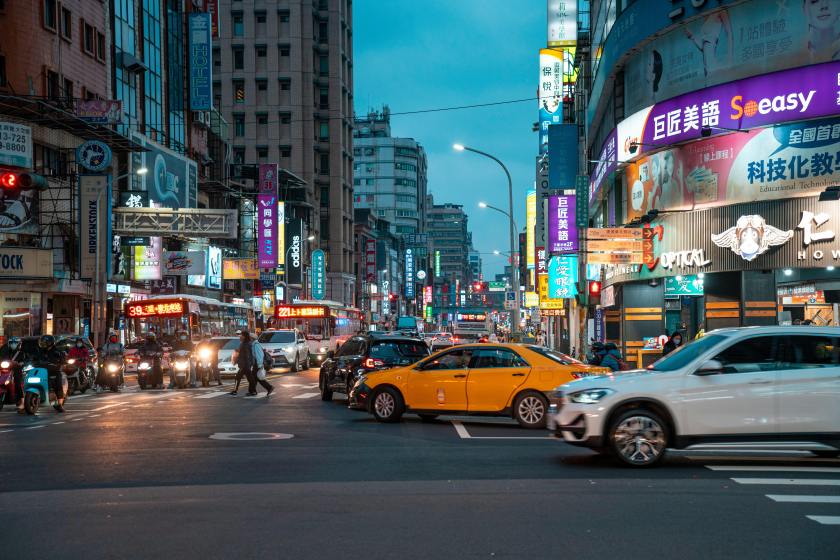
Image Credit: Jimmy Liao via Pexels, license: CC0.
When I was a poor PhD student in the United States in the mid-1990s, I was unable to frequently return to Taiwan. At that time, the internet was not yet well developed, so I had limited information about Taiwan. When I started teaching in Taiwan in 2001, many new common terms frequently appeared in the news and people’s vocabulary, such as BOT, public-private partnerships, and usage fees. Many new urban tools were developed to encourage the private sector to participate in urban renewal and other infrastructure projects. In 2001, the housing departments were eliminated within the central and local governments.
I was shocked by this change in Taiwan, but I couldn’t explain what was going on very well. In 2003, the book “Spaces of Neoliberalism: Urban Restructuring in North America and Western Europe” was published, a pioneering work on neoliberalism by a group of critical geographers. I recall when I first discovered this book at the University of North Carolina at Chapel Hill bookstore. I stood for hours reading it and could not agree more with what the book described. We were entering the neoliberal era. The transformation began in the 1980s and gradually evolved into a powerful ideology that reshaped the political system and everyday life in the Western world. The change of the rules of thumb in policies and common sense struck me strongly. This is a trend that follows a distinct path of development and has varying impacts on different countries, as each country has a unique history and political-economic structure. Nevertheless, Taiwan also underwent a similar road.
The concept of letting the market run has been a popular approach in Taiwan’s urban planning since 2000. In contrast to the discipline of health care that social democratic experts led, housing research has been dominated by housing economists. The contribution of housing economists was to construct the rules of the housing market, making it more transparent, and to establish the data of the housing market. However, housing economists have intensified the nature of housing as a commodity, rather than viewing it as a necessity good, like healthcare. Market mechanism or privatisation (or liberalisation) is the almighty solution for urban planning in Taiwan.
The housing sector in Taiwan was largely underground before 1990. This is what I mentioned as the laissez-faire situation. Housing finance is not well-developed, making it difficult to obtain mortgages. Housing transactions lacked sufficient legal support, resulting in numerous disputes. There were still many squatters in the cities. Efforts to formalise the informal sector are ongoing. The add-ons on rooftops or windows remain a significant challenge for the government to address. Most of the rental housing sector is still informal.
The 1990s marked a turning point in housing policies in Taiwan, largely due to the country’s democratisation. Unfortunately, this also occurred at a time when neoliberal ideology was gradually influencing the policy-making process through various channels, including the US-trained housing scholars. When I interviewed Ping-yi Lu, the CEO of Tsui-mama, a tenant organisation in Taiwan, he reflected on his time at the Graduate Institute of Building and Planning at National Taiwan University in the late 1980s. We both attended the program, which was known for its more left-leaning orientation. Lu wondered why Professor Chu-Choe Hsia never mentioned social housing while the shell-less snail movement was happening. Even the left-leaning schools in Taiwan were influenced by the pervasive idea of neoliberalism.
The first housing movement in the late 1980s finally prompted the government to provide low-interest loans and offer more mortgage programs for homebuying. The liberalisation and privatisation of the banking system were also underway. University College London researcher Josh Ryan-Collins argued in his book, Why Can’t You Afford a Home?, that providing a mortgage is akin to adding fuel to the fire of rising housing prices. This is what is happening in Taiwan. The reason Taiwan’s housing prices rose only slightly and did not drop significantly is due to the government’s intervention to prevent a decline. It is also the political context that has led Taiwan to become a homeowner society, one that prefers rising housing values. Private developers and the banking sectors have great lobbying power, while housing economists have dominated the housing discourse. This influence is reflected in the renaming of the housing institutes to real estate institutes. Even the Taiwan housing survey only reveals information about the real estate market, providing no information on the housing conditions and quality of the general population.
When I read the Chinese book “Unfinished Miracle,” edited by Thong-Hun Lin and Zong-Rong Lee in 2017, I was inspired by the recent findings on the changing role of the state in Taiwan’s development. While I was disappointed that urban research was not included in the chapters, my study of neoliberalism leads me to question the idea that the state’s influence is declining in urban policy. My own observation is that the state remains central, shaping policies in ways that benefit capital classes. The state sets the rules and leads transformations, even as these changes primarily serve the interests of capital. I was delighted that Lin and Lee later invited me to contribute to the English version of their ongoing project, “Unfinished Miracle.”
Housing was a neglected sector in public policies since 1949. In the 1970s, the KMT government, responding to both international and domestic challenges, implemented an ambitious public housing project. Intended to provide for-sale public housing, this policy ultimately fell short: the number of units built was far fewer than claimed, and the housing was too expensive for middle- to lower-income people. Centrally located land was mainly used to construct luxury public housing for upper-middle-income individuals. The change to get a public housing unit was like winning the lottery. In this process, the core mission of providing housing for those truly in need was lost. Since the 1990s, the state’s active regulation of the informal housing and finance sectors has only intensified the neoliberalization and financialisation of housing, reinforcing my argument that the state’s involvement has not waned but rather shifted to facilitate the treatment of housing as a commodity.
My paper, From Laissez Faire to a Market Mechanism: the Formation of Housing Finance in Taiwan, has analysed housing through the lens of Taiwan as a developmental state, which has been a neglected topic in developmental state theories. Different from the state’s approach to industrial policy, interventions in housing policy were stronger after the 1990s and changed from laissez-faire to housing market stimulation. Prior to financial liberalisation in the 1980s, state interventions in housing and finance were limited and selective, while a large informal sector filled relevant gaps by providing financial and housing services. Financial liberalisation then enabled the establishment of new banks and allowed the government to begin regulating the informal housing sector.
In conclusion, the commodification of housing perpetuates housing problems in a vicious cycle, leaving them unsolved. The neoliberal ideology underlying Taiwan’s economic liberalisation since the late 1980s has affected government housing interventions, with the state allowing the market to take centre stage. Market principles have gradually become evident in the rhetoric and logic underlying state interventions. The social housing movement in 2010 opened a new imagination of society. However, the implementation so far only treats social housing as a remedy for the shortcomings of the housing market, rescuing a small number of people who cannot access the housing market. In my paper, I highlight the risks of overinvesting in real estate and advocate for the restoration of housing’s use value.
Yi-Ling Chen is an Associate Professor in the School of Politics, Public Affairs, and International Studies at the University of Wyoming, USA. She applies theories of neoliberal urbanism, financialisation, feminist geography, and policy mobility to compare housing systems in East Asia, the United States, and Europe. She has been actively involved in Taiwan’s housing movement since the Snail Without Shell movement in 1989.
This article was published as part of a special issue on ‘Transitions and Challenges in Taiwan’s Economy and Society‘.
 Taiwan Insight