
Written by Gita T.
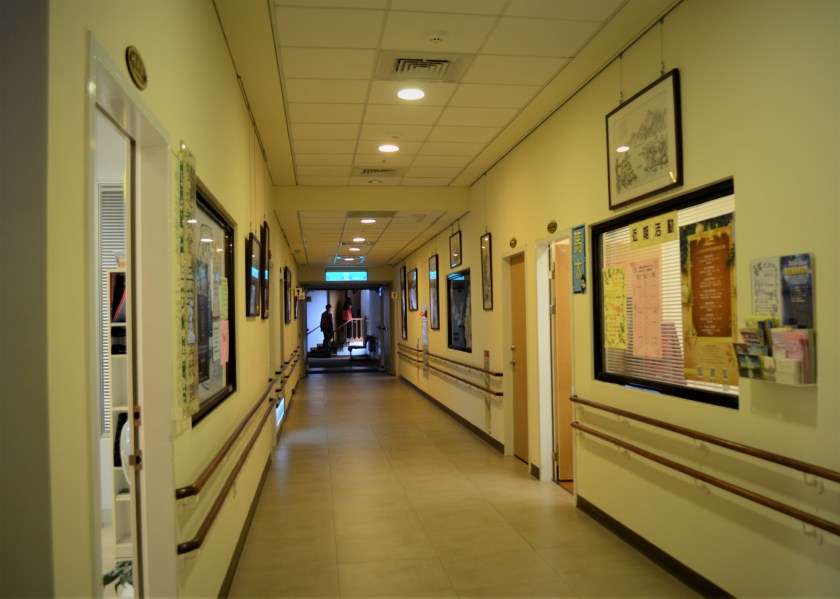
Image credit: 新北市雙連安養院7 by 林高志/ Wikimedia Commons, license: CC BY-SA 4.0.
By 2025, one in four Taiwanese will be over 65. By 2040, that share will rise to two in five — placing Taiwan firmly in the category the UN calls a “super-aged society.” Most discussions frame this as a crisis: too few workers, too many retirees, ballooning healthcare costs. But a crisis is only one lens. Taiwan also has an opportunity to redefine what “super-aged” means — shifting from managing decline to designing longevity. Taiwan already quietly has a social ecosystem that, if done efficiently, would reframe super-aged definitions while still preserving Taiwan’s identity.
Super-age societies have subtler and expensive challenges. Dementia—and the chronic illnesses that often accompany it—threatens to quietly drain families, caregivers, and a country’s healthcare system.
Dementia is not a single disease but an umbrella term for cognitive decline severe enough to interfere with daily life. Its most common cause is Alzheimer’s disease, which accounts for roughly two-thirds of cases worldwide. While dementia cannot be entirely prevented, research shows that lifestyle factors can reduce risk and delay onset—sometimes by years. Every year of delay is both precious to families and a fiscal reprieve worth billions for the state.
The costs are already sobering. In 2019, Taiwan recorded about 350,000 dementia patients. In 2024, new estimates put the economic toll of dementia in Taiwan at around NT$150 billion, with roughly half attributed to milder cognitive impairment. And that figure is conservative: most dementia patients also live with comorbidities such as diabetes or hypertension, multiplying risks and costs through complications like strokes, amputations, or insulin dependence. Left unchecked, the math becomes brutal. By the time 40 per cent of Taiwan’s population is elderly, the NHI budget will be staring at a fiscal bomb.
Dementia costs scale almost directly with demographic ageing, as Taiwan’s elderly population expands, the fiscal strain will rise in tandem. If costs continue tracking demographic growth, the bill could easily double within two decades.
Japan’s nursing care expenses already exceed 11.3 trillion yen annually, showing how fast costs escalate once a society remains super-aged for nearly two decades. Taiwan risks following a similar trajectory if it waits until dementia costs surface as an unmanageable budget bomb.
Yet, focusing only on costs and risks narrows the picture to crisis management. An ageing society is not just a burden — it also contains untapped potential. The same demographic that drives fears of dementia and rising health bills can, with the right interventions, become “Super-Agers”: older adults who maintain cognitive vitality, community roles, and independence far beyond statistical averages.
But ageing does not have to mean decline. Research on so-called Super-Agers offers a different vision. These are individuals in their eighties whose memory and cognitive performance match people twenty or thirty years younger. Scientists point to several factors: robust brain regions tied to motivation and learning, stronger emotional resilience, and active lifestyles. Many are bilingual, and some studies suggest they retain more spindle neurons—cells linked to social cognition and decision-making—than their peers. While biology sets limits, neuroplasticity can still be strengthened through habits, engagement, and community design.
Here, Taiwan holds hidden comparative advantages. Its infrastructure—from barrier-free transit to urban parks—is already among Asia’s most elderly-friendly. Unlike Japan, which has leaned heavily on robots and institutional care, Taiwan’s dense community life means that temples, wet markets, and neighbourhood centres already function as social anchors. Its people live with a kind of built-in resilience shaped by geopolitical uncertainty. And bilingualism is common: Mandarin and Taiwanese at minimum, with many also fluent in Hakka, English, or Japanese. All of these factors align neatly with what neuroscientists say sustains Super-Agers.
What is missing is not capacity, but framing. Taiwan’s policy choices often treat elders primarily as dependents in need of protection. Families, too, sometimes equate care with control—discouraging elders from cooking, shopping, or even walking to the market out of safety concerns. In the name of caution, independence is quietly eroded. But dignity and cognitive strength are not preserved through passive safety; they are preserved through active engagement.
Three policy shifts could build on Taiwan’s cultural strengths without requiring new billion-dollar infrastructure:
First, everyday engagement. Daily rituals can be as protective as medical regimens. For many Taiwanese elders, a trip to the wet market is not simply about buying groceries but about bargaining, comparing produce, and gossiping with neighbours. These micro-interactions stimulate memory and decision-making circuits. Instead of relegating such tasks to caregivers, policies could encourage elders to remain participants, with caregivers as safety nets rather than substitutes. Infrastructure tweaks—anti-slip flooring, railings, better lighting—are inexpensive compared to the costs of dementia wards.
Second, pride and showcase. Once a month, communities could host “Silver Days,” turning temple courtyards or community halls into spaces for elders to showcase their skills: cooking family recipes, demonstrating calligraphy, playing chess, and performing music. The aim is not GDP growth but pride and continuity—signalling that ageing is not erasure. These showcases create positive peer pressure: if one elder is still dancing or painting, others may try as well. They also serve as quiet bridges between generations, allowing younger Taiwanese to see ageing as an aspiration rather than a decline.
Third, cognitive cafés. Memory cafés—piloted in Europe and Japan—could be localised for Taiwan’s fabric. Imagine small spaces near temples or markets where elders gather for puzzles, word games, or mahjong, overseen by psychology or nursing students. Families gain an early-warning system, since subtle lapses can be spotted earlier when interventions are most effective. Elders gain playful ways to keep their minds active. Universities gain hands-on training opportunities. The state gains scalable, low-cost prevention.
None of these initiatives is expensive. A pop-up Silver Day or a memory café requires less investment than constructing another retirement home. Training caregivers to empower rather than overprotect requires no new buildings, only a reframing of roles—something that could be built into migrant caregiver orientation or nursing curricula. The benefits, however, ripple outward: elders preserve dignity and cognitive strength, families feel less strain, and the NHI avoids escalating costs.
The comparative advantage is cultural. Taiwan does not need to import Japan’s robot caregivers or Europe’s retirement villages. It can leverage what already exists: lively temples, community rituals, a multilingual citizenry, and an infrastructure that is already inclusive. What is needed is a modest shift in perspective: from guarding the elderly to enabling them.
For policymakers, the appeal is not only humanitarian but fiscal. Dementia costs Taiwan nearly NT$200 billion annually. Every year, the onset is delayed, saving billions in healthcare and long-term care spending. In budgetary terms, pilot projects like Silver Day or Memory Cafés are rounding errors compared to the downstream costs of institutionalisation.
These initiatives are not only fiscally pragmatic, but they also map onto global sustainability goals — SDG 3 (Good Health and Well-Being) and SDG 11 (Sustainable Cities and Communities). Delaying dementia directly supports SDG 3’s focus on lifelong health, while using community spaces rather than costly institutions advances SDG 11’s aim of inclusive, age-friendly cities. For private actors, investing in such programmes also speaks to the “S” in ESG — leveraging Taiwan’s cultural-social ecosystem to create dignity, inclusion, and healthier intergenerational ties. In other words, the very fabric of Taiwan’s society is itself a form of social infrastructure, one that can be activated for both resilience and pride.
For society, the payoff is psychological. Supporting Super-Agers offers younger generations an aspirational model of ageing: not decline, but continuity; not dependency, but contribution. In a region where the spectre of demographic crisis looms, Taiwan could lead with a different story—one where “super-aged” does not mean burden, but a society of Super-Agers.
Gita T. is a Taipei-based writer and researcher exploring how identity, culture, and policy intersect in East Asia.
 Taiwan Insight
