
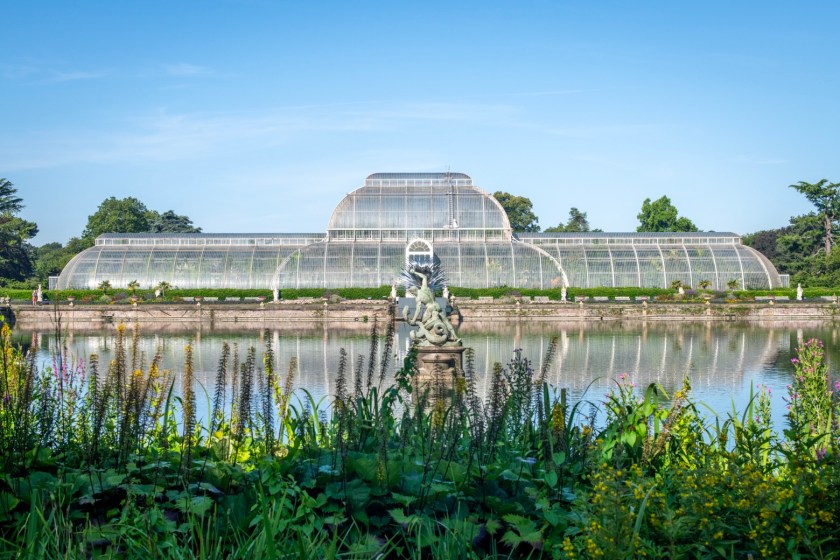
Written by Richard Gianfrancesco.
Image credit: author.
Royal Botanic Gardens, Kew works to understand and protect plants and fungi for the well-being of people and the future of life on earth. Kew Gardens (as it is known publicly) is actually an Executive Non-Departmental Public Body, sponsored by the government Department for Environment, Food and Rural Affairs. As well as this, Kew is a charity and, of course, a world-famous publicly accessible botanic garden welcoming millions of visitors each year. But behind the garden walls lie our globally-important science collections housing over eight million items, as well as hundreds of technical staff, curators and scientists. Spread over a number of buildings including the historic Herbarium and the Jodrell Laboratory in west London, and down in Sussex, our Millennium Seed Bank, as well as a number of satellite sites across Madagascar, the science directorate itself employs over 500 members of staff, working on a number of research priorities including plant and fungal taxonomy, ecosystem stewardship and trait diversity and function. These research themes stretch from fundamental biology to applied conservation and restoration. Kew also works with around four hundred global partners – research institutes, botanic gardens and universities, in over 100 different countries, focusing largely on tropical regions, where biodiversity is most under threat. In many ways, it’s Kew’s globally significant collections and partnerships that make it such a unique botanic garden.
In addition to conducting plant and fungal-centred research, Kew offers a range of formal and informal training and education opportunities, particularly at the graduate and postgraduate levels. Indeed, one of the five Manifesto for Change priorities, set out in Kew’s 10-year strategy, focuses specifically on ‘training the next generation of experts’. From undergraduate industry year placements, MSc programmes, doctoral studentships and opportunities for early-career researchers, Kew welcomes around 200 students each year to either study on its formal programmes or to be embedded in one of the many research groups to conduct novel research. In addition to these formal Master’s and PhD programmes, Kew also creates opportunities for students from many different global universities to gain experience working in a biodiversity research institute for short periods of time. Whether as a formal part of their degree programme or an additional opportunity offered by their university, Kew welcomes over 50 placement students each year. Embedded into research, collections or professional service teams, the students gain real-life experience of working in a unique collections-based botanic garden.
And it’s from this basis that the collaboration between Kew and National Taiwan University (NTU) began several years ago. As is often the way, a chance existing relationship, in this case between a Kew Research Fellow and the Chairman of the National Taiwan University Alumni Association in the UK, enabled discussions about a possible student placement scheme to begin. NTU have an established Office for International Affairs (OIA), and as part of their remit, they encourage their students to seek out opportunities outside Taiwan as part of their studies. Among a range of different programmes and opportunities for their students, their NTU Overseas Internship Program aims to ‘increase students’ professional global competence’. Working with commercial organisations, non-profit organisations and charities, undergraduate and graduate students can apply for specific summer placements offered by overseas organisations working in partnership with NTU, and where possible, offered subsidised places.
Back in August 2022, conversations between Kew and NTU began. And as this was NTU’s first collaboration for this specific programme with a UK-based institution, at first it wasn’t clear whether a suitable way forward could be found. Challenges with whether students would be eligible for an appropriate visa, the high cost of living in West London, and how students would be recruited to the specific projects were all important discussions between NTU and Kew staff. Because Kew would be the first organisation in the UK to offer this scheme to NTU students, so many of the discussions were relevant to future collaborations with other UK-based organisations too.
Back at Kew, the education team put out a call across its science departments, asking staff whether they had suitable three-month projects for the prospective placement students, and by October 2022, there were four well-defined projects. The projects were then advertised across the university, and excitedly, many NTU students started to apply.
By the following summer, agreements had been signed, and the logistics of welcoming the students to Kew had been completed, thanks to the efficient work of the OIA office back at NTU. In June 2023, four students were welcomed to Kew—two were based at the Millennium Seed Bank in Sussex, and two were based in the Herbarium at Kew Gardens.
As well as being embedded into research groups and working on specific projects, the interns were also able to join a range of other activities and events arranged by the Kew Science Education & Training team, as well as a range of activities organised by the NTU Alumni Association Chairman, Ming-Tsung Wu. This included trips to Cambridge, London’s Chinatown and even the Taipei Representative Office in Victoria, London.
During this summer, Kew welcomed a delegation from the OIA at NTU. The group was interested in understanding the experience of their students at Kew and discussing future possibilities. By the end of August, Kew’s staff were sad to say goodbye to the first cohort of NTU interns – all of whom delivered novel research, completed important projects, and, importantly, worked to share an understanding of Taiwanese life and culture across Kew.
By the following year, the die was cast. Exciting projects from Kew staff flowed in, and NTU students enthusiastically applied for new opportunities at Kew for the summer of 2024. Once again, Kew welcomed four confident, highly intelligent and committed students for a placement.
Later in the summer, Kew once again hosted a delegation from OIA at NTU, including Vice President for International Affairs, Professor Hsiao-Wei Yuan, who was interested in hearing about the experience of their students. Conversations ensued, focused on discussing opportunities for deeper collaborations.
Over the next year, and following further in-person and online meetings, culminating in a visit once again in the summer of 2025 by Professor Hsiao-Wei Yuan and NTU Executive Vice President Shih-Torng Ding, a number of new opportunities were developed, and in 2026, it’s hoped the placement scheme will be taken to the next level.
The purpose of the scheme has always been about exciting, career-defining opportunities for NTU students, but given that this scheme has also strengthened the relationship between two world-class research institutions, it made sense to try to encourage an even deeper collaboration. In 2026, there will be an increase in the number of placement opportunities offered to NTU students, but more importantly, most of them will be linked to existing and new research collaborations between academics at both NTU and Kew. Designing projects in partnership and linking shared research interests will enable the completion of pilot studies by the students, generating new data and insights. These projects, developed by academics from across the NTU Department of Life Science and those at Kew, include a range of topics, such as exploring the 400-year-old Taiwanese records of Champa rice, discovering the diversity of fungal cord-systems using forensic-style techniques, as well as a project analysing the newly digitised collections at Kew to unearth otherwise forgotten collections from Taiwan.
In the future, these shared, mutually important research topics may be taken forward by either future placement students or even as part of joint research projects between Kew and NTU.
This relationship with NTU is one of a number of other similar collaborations between Kew and other global universities and research institutions, and so what makes this partnership particularly unique? NTU is committed to supporting and encouraging global literacy of its students, and importantly, in areas related to safeguarding the environment. Perhaps through this education, as well as Taiwan’s unique biodiversity, its habitats and landscapes, this new generation of environmentally aware and globally literate students is seeking out opportunities to further their understanding of how they can contribute to reducing biodiversity loss and safeguarding plants and fungi for future generations – a sentiment Kew is happy to support.
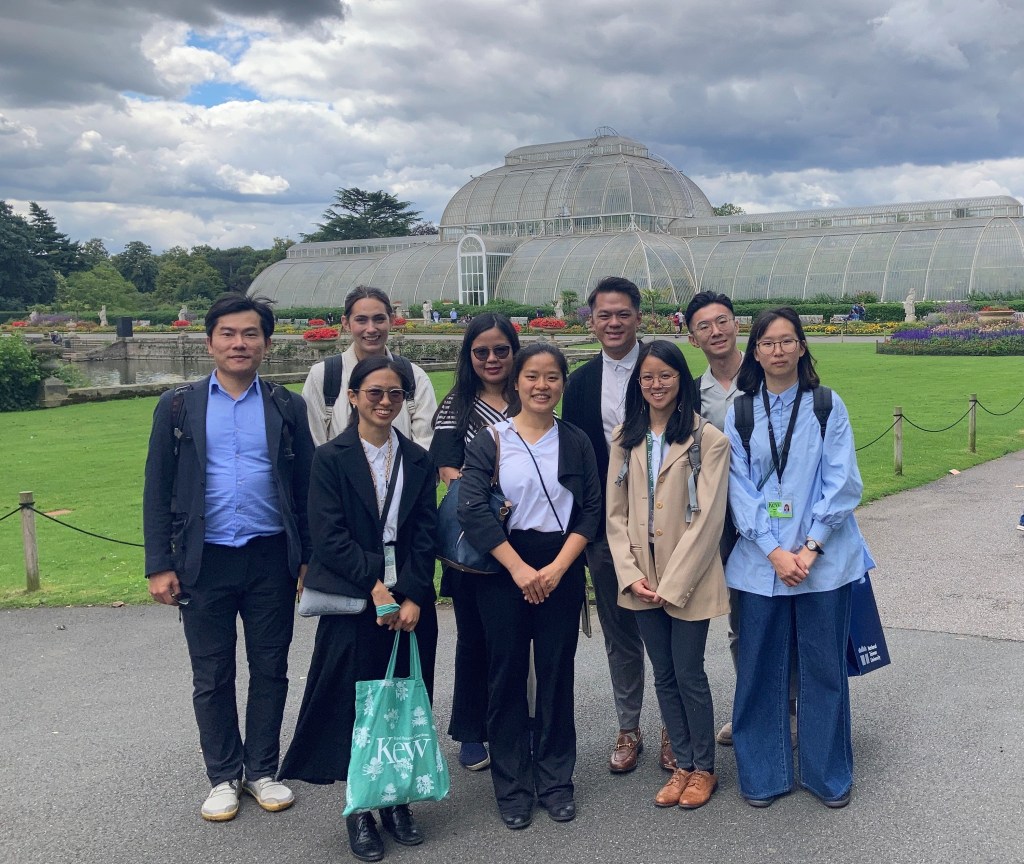
Richard Gianfrancesco completed his PhD from the University of Sheffield, working on mycorrhizal plant nutrition and below-ground processes. He then went on to work for a number of commercial companies and charities, completing research into aspects of plant ecology and horticulture. Richard has worked at Kew for eight years, where his main responsibilities have been to develop new formal and informal education and training programmes. Richard is currently supporting a number of research and education initiatives between Kew and Taiwan and welcomes the opportunity to work with other researchers interested in Kew’s work.
This article was published as part of a special issue on ‘Seeds of Exchange: Stories from the Kew-NTU Collaboration‘.
If you are interested in working at Kew, the Global Pathfinders initiative recently launched a program including six 6-month fully paid opportunities at Kew. More information can be found on page 6 of the website under codes G-8-34 to G-8-39: https://twpathfinder.org/overview1830.
 Taiwan Insight