
Written by Aileen A. Espiritu, Marc Lanteigne, and Tse-Kang Leng.
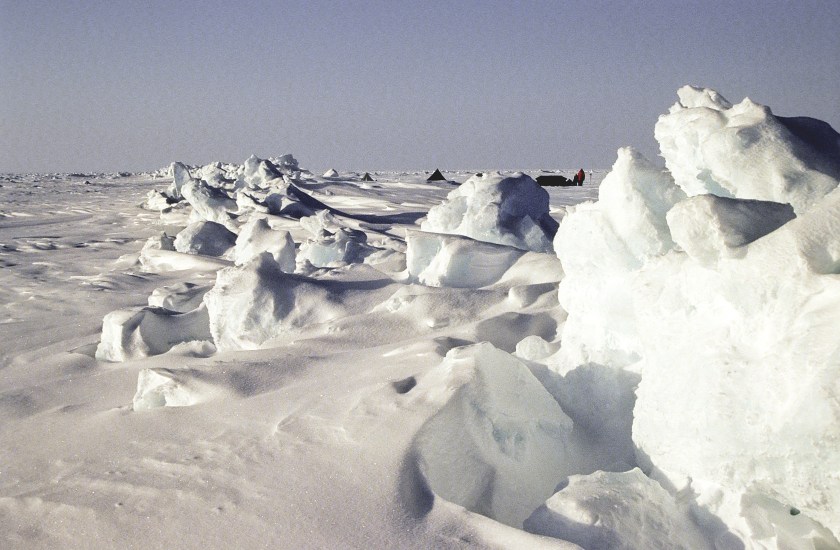
Image credit: North Pole, Arctic Ocean, sea ice 03 by Matti&Keti/ Wikimedia Commons, license: CC BY-SA 4.0.
As the world’s ice pack continues to melt, a new geopolitical and economic frontier is rapidly emerging in the Arctic. Once considered a frozen periphery, the Arctic is rapidly transforming into a pivotal region for economic activity, scientific research, and international cooperation. Despite geographic distance, Taiwan cannot afford to be a bystander in a transformed Arctic. It is therefore imperative that Taiwan, a vital maritime economy and a beacon of innovation, construct a clear, multifaceted Arctic policy to safeguard its future prosperity and strengthen the country’s international standing.
Until recently, the Arctic appeared remote to many in subtropical Taiwan, overshadowed by more immediate Asia-Pacific geopolitical concerns. However, with climate change in the far north, new shipping lanes, including the Northern Sea Route connecting Northeast Asia to Northern Europe, promise to reduce transcontinental transit times and open new hubs for trade. As a leading maritime nation, with world-class shipping companies like Evergreen Marine and Yang Ming Marine, Taiwan has a key economic stake in these evolving trade routes. Adapting to, and potentially leveraging, these new arteries of commerce is not merely an opportunity, it is a necessity for Taipei to maintain its competitive edge in global logistics and trade. A well-defined, comprehensive Arctic economic policy would guide Taiwanese industries in navigating these emerging routes, investing in necessary infrastructure, and preparing for the new realities of northern global shipping.
Beyond commerce, the Arctic is a crucial barometer for global climate change. Sea-level rise, more frequent monsoons, and extreme weather patterns are a result of the rapid warming of the Arctic, with ripple effects which can be measured well southwards. Taiwan is not immune to these impacts of climate change, warming seas, and elevated sea levels. As a 2024 report by the National Science and Technology Council and the Ministry of Environment stressed, Taiwan could see the elimination of winter weather and a spike in extreme high temperatures in less than four decades.
Taiwan is also well positioned to contribute to the body of scientific work on Arctic climate change, as already demonstrated its commitment to scientific excellence and environmental stewardship, including via institutions like the Taiwan Polar Institute (TaiPI). TaiPI has focused interests on understanding polar environments, from ice sheet dynamics to oceanography, not only contributing vital data to global climate science but also demonstrating Taiwan’s capacity as a responsible global actor. In June 2022, Taiwan opened its first Arctic workstation, TaiArctic, in Longyearbyen, Svalbard, overseen by TaiPI and Taoyuan’s National Central University, and in partnership with Taiwan’s National Academy of Marine Research and the Nicolaus Copernicus University in Toruń, Poland.
In formalising its Arctic policy, Taiwan can augment current and future scientific contributions, fostering greater international collaboration and solidifying Taiwan’s reputation as a key provider of climate data and insights into adaptation and mitigation policies. In keeping with Taiwan’s multifaceted approach to diplomatic engagements, the development of Arctic science diplomacy offers a powerful conduit for engaging the international community, building bridges and goodwill where formal diplomatic ties may be lacking, and the Arctic itself is now facing several hard power challenges.
Also contributing to research and knowledge production in the social science realms are fledgling yet robust Arctic research agendas, including those from Academia Sinica, delving into issues of governance, regionalism, and international relations in the Arctic. Many of these research activities are conducted in cooperation and collaboration with colleagues and institutions from Japan, Norway, Finland, and China. Such collaboration not only allows for the sharing of essential scientific data on Arctic environmental conditions but also provides new opportunities to incubate science diplomacy, with the understanding that events in the Arctic have global implications.
Furthermore, a comprehensive strategic Arctic policy provides Taiwan with unique diplomatic opportunities. Many non-Arctic nations, including major Asian governments – Japan, China, the Republic of Korea, Singapore, and India, have recognised the region’s importance and obtained observer status in the Arctic Council. Through focused engagement, Taiwan can expand its international space, forge new partnerships with Arctic and non-Arctic nations alike, and participate in expanding multilateral discussions on issues ranging from environmental protection to sustainable development.
Taiwan’s own rich experience with Indigenous communities also offers a unique and valuable perspective for Arctic engagement. Arctic governance often emphasises the crucial role of Indigenous organisations as Permanent Participants in the Arctic Council, recognising their traditional knowledge and deep connection to the land and environment, as well as the specific environmental and geopolitical challenges faced. Similarly, the original peoples of Taiwan share concerns about ecological balance and sustainable development with Arctic Indigenous populations. Taiwan’s commitment to Indigenous rights and cultural preservation, alongside its advancements in environmental science, positions the country to contribute meaningfully to multilateral discussions on safeguarding Arctic ecosystems and the well-being of northern inhabitants. This shared emphasis on respecting Indigenous heritage can foster stronger connections and mutual understanding with Arctic nations and communities.
Finally, a progressive Arctic engagement policy is also an exercise in strategic foresight. The Arctic is not immune to geopolitical rivalries, and the increasing involvement of major powers underscores its strategic significance. Amongst these is the recent revival of the ‘Polar Silk Road’ shipping route by China and Russia. Through engagement, Taiwan can better understand these evolving dynamics, anticipate potential impacts on global supply chains and security, and ensure its interests are considered in the broader context of Arctic relations.
Crucially, Taiwan’s engagement in the far north must also navigate the delicate balance imposed by Beijing’s ‘Cross-Taiwan Strait’ policy. This requires a nuanced approach, prioritising scientific, economic and cultural cooperation which aligns with international norms as well as the interests of Arctic actors, while carefully managing any actions that could be perceived as challenging Beijing’s diplomatic sensitivities, especially since China views itself as a ‘near-Arctic state’ and a regional stakeholder. Taiwan’s focus should remain on its substantive contributions to global issues, thereby affirming its indispensable role in the international community through practical and beneficial engagement, in keeping with niche diplomacy. Ignoring this rapidly transforming region would be a strategic blind spot, potentially leaving Taiwan vulnerable to shifts in global power dynamics and trade patterns.
In sum, Taiwan must establish an inclusive Arctic policy. This is not a matter of distant curiosity, but a strategic aspiration which directly impacts Taiwan’s economic prosperity, scientific leadership, and international visibility. By embracing the Arctic as a new frontier for engagement, Taiwan can ensure that it remains agile, flexible, informed, innovative, and influential in a rapidly changing world.
Aileen A. Espiritu is a Researcher at the Barents Institute, UiT – The Arctic University of Norway, Tromsø. Marc Lanteigne is a Professor of Political Science and Asia Studies at UiT Tromsø. Tse-Kang Lengis a Professor at Academia Sinica and National Chengchi University, Taiwan.
 Taiwan Insight

One comment