Digital Governance Perspectives for Taiwanese and Japanese Civil Society

Written by Tommy Hall and Margaret Siu. In the digital age, politics and technology are more intertwined than ever, especially in East Asia. With nations like Taiwan wrestling with the balance between free speech and foreign interference and Japan pivoting towards advanced tech solutions for national security, the right balance remains elusive, and the stakes perennial. By exploring these critical intersections between online spaces and national politics, this work spotlights the challenges and opportunities that lie ahead for these East Asian democracies, as well as connecting the East Asian experience to the world at large.

Invisible Nation Documentary is Making Taiwan More Visible

Written by Shawna Yang Ryan and Gerrit van der Wees. During the past weeks, a new documentary about Taiwan, Invisible Nation, has been making the rounds at various film festivals in the United States and Europe, including the International Documentary Film Festival Amsterdam on November 14-18, 2023.  Invisible Nation is the work of Vanessa Hope, who built up the film around the everyday life of President Tsai Ing-wen, in the process creating a fascinating picture of how the low-key President is ably leading Taiwan towards a better future.

US-Taiwan Trade Agreement: It is More of Politics than Economic

Written by Raian Hossain. Taiwan has severe military security concerns, and the island has over-trade and investment dependency towards the PRC, which raises the question of economic security. As of 2022, the PRC accounted for 25% of Taiwan’s exports and 20% of its imports, making Beijing still the largest trading partner of Taipei. However, Taiwan made significant progress in growing trade by 25% with the U.S. in 2021 and expanded its trade volume with New South Bound countries under President Tsai Ing-wen. After a year of negotiations aimed at diversifying trade and commerce, the U.S. and Taiwan signed the first part of the US-Taiwan Initiative on 21st Century Trade. Meanwhile, the second round of negotiations has already started.

Taiwan-US Trade Initiative: A good start, but the beginning of a long road

Written by Chieh-Ting Yeh. In 2005, I understood the FTA to be an aspirational long-shot—something that we can press for but not something we should expect to see in the foreseeable future. Recent developments such as the 21st Century Trade Initiative are milestones for sure, but milestones to mark just the beginning of a long road for a true free trade agreement with the US, as well as meaningful participation in regional trade blocs.

The Prospect of a US-Taiwan BTA in an Era of Heightened Political Exchanges

Written by Brian Hioe. The US and Taiwan signed the first stage of the US-Taiwan Initiative on 21st Century Trade in June, paving the path for both to streamline customs and taxation procedures between both sides. The trade agreement will also boost economic cooperation regarding small-to-medium-sized enterprises, while implementing anti-corruption measures. Progress on the trade agreement has continued, with the second negotiating round of the agreement starting in August. In particular, an end to double taxation between the US and Taiwan is a concrete outcome that both sides may pursue, long a stumbling block for those that work and do business in both the US and Taiwan. As progress on the US-Taiwan Initiative on 21st Century Trade has continued, legislation to this effect has been introduced in the US Senate.

Hong Kong’s National Security Law 3 years on – Taiwan should build a defence

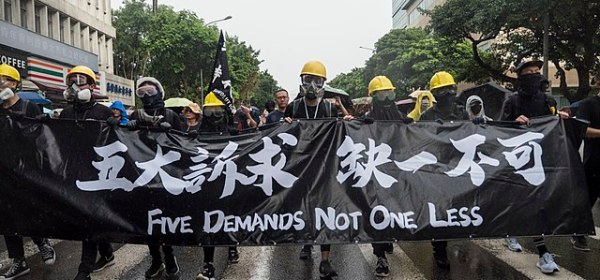
Written by Michael MO. Hong Kong’s pro-democracy struggle was a hot-button issue in 2020’s Taiwan presidential election campaign. Both President Tsai and former head of Executive Yuan Su Tseng-chang took the city as a case in their speeches to remind the Taiwanese to defend the island and not turn Taiwan into another Hong Kong. Three years on, specific policies to guard the country against the potential legal and political harassment from the extraterritorial application of the NSL remain non-existent. While the issues of Hong Kong may no longer be a concern in the presidential race, the need to build a robust defence to protect Taiwanese interests in Hong Kong should still be on the political agenda of the island.

Under The Radar: How Taiwan Compares to Sexism in the East

Written by Zoe Parrott. There is no doubt that, as three examples of major developed East Asian countries, Japan, South Korea, and Hong Kong are able to boast of countless laudable achievements. Furthermore, compared to other countries, all of these nations have impressive Human Development Indexes, ranking higher than the United States. However, there is one aspect of each of these nations that often flies under the radar – the infamous gender inequity these nations are characterised by. For concrete examples, look no further than DJSoda, who was sexually assaulted during her show in Osaka, Johnny Kitagawa, who, for decades, dangled “the price of stardom” as an explanation for his sexual abuse, and the four undergraduates who were sexually harassed and/or raped by their older 28-year-old peer at the Education University of Hong Kong.  However, there seems to be one outlier among its peers – Taiwan, otherwise known as the Republic of China.

Taiwan and Europe – Partners of choice, not obligation

Written by Zsuzsa Anna Ferenczy. In January 2024, Taiwan will elect a new president. Facing an existential threat from China, for Taiwan cooperation with the EU as a partner is essential to strengthen its democratic resilience. To expand the partnership however, a better understanding of the complex nature of the EU and developing a greater sense of clarity about what Taiwan wants will be indispensable. 

The Democratic Progressive Party’s Nuclear Policy Dilemma: An Unwavering Anti-Nuclear Stance Amidst Self-Contradictory Policies

Written by Minfan Yu. On May 28th, the DPP-affiliated presidential campaign candidate William Lai Ching-Te (賴清德) stirred controversy by responding to a question about whether the cross-strait tensions faced by Taiwan had resulted in a shortage of natural gas for electricity production. Despite being a staunch advocate for green energy and consistently promoting an anti-nuclear stance, Lai’s answer suggesting the potential reactivation of nuclear power plants in emergency situations appeared contradictory to the DPP’s anti-nuclear policy.

In memory of Prof. Ian Inkster

Written by Chun-yi Lee. The deep sorrow of never receiving another book proposal from Ian is everlasting. But I know in my heart that his influence will continue: his thoughts will inspire further contributions to Taiwan-related studies. Thank you, Ian. We learned so much from you when you were with us, both in person and through email communications, and we will keep learning from your writings every time we read your publications. And yes, I always, always give you my positive vibes!

Why is there so little policy debate in Taiwan’s presidential campaigns?

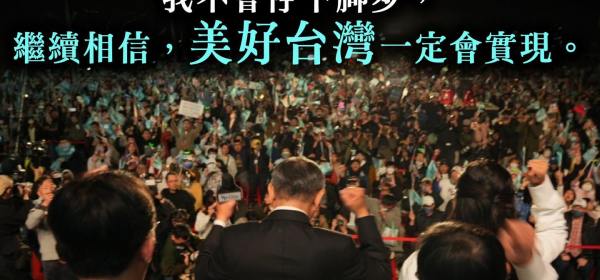
Written by Gunter Schubert. Taiwan is gearing up for another round of national elections, scheduled for next January. As always, media coverage of election campaigns focuses on the presidential aspect of the national ballot, as this is where elections become most personalized. This is the essence of Taiwanese political culture. All politics becomes personal, involving interactions between candidates and voters, particularly at the local level.

Reflections on the Twentieth Anniversary of the European Association of Taiwan Studies

Written by Dafydd Fell. It was a special moment to open the 2023 European Association of Taiwan Studies (EATS) Conference back at SOAS twenty years after we started planning the first conference. The venue for the opening in June 2023 was even the same as the first 2004 conference in the SOAS University of London’s Khalili Lecture Theatre. It was also wonderful to see many people at this year’s conference who had also been involved in the early history of the association. Reflecting back over the last twenty years, it is remarkable how European Taiwan Studies has developed, and EATS has played a critical role in this Taiwan Studies miracle.

1 12 13 14 15 16 26